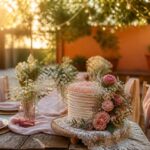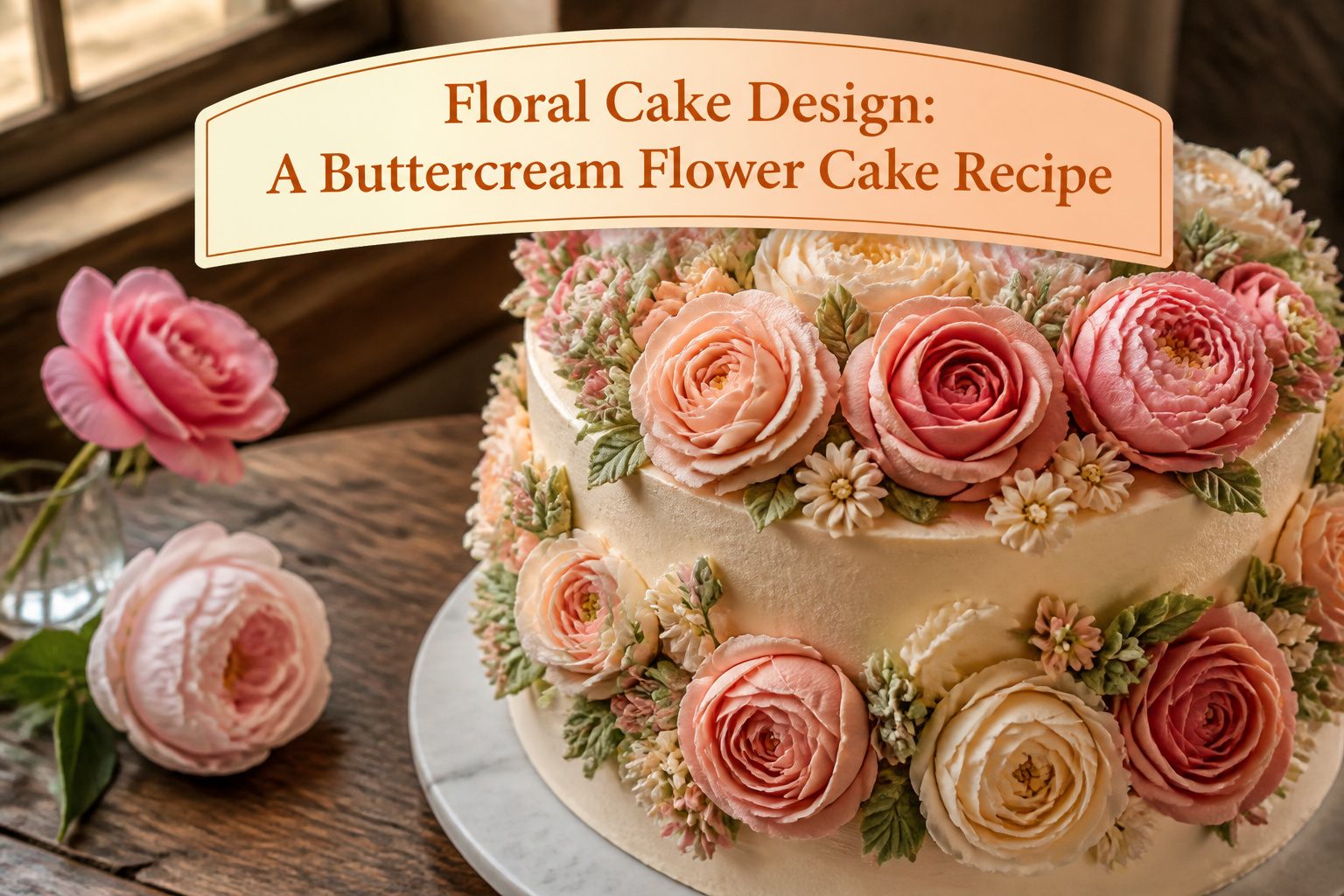
This buttercream flower cake tastes like vanilla and sugar with a texture that dissolves rather than fights back, and the thing that sets it apart is that every petal is piped from the same crusting American buttercream that covers the cake.
Total time is 4 to 5 hours split across two days, but only if your kitchen stays cool enough that the buttercream holds its edges; a warm room turns those roses into rounded blobs before the party starts.
I default to a 104 petal tip for roses and peonies, and I chill the crumb coat overnight so the base hardens into a shell I can pipe against without smudging.
Ingredients
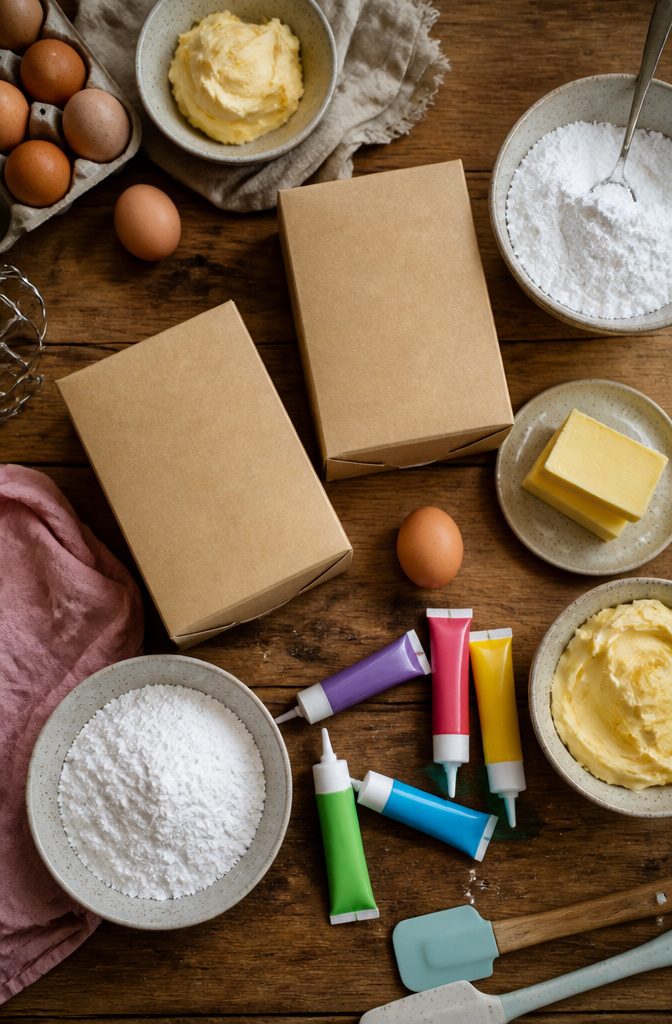
A floral cake design starts with a solid base and the right materials for both frosting and flowers. I keep my list tight: nothing here requires a trip beyond the grocery store and a standard craft aisle.
Cake base
- 2 boxes vanilla cake mix, or your scratch equivalent, baked in three 8-inch rounds
- Same quantity works for chocolate, lemon, or carrot; lemon and carrot pair especially well with buttercream florals
Buttercream
- 2 pounds unsalted butter, softened
- 8 cups powdered sugar
- 4 tablespoons heavy cream
- 2 teaspoons vanilla extract
- Pinch of salt
- Gel food coloring in soft pink, ivory, leaf green, and one accent shade of your choice
Piping equipment
- Piping bags, at least a dozen disposable
- Couplers for switching tips without changing bags
- Petal tips: 104 for roses and peonies, 81 for daisies, 59 for lilies, 101 for orchids
- Leaf tip, size 352
- Flower nail and parchment squares for building roses off the cake
Gum paste flowers (optional, if you want flowers that hold for days)
- 1 pound gum paste
- Small rolling pin and foam pad
- Ball tool for thinning petal edges
- Petal cutters matching the flower types above
- Edible petal dust in matching tones
- Clear alcohol or lemon extract for painting dust into color
Real edible flowers (the faster route)
- 1 pint organic roses, peonies, daisies, lilies, or orchids, stems on for last-minute placement
- Food-safe flower picks or washed drinking straws to seal stems from the cake
I default to buttercream flowers for weeknight projects. They take longer than real blooms but travel better and cost less than a specialty florist order.
Method
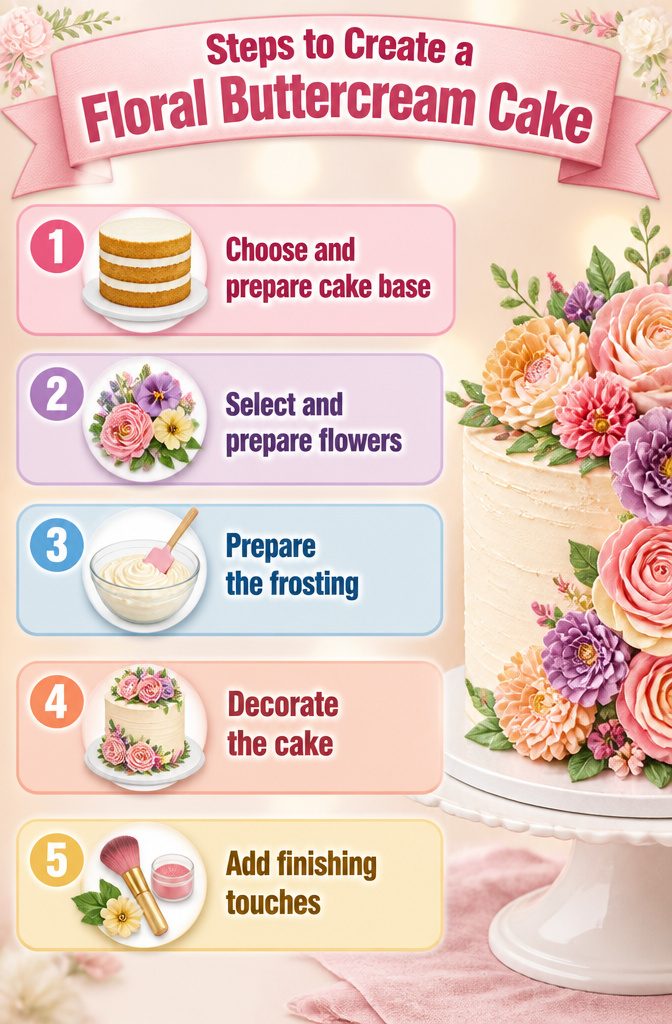
- Choose and prepare the cake base. Vanilla, chocolate, lemon, or carrot all work; I reach for vanilla most often because its pale crumb lets the flower colors read true against it. Bake in two or three layers for height that gives the flowers somewhere to climb.
- Select and prepare your flowers. Real edible flowers must be pesticide-free; I buy from the produce section or a dedicated grower, never the florist aisle, and I wash and air-dry them on a towel the morning of. For buttercream flowers, I make palette knife roses by dragging a loaded knife through a petal shape on parchment, then freezing until firm enough to lift. Buttercream chrysanthemums need a piping bag with a multi-opening tip and a steady turn of the wrist. Meringue roses are lighter and hold longer in humidity, though they take more time. Gum paste and fondant flowers dry hard and suit cakes that will travel.
- Prepare the frosting. A crusting American buttercream covers smoothly and holds piped details; Swiss meringue buttercream tastes less sweet but stays softer, so it is less forgiving for intricate piping. Fondant gives a porcelain surface that gum paste flowers adhere to cleanly.
- Decorate. I start with the largest flowers at the base or off-center top, then fill toward the middle with smaller blooms and buds. Fresh flowers get a stem wrap of floral tape and a drinking straw pushed into the cake as a barrier; no stem touches cake directly. Buttercream flowers transfer from their parchment with a small offset spatula while still cold.
- Add finishing touches. A dusting of petal dust on gum paste, a few painted leaves, or a textured basket-weave on the base tier gives the eye somewhere to rest between blooms. Stop before every inch is covered; the negative space is what makes the flowers matter.
Flower Types
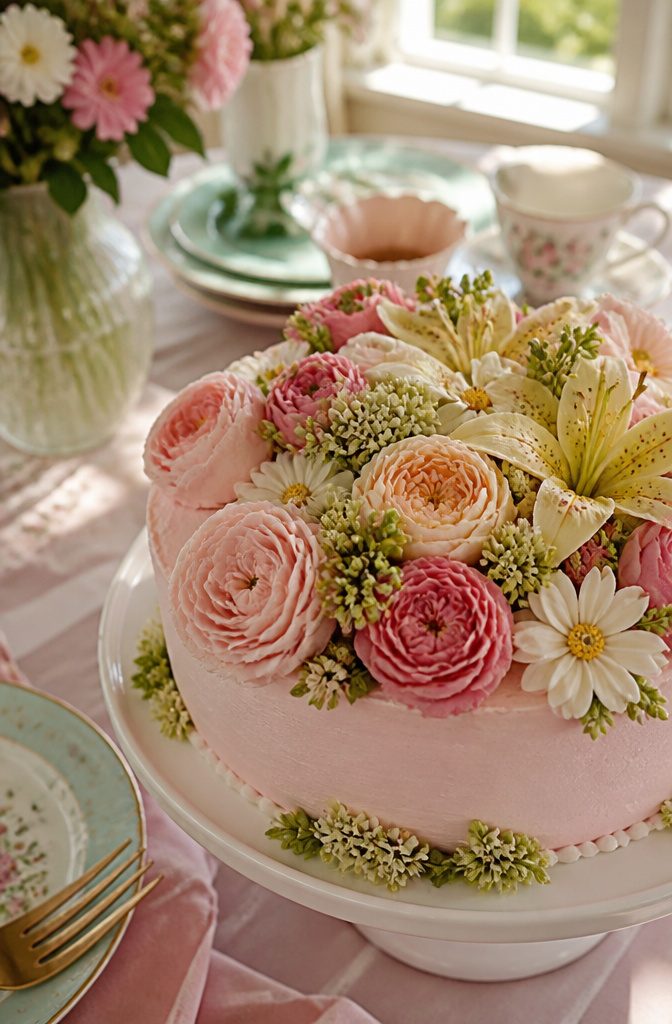
Roses and peonies carry most wedding cakes for good reason. Their layered petals build naturally in buttercream, and the rounded shape reads as formal without extra fuss.
I reach for a partially open rose when the bride wants something that looks garden-picked rather than bakery-perfect; the uneven outer petals hide beginner mistakes.
Daisies and lilies suit birthdays and baby showers where the mood is lighter. Daisies pipe fast, which matters when you are frosting a dozen cupcakes the night before a party.
Lilies demand a longer petal tip and more patience, but the trumpet shape fills vertical space on a tiered cake better than anything flat.
Orchids read modern and work best when the design is spare, one or two blooms set against smooth fondant or bare cake.
They are not my first choice for a buttercream-only cake; the delicate throat details smudge easily in the softer frosting.
For something genuinely different, arugula flowers bring a sharp, peppery note that pairs well with lemon cake, and lilacs in spring give a color you cannot match from gel paste.
Both are safe to eat only if grown without spray, which means your own garden or a trusted farmer, not the grocery store bouquet section.
Decoration Techniques
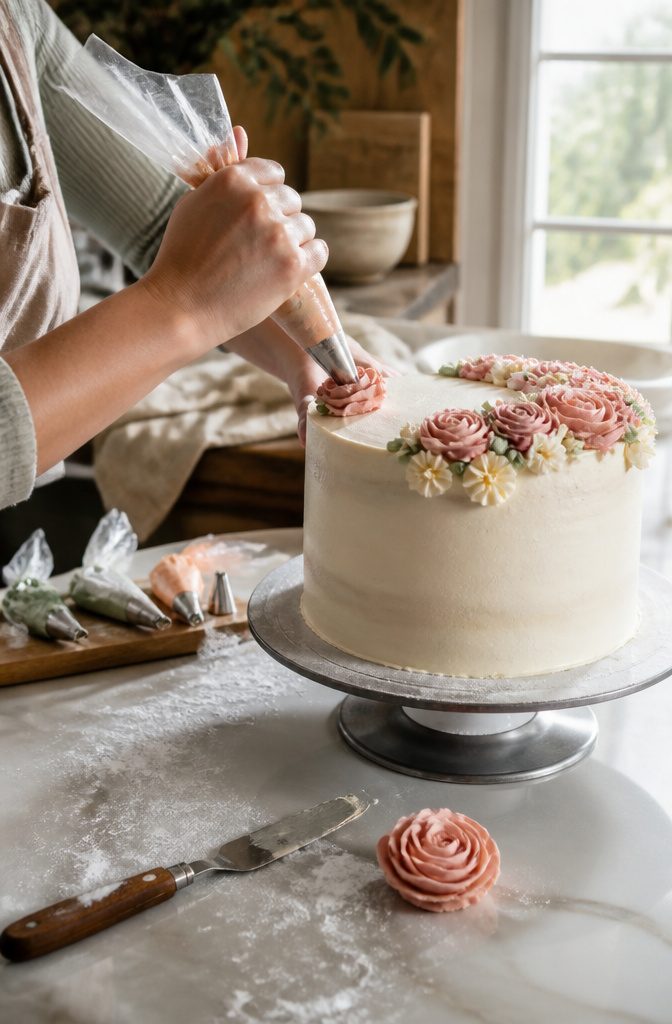
Buttercream piping is where most floral cake designs start, and for good reason.
A palette knife rose takes maybe two minutes once the motion clicks, and the result reads as intentional rather than fussy. I reach for this when I need a birthday cake that looks considered but not labored over.
The petals have a softness that piped roses can’t quite match, though the technique does require a steady hand and a thick, cold buttercream.
For fuller coverage, buttercream chrysanthemums build out in layers from a center bud, each petal piped with a curved tip.
They eat up time but reward the effort with the kind of garden-spilling density that photographs well. Meringue roses sit in a different category entirely: lighter, crisper, more sculptural.
I use them when the cake needs to travel or when I want the flowers to read as decoration first, food second. They hold their shape for days and dissolve on the tongue rather than fighting through a buttercream mouthful.
Gum paste flowers demand the most commitment. Gum paste flowers require patience and practice: hours of petal thinning, wire insertion, and drying time before they are ready to place.
The result is realism no buttercream achieves. Fondant flowers split the difference: faster than gum paste, more structured than buttercream, and easy enough with a cutter set that a home baker can produce a credible rose in twenty minutes.
Fresh flowers are the wildcard. Real blooms bring movement and color variation that nothing handmade replicates, but they require precautions: food-safe stems, organic sourcing, and placement that keeps the petals from wilting against frosting.
I use them for single-stem minimal cakes or for full garden overflow when the event justifies the extra handling.
The best floral designs mix two or three techniques rather than committing to one, letting texture do the work that perfectionism would otherwise demand.
Real Flowers vs. Edible Flowers
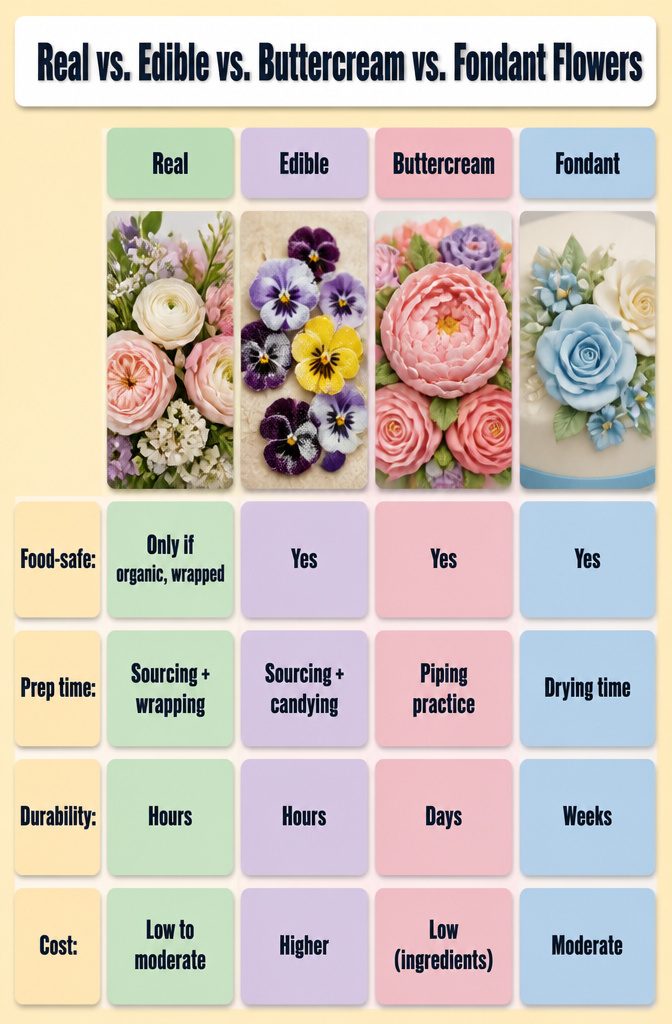
Real flowers give a cake that just-picked, organic movement no piping bag quite matches, but only pesticide-free blooms are safe to place against frosting.
Grocery store bouquets almost never qualify, which means sourcing from an organic grower or florist who can confirm the variety was raised without systemic chemicals.
Even then, the stems need wrapping, and the flowers come out before serving, so you are decorating with something the guest does not eat.
Edible flowers, candied or fresh, solve the safety issue but shrink your palette to violas, pansies, and a handful of others that read small on a cake.
They also wilt within hours and cost more per usable bloom than a standard bouquet.
Buttercream flowers land in the middle: food-safe by definition, buildable days ahead, and you control the color exactly. The downside is the learning curve.
A single peony takes me twenty minutes still; a practiced hand does it in five. Fondant flowers look sharper and hold longer, but they taste like fondant, which most guests set aside.
| Real | Edible | Buttercream | Fondant | |
|---|---|---|---|---|
| Food-safe | Only if organic, wrapped | Yes | Yes | Yes |
| Prep time | Sourcing + wrapping | Sourcing + candying | Piping practice | Drying time |
| Durability | Hours | Hours | Days | Weeks |
| Cost | Low to moderate | Higher | Low (ingredients) | Moderate |
I use real flowers for a single photograph or a party where I am on site to pull them before cutting. For anything out of my hands, buttercream wins.
Occasion Suitability
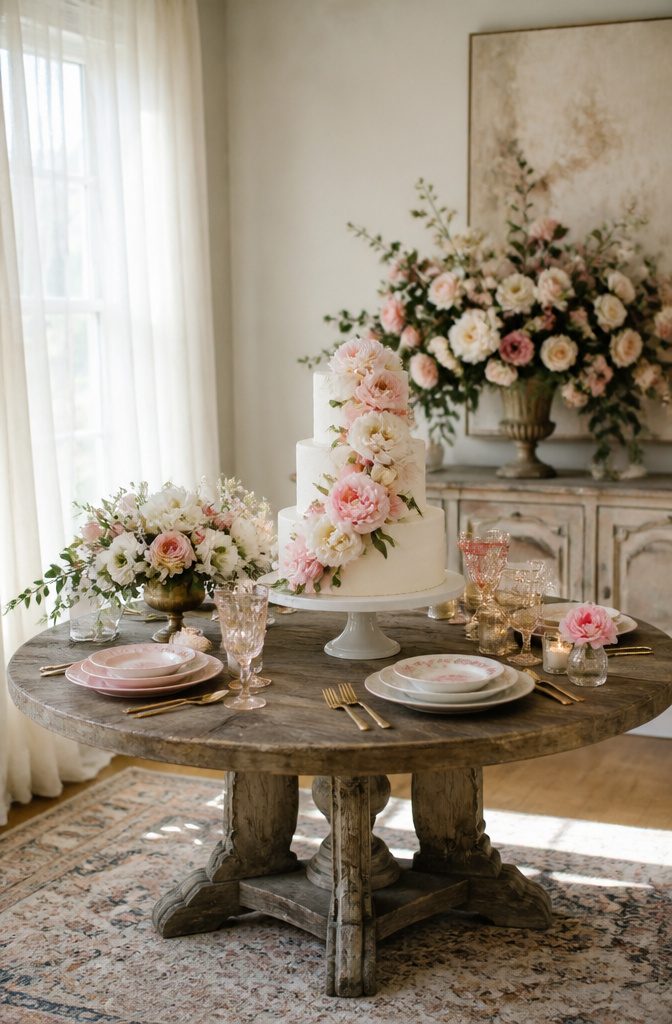
A buttercream flower cake earns its place at weddings, birthdays, baby showers, and Easter gatherings because the floral design does more than decorate; it signals what kind of event this is.
For a wedding, cascading sugar peonies read as formal and romantic without the cost of fresh flowers that wilt before the last dance.
At a baby shower, soft buttercream daisies in pastel tones match the nursery palette the host spent three weeks choosing. Easter cakes lean into the season with piped daffodils and hyacinths that look like they were cut from the garden.
The visual anchor matters more now than it did a decade ago. A cake covered in flowers invites photos before the first slice, and social media has turned that moment into part of the event itself.
Guests expect something worth posting. The floral cake delivers without requiring a professional florist or pesticide-free sourcing; the baker controls every petal.
I would skip wild, sculptural arrangements for a child’s birthday, where the cake needs to survive small hands and iPhone timers, but for a bridal shower where the guest of honor wants an Instagram tablescape, I would build the whole design around a dense buttercream rose cluster in two tones.
Timing and Storage
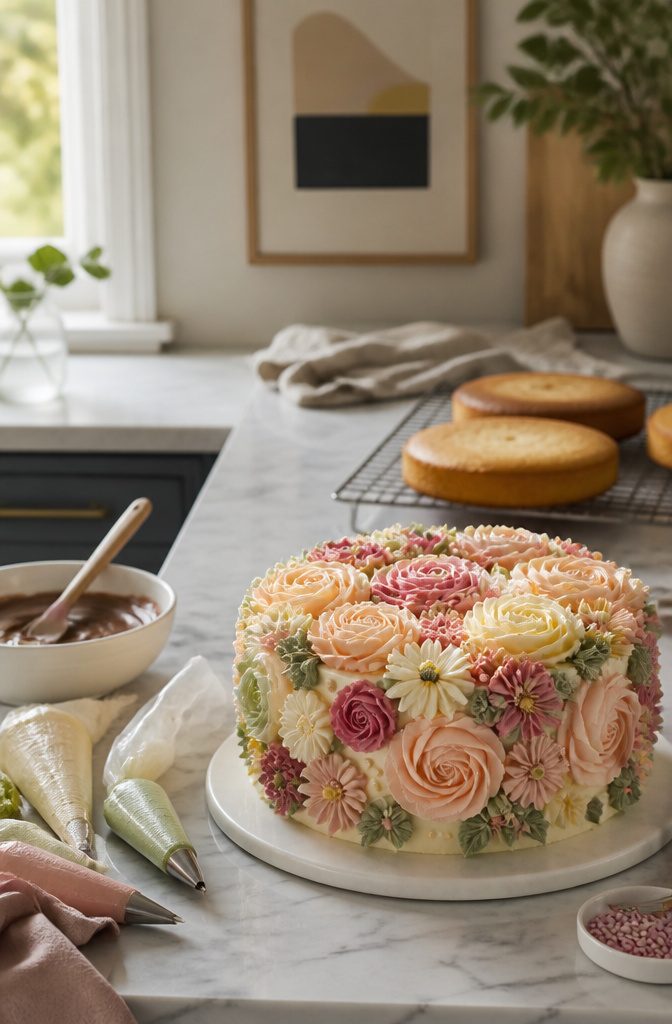
A full buttercream flower cake takes me about 4 to 5 hours from crumb coat to final petal, though I split that across two days.
Day one is baking, cooling, and the crumb coat, which then chills overnight so the buttercream hardens into a solid shell. Day two is the flower work, and the cold base keeps everything from smudging while I pipe.
Real flowers go on no more than a few hours before serving. Their stems carry moisture that softens buttercream faster than it softens fondant, and the petals wilt in refrigerator humidity.
Sugar flowers, by contrast, can sit on the cake for a couple of days without bleeding color or losing shape, which is why I make them ahead whenever the schedule allows.
Storage depends on what is touching the cake. All-buttercream finishes need the cold: refrigerate at 40°F or below, loosely tented so no plastic clings to the petals.
Fondant-covered cakes with gum paste flowers stay at room temperature in a cool, dry spot, since refrigeration risks condensation that dulls the finish. Either way, the decorated cake holds for 2 to 3 days before the texture turns.
Buttercream wins on taste, but it is the less forgiving medium.
A warm kitchen or a delayed party, and the flowers lose their edges. I plan the timeline backward from the event, not forward from the oven.
Substitutions and Variations
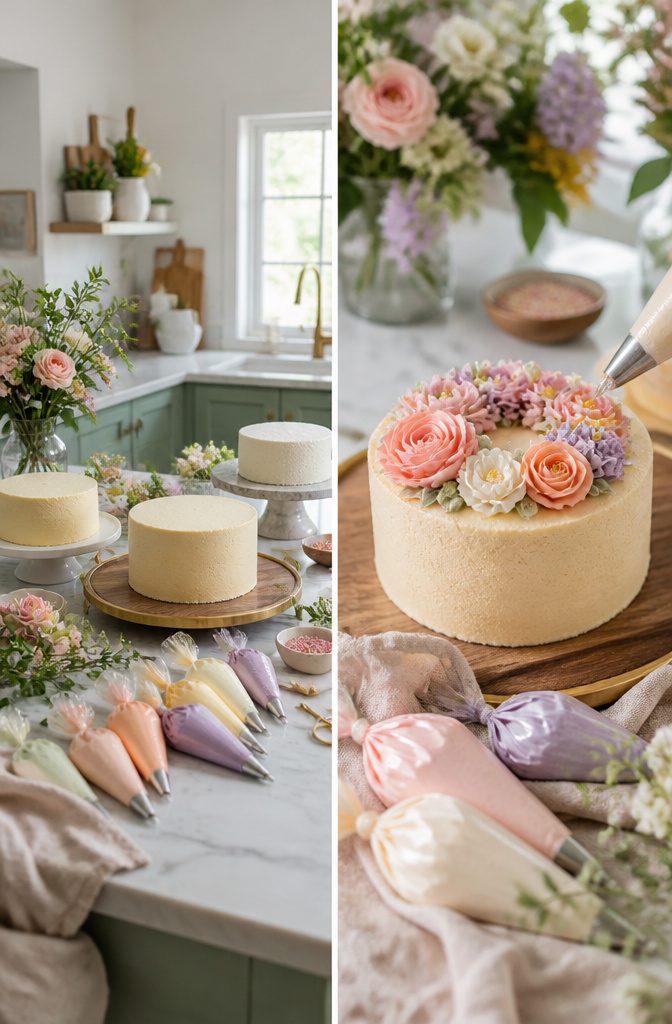
A vanilla buttermilk cake is the most reliable base for floral cake design because its pale crumb shows off the colors you pipe on top, but white velvet cake and lemon cake from scratch work just as well if you want a brighter backdrop.
Chocolate cake is the one I would skip for a first attempt; dark fondant or frosting flowers can disappear against it unless you stick to pale buttercream blooms.
The frosting matters more than most people think. American buttercream pipes the sharpest petals and holds its shape at room temperature, which is why I use it for roses and peonies.
If you are set on a cream cheese frosting, know that it softens faster and your flowers will look rounded where you wanted crisp edges.
When a specific bloom is out of season, lisianthus substitutes cleanly for roses in buttercream; the petal structure is similar enough that the same piping tip and pressure get you there.
Dahlias and orchids are harder to fake with a different flower, so I would rather switch to a real flower garnish for those than pipe a poor imitation.
The real choice in floral cake design is between modern and traditional styling.
A traditional spray piles roses, peonies, and lilies high and full, spilling down the tiers. I find this easier to execute because uneven placement hides mistakes.
A modern arrangement uses one or two stems placed just so, which looks effortless but takes longer; every angle is exposed, so a leaning flower reads as a flaw, not charm.
For a weeknight project, the full garden style is the safer bet.
Frequently Asked Questions
What types of flowers can be used on cakes?
Roses, peonies, daisies, lilies, and orchids are the most common choices for floral cake design, with arugula flowers and lilacs as less expected options.
Roses and peonies work best for formal events like weddings because their layered petals build naturally in buttercream.
Daisies and lilies suit lighter occasions such as birthdays and baby showers, while orchids read modern and work best in spare, minimal arrangements.
How do you make edible flowers for cakes?
Edible flowers for cakes come in buttercream, gum paste, fondant, or meringue, each with different timing and skill requirements.
Buttercream flowers pipe directly onto parchment using petal tips, then chill until firm enough to transfer; a single peony takes about 20 minutes for a home baker.
Gum paste flowers demand the most time and practice, involving petal thinning with a ball tool, wire insertion, and drying time, but achieve the most realistic look.
Fondant flowers split the difference, cutting out shapes with cutters for a credible rose in about 20 minutes.
What are the best techniques for decorating a floral cake?
The three main techniques are buttercream piping, gum paste or fondant flowers, and fresh flower arrangement, often combined for texture and visual interest.
Start with the largest flowers at the base or off-center top, then fill toward the middle with smaller blooms and buds, leaving negative space so the flowers matter.
For fresh flowers, wrap stems in floral tape and insert them through drinking straws as barriers so no stem touches cake directly. A basketweave base or a few painted leaves gives the eye somewhere to rest between blooms.