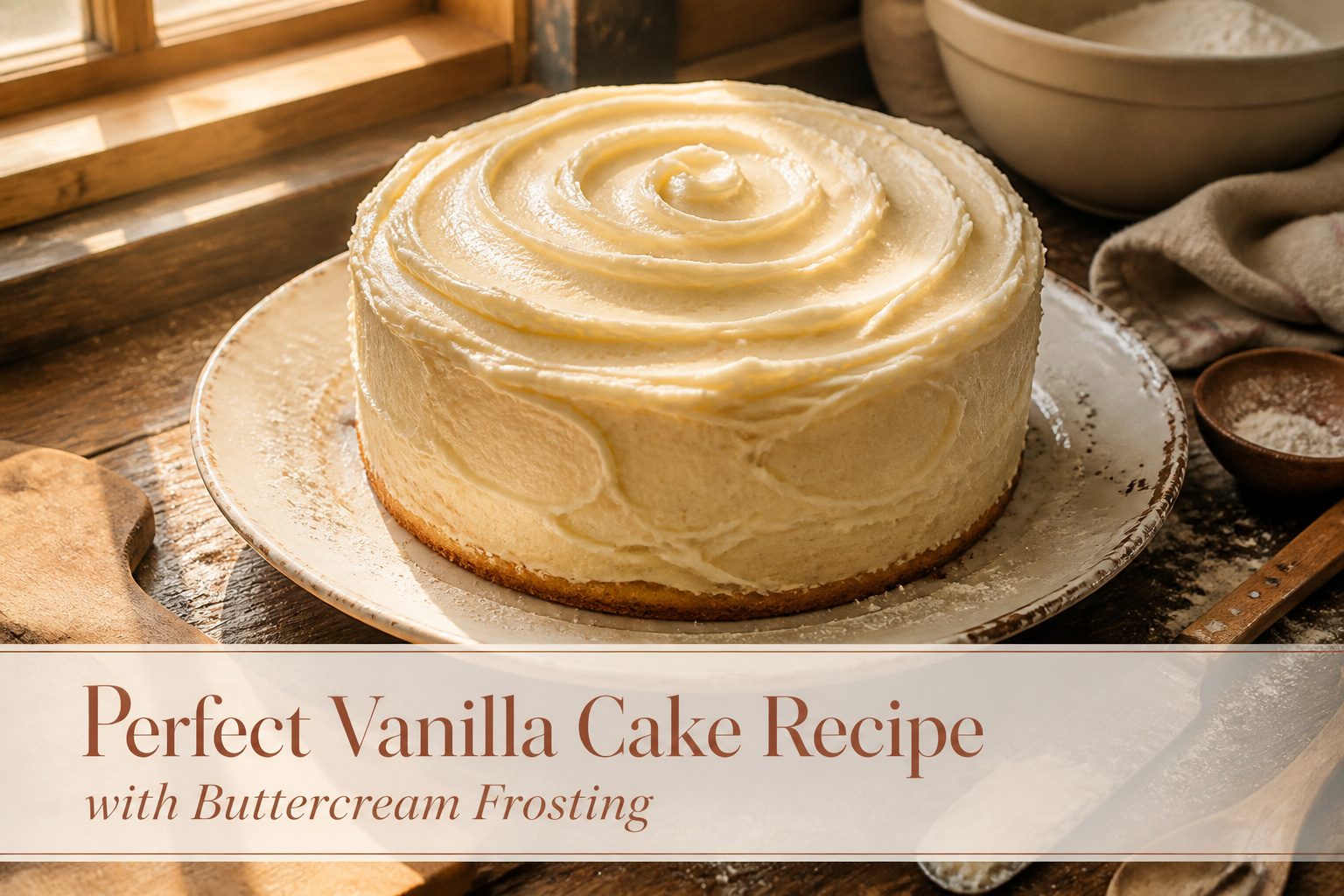
This vanilla cake bakes up tall and even with a tender, fluffy crumb that actually tastes like vanilla rather than "yellow," and it takes about an hour from mixing to cooling.
The difference is room-temperature butter and buttermilk, which emulsify properly rather than seizing into a dense, broken batter. Cold dairy straight from the fridge will sabotage the texture before the pans ever reach the oven.
Ingredients
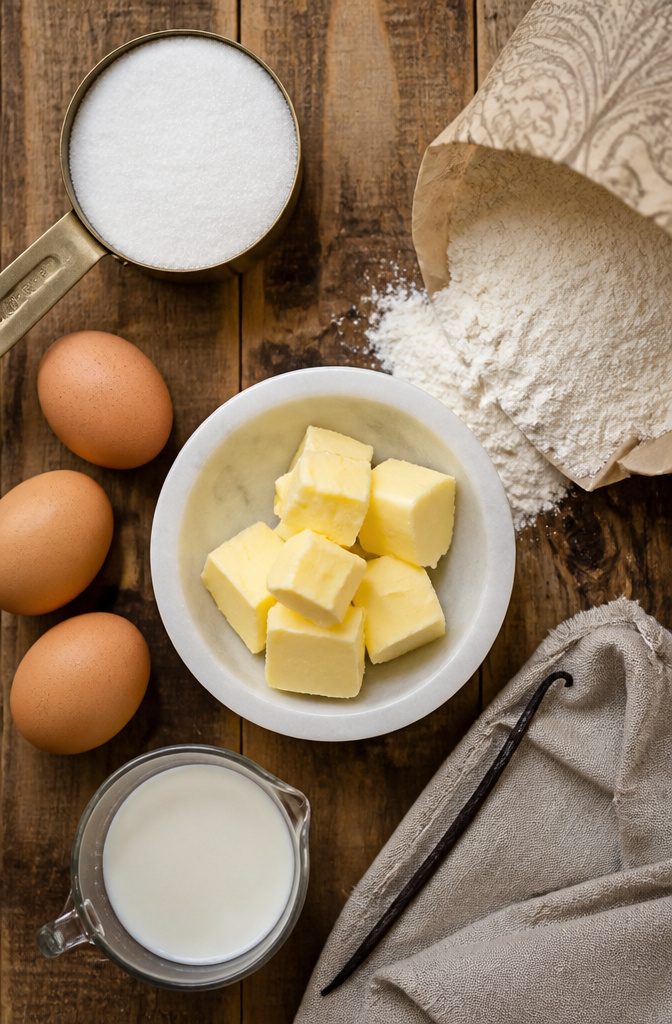
The ingredient list for this cake stays tight, and room temperature butter and buttermilk are what separate a dense crumb from one that rises tall and even. Cold dairy seizes the batter; room-temperature dairy creams and emulsifies.
For the cake:
- 1 cup unsalted butter, room temperature
- 1 1/2 cups granulated sugar
- 6 large egg whites
- 3 cups cake flour
- 1 tablespoon vanilla extract
- 1 cup buttermilk, room temperature
- 4 teaspoons baking powder
A couple of competing versions add sour cream for moisture, and I consider it optional here.
The buttermilk alone keeps the crumb tender, but 1/2 cup of sour cream stirred in buys you extra insurance if your oven runs hot or you need to bake a day ahead.
For the buttercream:
- 6 cups powdered sugar, sifted if lumpy
- 1 1/2 cups unsalted butter, softened
- 2 teaspoons vanilla extract
- 1/3 cup heavy cream, cold
Method
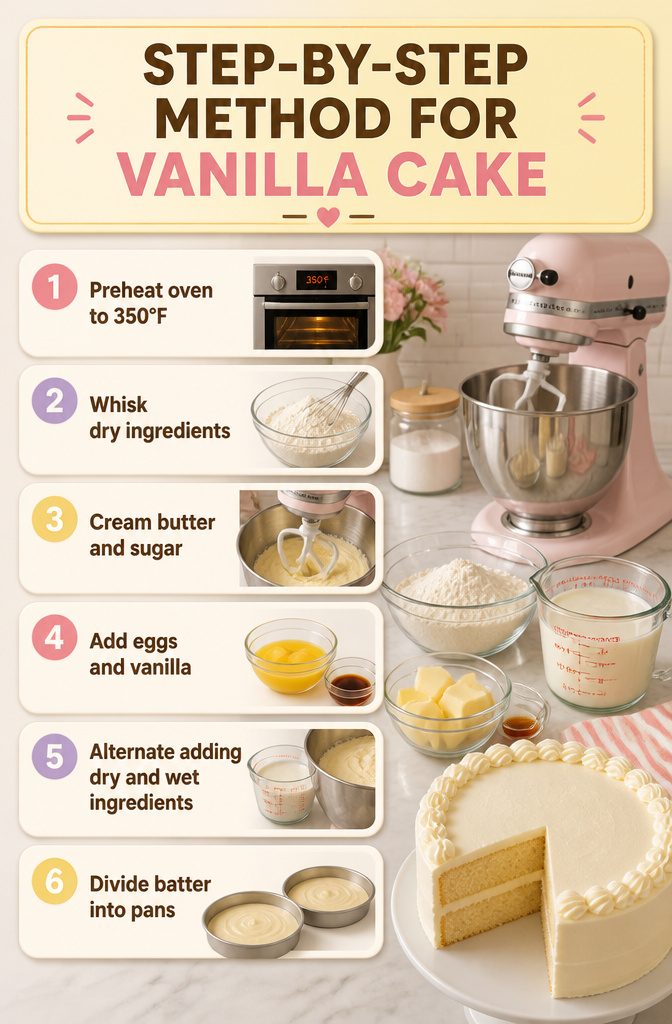
- Preheat the oven to 350°F. Grease two 9-inch round cake pans, line the bottoms with parchment circles, and grease again so nothing sticks.
- Whisk together cake flour, baking powder, baking soda, and salt in a medium bowl. I set this aside near the mixer so I don’t forget it.
- Cream butter and sugar in a stand mixer with the paddle attachment until the mixture turns light and fluffy, 3 to 5 minutes on medium-high speed. This step builds the cake’s structure; skimp on it and the crumb turns dense.
- Add eggs and vanilla, beating until fully combined. Scrape the bowl once so streaks don’t hide at the bottom.
- Alternate adding the dry ingredients and buttermilk, beginning and ending with dry. I finish the last bit by hand with a spatula to avoid overmixing, which causes tunneling in the crumb.
- Divide batter between the prepared pans. A kitchen scale makes this exact; eyeballing works if the pans sit level in your hands.
- Bake 25 to 30 minutes until a toothpick inserted in the center comes out clean or with a few moist crumbs clinging. Start checking at 25; overbaked layers dry out fast.
- Cool in pans for 10 to 15 minutes, then run a knife around the edges, flip onto a wire rack, peel off parchment, and let cool completely. Frosting a warm cake is a mistake you only make once.
- For the buttercream, beat softened butter with powdered sugar, a splash of heavy cream, and vanilla until spreadable. I add cream a tablespoon at a time; you can always loosen, never tighten.
- Frost only after the layers are fully cool. A crumb coat first, 10 minutes in the fridge, then the final layer gives the cleanest finish.
Room Temperature Ingredients
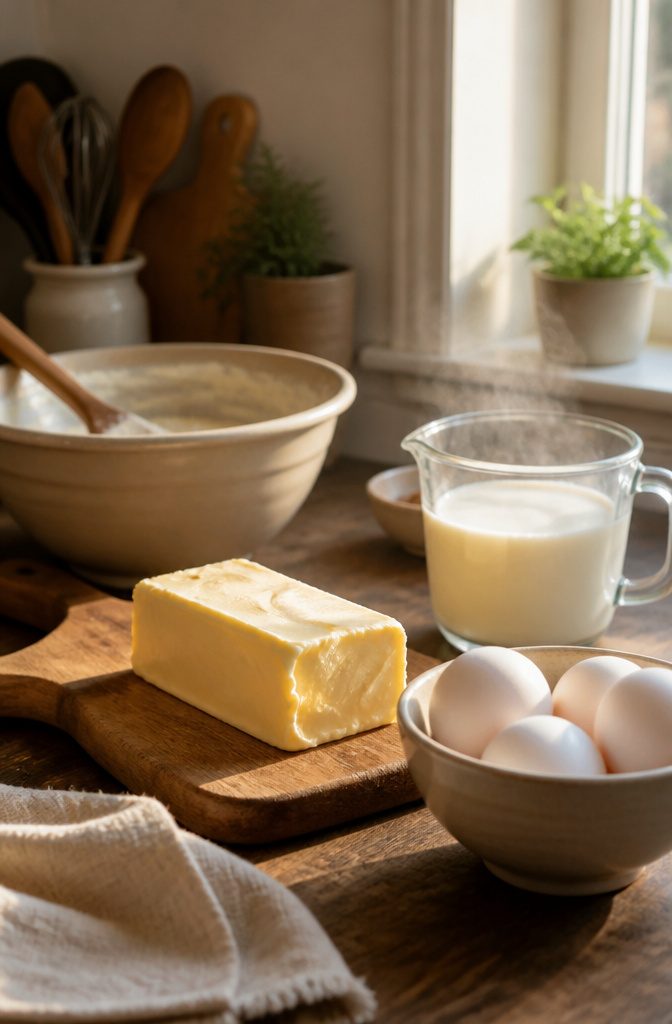
Cold butter and eggs straight from the refrigerator will sabotage a vanilla cake before it ever hits the oven.
Room temperature ingredients emulsify into a smoother batter, trap air more efficiently during creaming, and produce the fluffy, tender crumb that makes this cake worth baking in the first place.
The practical test for butter is simple: it should indent slightly when pressed, not squish or crack.
For eggs, a bowl of warm water does the work in about 30 minutes, though some cooks cut that to 5 minutes if they are truly pressed for time.
Buttermilk can be warmed in the microwave for 20 to 30 seconds until just lukewarm, which helps it blend seamlessly with the butter and sugar rather than seizing into flecks.
Skipping this step risks a broken batter and a dense, uneven crumb. The extra few minutes of patience pays off in texture you can actually see and taste.
Frosting Options
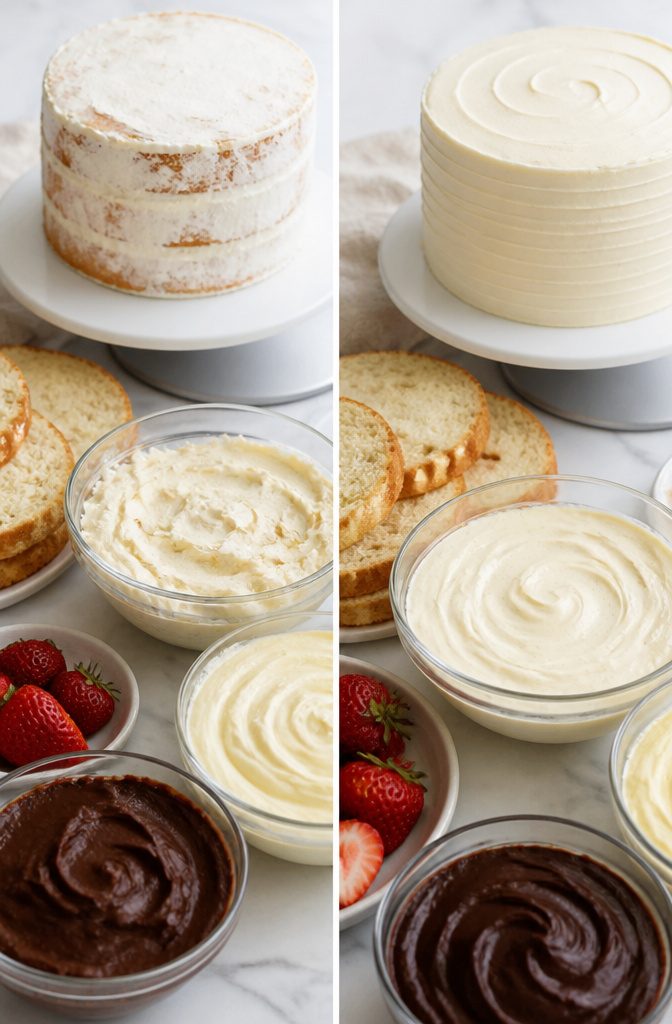
Vanilla buttercream is the standard choice for this cake, and for good reason.
It sets up firm enough to hold its shape under fondant or in a stacked tier, and the sweetness plays straight into vanilla’s mild flavor without fighting it.
The version that works here starts with slightly cold butter, gets its lift from heavy cream, and finishes with vanilla bean paste for the speckled look.
The one consistency tip that matters: if the buttercream tastes like straight butter, it has not been whipped long enough. Eight to ten minutes on high speed transforms it into something that tastes like melted ice cream and pipes clean.
Cream cheese frosting brings a tang that cuts through vanilla’s sweetness, though it limits you. A cake with cream cheese underneath fondant will soften and slump, and it can only sit out for about four hours before it needs refrigeration.
The refrigerator dries cake out fast, so this option works best for a same-day serve with no fondant.
Ganache is the third route, and it trades in intensity. The chocolate dominates more than it supports, which makes it a better fit for a chocolate cake or a vanilla cake that needs to read as dessert rather than celebration.
If you go this route, pour it at the right temperature: too warm and it runs off the sides, too cool and it sets before it smooths.
Storage
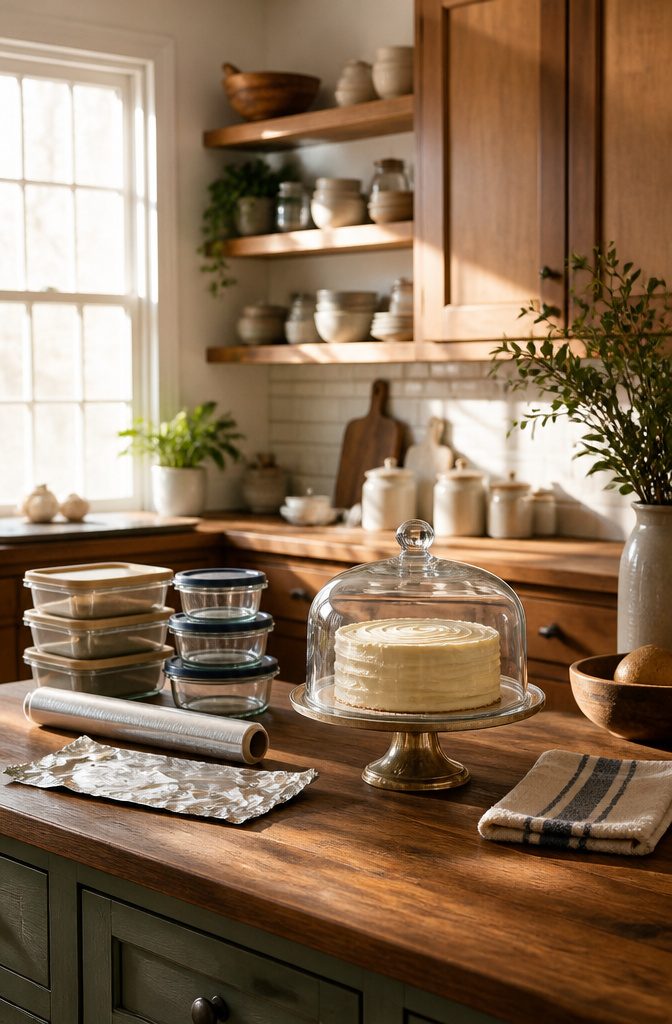
A frosted vanilla cake keeps best in an airtight container at room temperature for up to 2 days.
If your kitchen runs warm or you need more time, the refrigerator extends that to 4 days, though the buttercream firms up and the crumb tightens in the cold.
I always pull the cake out 30 minutes before slicing so the frosting softens and the texture comes back.
For anything longer, unfrosted layers are the way to go. Wrap them well in plastic, add a layer of foil to block freezer burn, and freeze.
They hold for months and thaw overnight in the refrigerator, ready to frost the next day. The 30-minute counter rest is the detail that saves a refrigerated cake from tasting like leftovers.
Common Mistakes
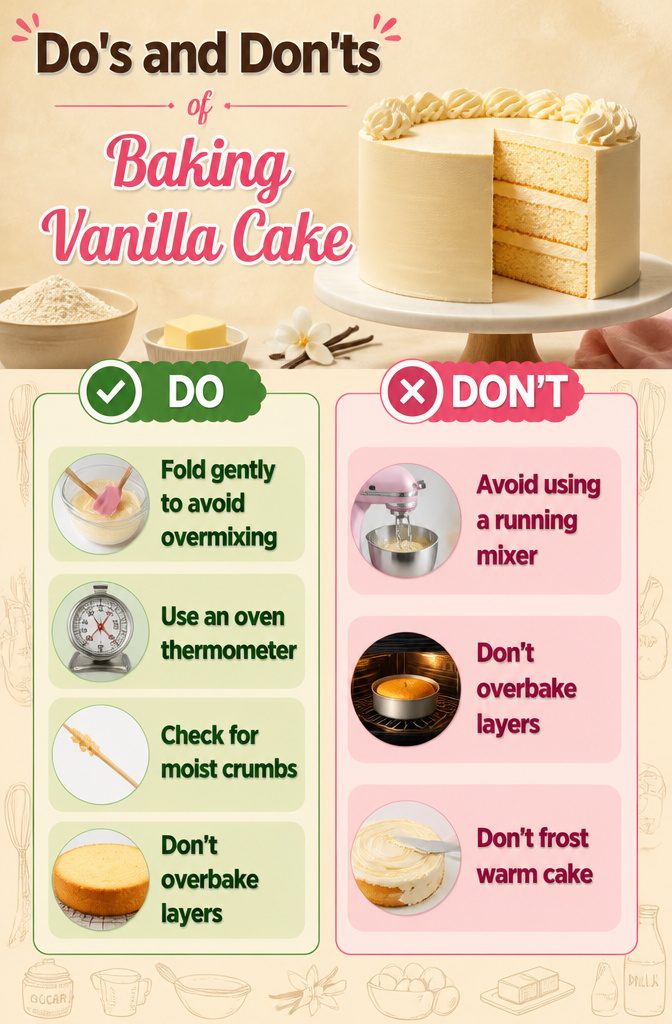
Overmixing once the flour goes in is the fastest way to turn a tender vanilla cake into something closer to sandwich bread. The moment you add flour, gluten development starts, and continued beating turns the batter elastic rather than soft.
I fold just until the streaks disappear, then I stop. The spatula matters here; a metal spoon or rubber spatula keeps the motion gentle in a way a running mixer never will.
An oven thermometer is non-negotiable if you bake more than twice a year. Home ovens run off by twenty or even thirty degrees, and that gap costs you rise, moisture, or both.
I hang a cheap dial thermometer on my center rack and check it every few months. The five dollars beats guessing why the cake domed or sank.
For doneness, a toothpick pulled out clean means you have already gone too far. A few moist crumbs clinging to the wood is the real cue; the carryover heat finishes the job while the cake rests.
Overbaking dries the crumb past what any syrup soak can fix, and with buttercream waiting, a dry layer only drinks up the frosting and turns pasty.
I set my timer for five minutes under the stated range and start testing there.
Flavor Variations
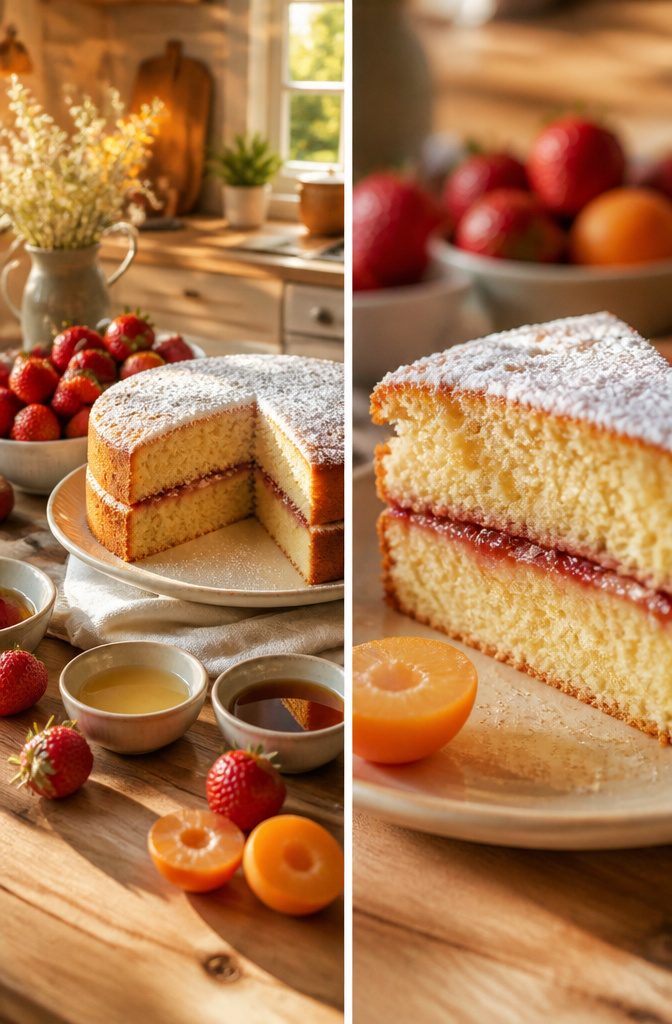
This base vanilla cake takes additions without fighting them.
A thin layer of raspberry or apricot jam between layers adds tartness that cuts the buttercream’s sweetness; pipe a frosting dam around each layer’s edge first, or the filling slides and the cake shifts.
Fresh strawberries or peaches work the same way, though I find they weep slightly if the cake sits more than a day.
For a brighter cake, swap half the vanilla extract for almond or lemon extract; the full amount of either overpowers the crumb.
A vanilla syrup soak after baking, brushed on while the layers are still warm, buys extra moisture without changing the texture.
The simplest version comes from simmering a vanilla pod or vanilla bean paste with sugar and water. Good-quality vanilla extract matters here, and anything labeled "essence" or "flavoring" tastes thin by comparison.
It is worth paying a little extra to buy good quality vanilla extract and avoid anything that says vanilla essence or flavouring, as the flavour is much deeper from real vanilla pods.
That deeper flavor is the difference between a cake that reads as vanilla and one that reads as "yellow."
Decorating Tips
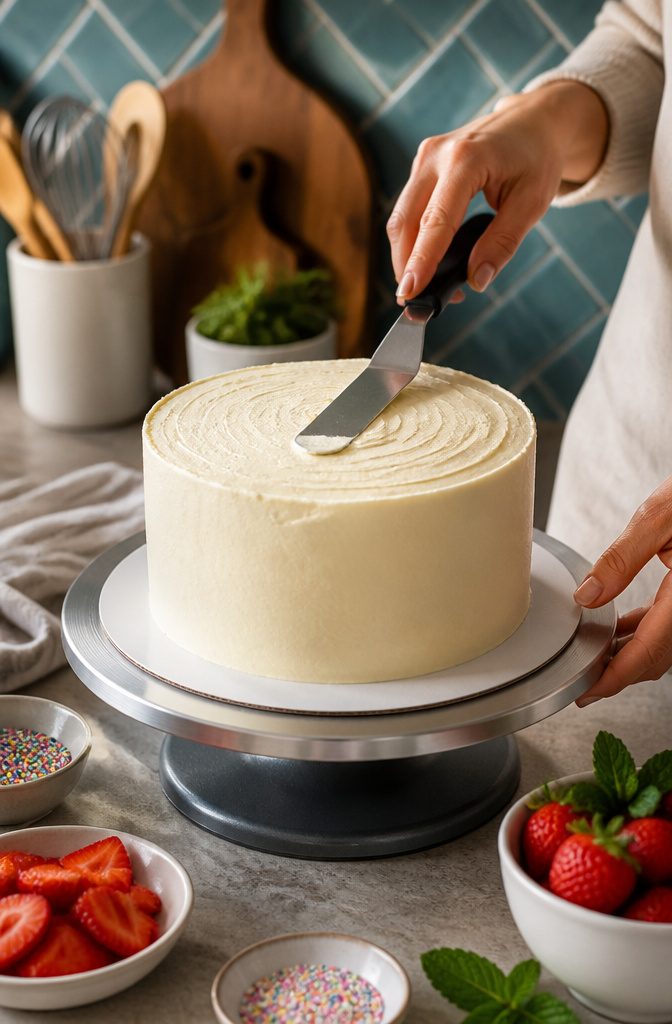
A straight-sided spatula, the kind with a flat edge and no curve, is the one tool that changes how smooth your buttercream looks.
Run it under hot water, wipe it dry, and pull it across the frosting in long strokes. The heat softens the buttercream just enough to fill the gaps.
A rotating cake stand is the only specialty purchase I would push for.
It does not have to be expensive; the cheap plastic ones turn just fine. Being able to spin the cake while your hand stays still saves you from the arm-twisting that produces wobbly sides.
Fresh fruit or sprinkles finish the job without any piping at all. A ring of sliced strawberries around the base, or a handful of confetti sprinkles pressed into the sides while the buttercream is still soft, reads as intentional.
Skip the Wilton 1M tip and buttercream roses. Neat edges and a level top signal that this cake was made with care, not bought from a case.
Frequently Asked Questions
How do I store my vanilla cake?
A frosted vanilla cake stays freshest in an airtight container at room temperature for up to 2 days.
If your kitchen runs warm or you need more time, refrigerate it for up to 4 days, but let it sit out for 30 minutes before slicing so the buttercream softens and the crumb relaxes.
For longer storage, wrap unfrosted layers in plastic and foil, then freeze; they thaw overnight in the refrigerator and taste fresh months later.
What is the trick to a moist cake?
Get the ingredient ratio right and pull the cake from the oven before it dries out. Room temperature butter and buttermilk emulsify into a batter that traps air and rises tall, while an oven thermometer guards against overbaking.
A toothpick with a few moist crumbs, not bone dry, is your real cue for doneness; carryover heat finishes the job as the layer cools.
Can I use sour cream in my vanilla cake?
Yes, sour cream adds extra moisture insurance, especially if your oven runs hot or you are baking a day ahead.
The buttermilk in this recipe already keeps the crumb tender, but stirring in 1/2 cup of sour cream buys you more room for error. Treat it as optional, not required; the base cake stands on its own without it.