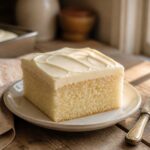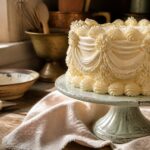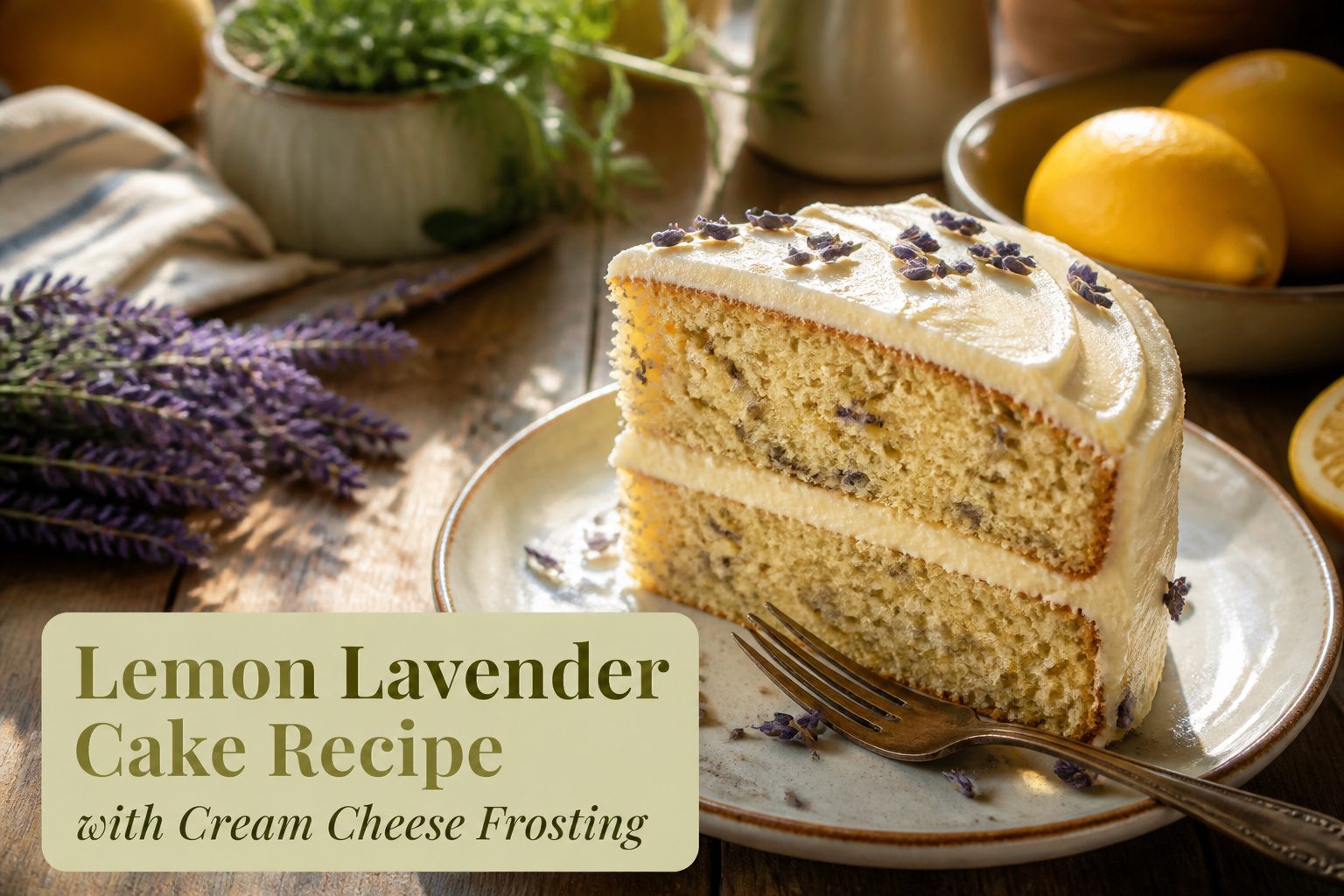
This lemon lavender cake tastes like a grown-up birthday: floral and aromatic from steeped culinary-grade lavender, but kept grounded by lemon zest and vanilla in a soft, moist buttermilk crumb.
The one detail that trips people up is also what makes it work: decorative lavender buds, the kind sold for sachets, turn bitter or soapy once baked.
Only food-safe culinary lavender survives the heat, and the 10 to 15 minute steeping step in warm milk is what carries that flavor through both cake and cream cheese frosting.
Total time runs about 3 hours and 15 minutes for 12 to 15 slices, enough for a small gathering without a week of leftovers.
What Lavender Cake Tastes Like and When to Make It
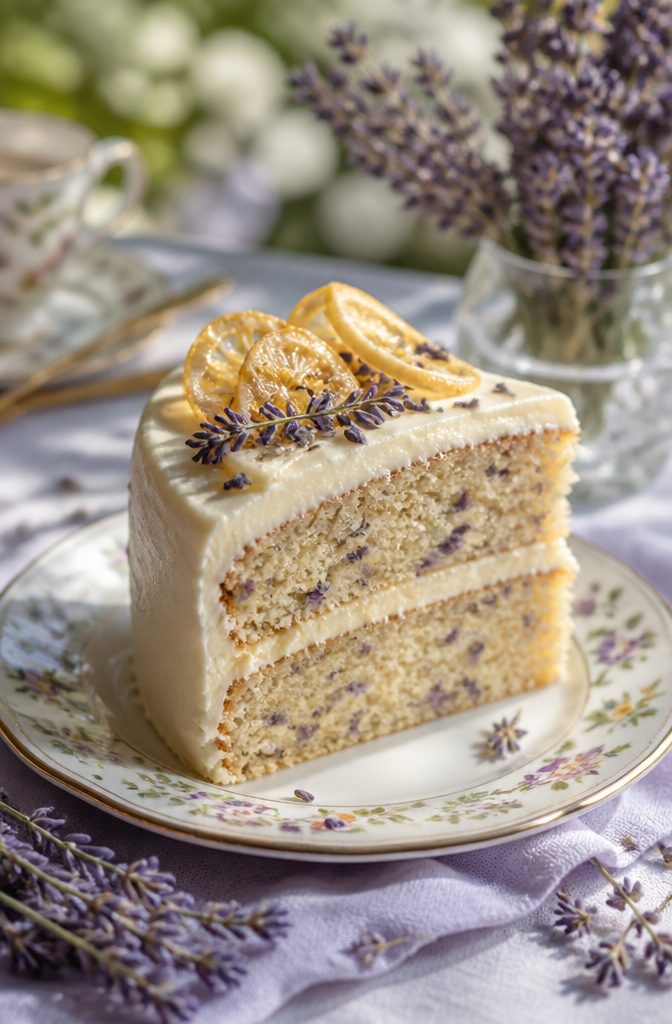
A happy birthday lavender cake should read as special without feeling fussy, and the flavor is what makes that call.
The floral note is aromatic and earthy, but it never overpowers; lemon zest and vanilla keep it grounded in familiar birthday-cake territory.
The balance depends entirely on culinary-grade lavender, not the decorative buds sold for sachets. Decorative lavender is treated with oils or chemicals that taste bitter or soapy once heated, so the steeping step only works with food-safe buds.
I think of this as a cake for a grown-up birthday or a spring afternoon party, not a child’s superhero theme.
The total time runs about 3 hours and 15 minutes, and it yields 12 to 15 slices, which is enough for a small gathering without leaving you with half a cake in the refrigerator for a week.
The texture is soft and moist from the buttermilk and oil combination, closer to a bakery layer cake than a dense butter cake.
If you want showstopper decoration without fondant work, the candied lemon slices and piped buttercream swirls do the lifting.
Ingredients
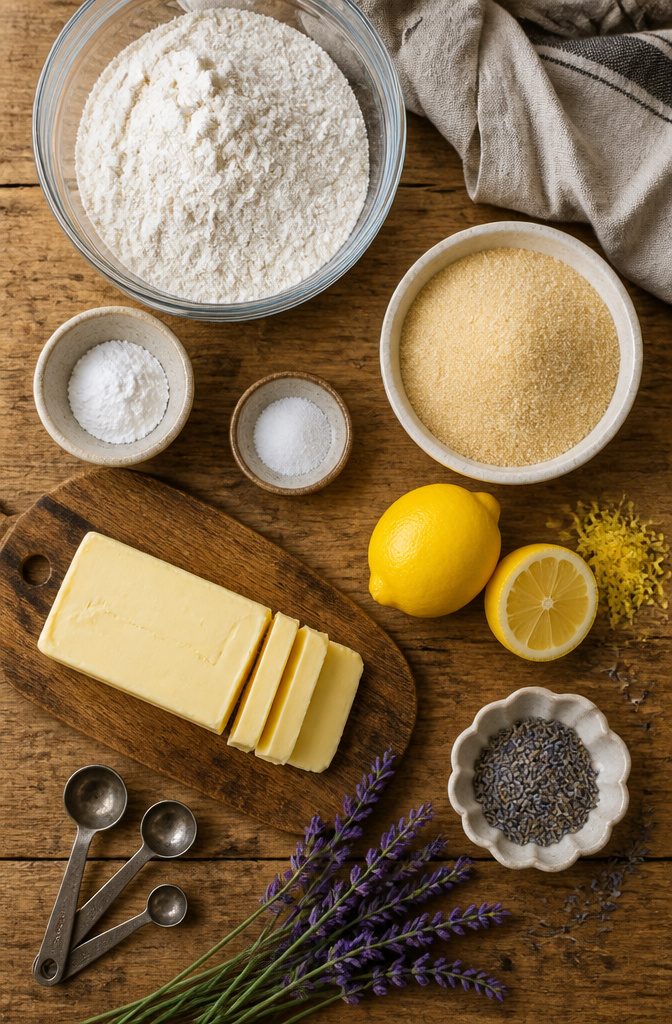
Cake flour gives this layer cake its tender crumb, and 2 1/2 cups (265g), sifted, is the amount that works.
I pair that with 1 tablespoon baking powder and 1/2 teaspoon salt. Granulated sugar comes in at 1 1/2 cups (300g).
For the fat, I use two kinds: 1/2 cup (113g) unsalted butter at room temperature, plus 1/2 cup (120ml) vegetable oil. The oil keeps the crumb moist where butter alone can dry out.
Two tablespoons (8g) of dried culinary lavender go into the milk for steeping; whole milk or almond milk both work here. You’ll also need eggs, fresh lemon juice and zest, and vanilla extract.
For the cream cheese frosting:
- 1 1/2 cups (339g) unsalted butter, room temperature
- 5 1/4 cups (630g) powdered sugar
- 2 teaspoons pure vanilla extract
- The strained lavender milk
- A squeeze of lemon juice
Vegan butter substitutes cleanly for the dairy butter if you need it. The lavender milk is the detail that separates this frosting from standard cream cheese, so don’t skip the steeping step.
Method
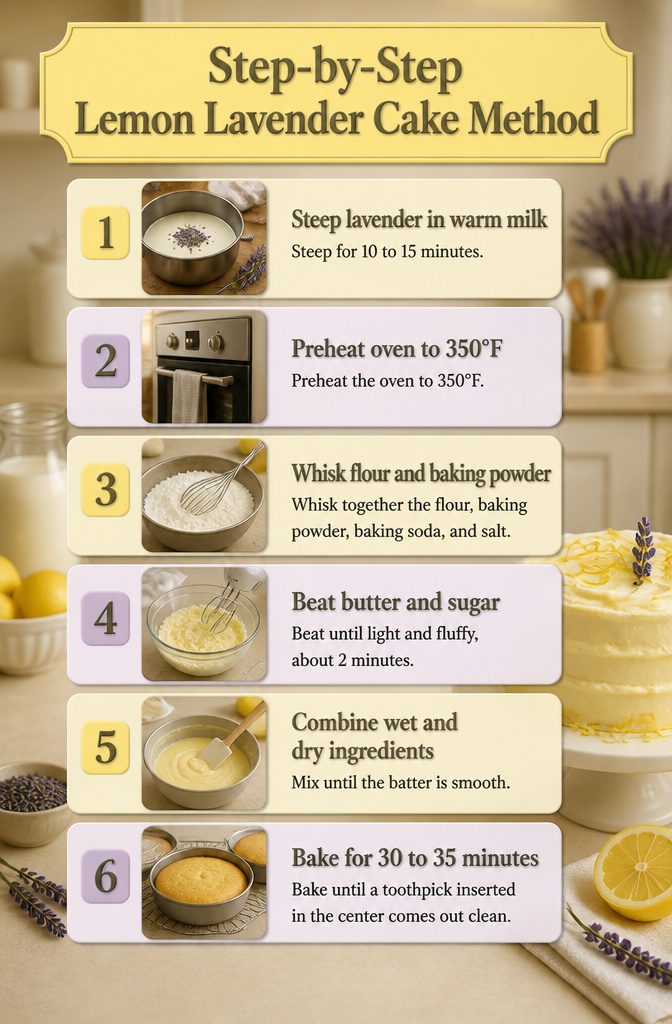
- Heat the milk until very warm but not boiling, then steep the culinary lavender for 10 to 15 minutes. Strain out the lavender and set the infused milk aside.
- Preheat the oven to 350°F. Line two 9-inch cake pans with parchment circles, grease the pans and parchment, and dust lightly with flour.
- Whisk together the flour, baking powder, baking soda, and salt in a bowl.
- Beat the butter and sugar on medium speed until the mixture turns light and fluffy, about 2 minutes.
- Add the lavender milk (reserve 2 tablespoons for the frosting), lemon juice, lemon zest, and vanilla to the butter-sugar mixture. Beat until combined.
- Mix in the dry ingredients until the batter is smooth. Divide it evenly between the two prepared pans.
- Bake for 30 to 35 minutes, until a toothpick inserted in the center comes out clean.
- Cool the cakes in their pans for 15 minutes, then run a knife around the edges, flip them onto a wire rack, and let them cool completely.
- For the frosting, beat the butter until creamy, then add the reserved lavender milk, lemon juice, and powdered sugar. Beat until smooth and spreadable.
- Assemble the cake by spreading frosting between the layers, then over the top and sides. Decorate as you like.
Lemon and Lavender as a Pair
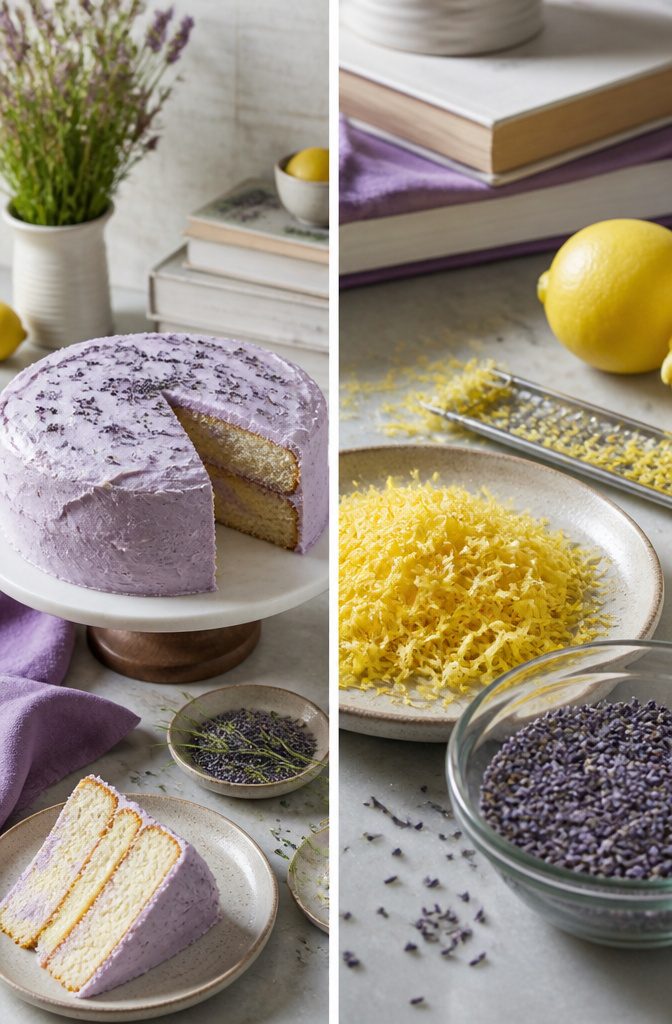
Lemon juice and zest show up in nearly every reliable lavender cake for a reason. The bright citrus cuts through lavender’s floral weight so the cake tastes fresh rather than soapy.
Without it, the lavender reads as perfume, not food. Vanilla plays a supporting role here too, rounding the edges so neither note dominates.
Skip the lemon and you risk the soapy, medicinal note that puts people off floral desserts. The balance is structural, not decorative.
Freshly squeezed juice and zest from the same fruit give the truest flavor, and the extra step is worth it. Culinary lavender brewed into milk carries the base note, but lemon is what keeps the whole thing edible.
Butter and Milk Options
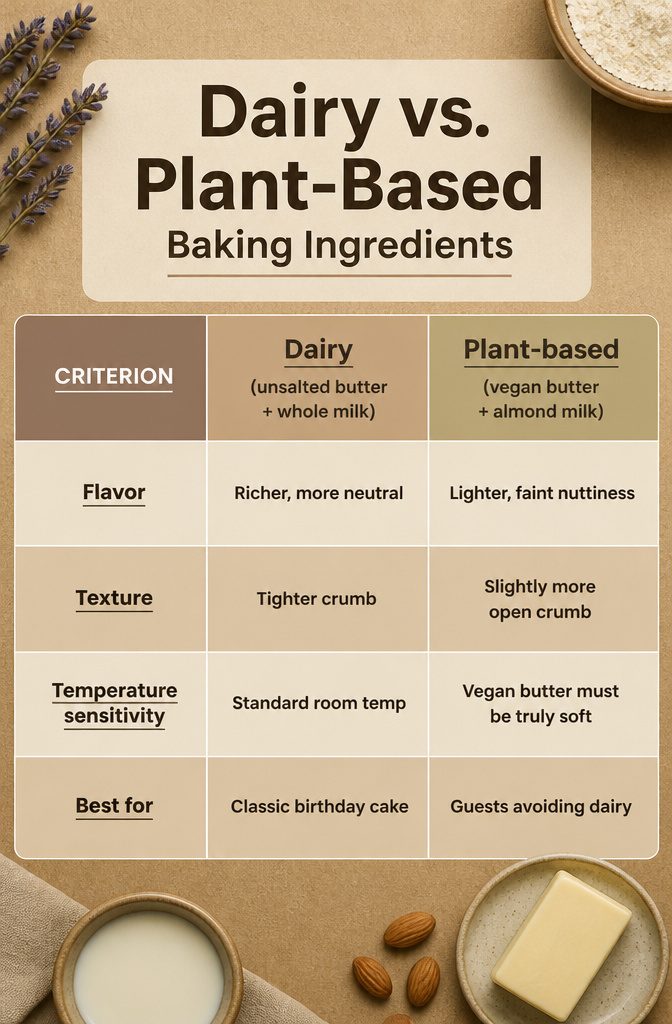
Regular unsalted butter with whole milk gives the crumb more richness and a tighter structure, while vegan butter with almond milk keeps the cake lighter and adds a faint nuttiness that some people find works well with lavender.
Both paths work without any specialty equipment.
| Dairy (unsalted butter + whole milk) | Plant-based (vegan butter + almond milk) | |
|---|---|---|
| Flavor | Richer, more neutral | Lighter, faint nuttiness |
| Texture | Tighter crumb | Slightly more open crumb |
| Temperature sensitivity | Standard room temp | Vegan butter must be truly soft to cream properly |
| Best for | Classic birthday cake | Guests avoiding dairy |
The vegan butter creams differently than dairy butter, so give it more time at room temperature before you start. Cold vegan butter will never fully aerate, and the batter stays dense.
If you are deciding between the two for a happy birthday lavender cake, the dairy version wins for a traditional celebration cake with cream cheese frosting, while the almond milk version suits a spring afternoon gathering where you want the lavender to read more floral than creamy.
Frosting Choices
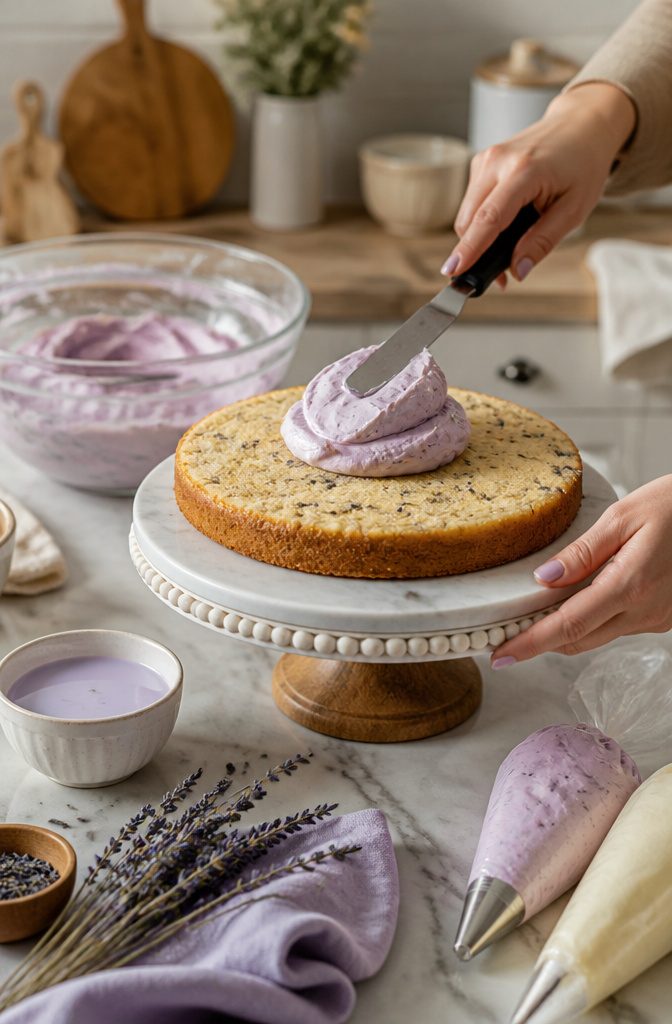
For a happy birthday lavender cake, the frosting choice comes down to American buttercream versus Italian meringue buttercream.
American buttercream comes together in minutes with butter, confectioners’ sugar, and your lavender infusion. The fat in butter carries lavender’s floral notes directly, so the flavor reads clean and true without competing elements.
Italian meringue buttercream demands a candy thermometer, hot sugar syrup drizzled into whipping egg whites, and a stand mixer running the whole time.
The result is undeniably silkier and far less sweet, which some palates prefer. More bowls, more cleanup, and a texture so soft that intricate piping holds its shape for hours at best: the cost is real.
For a weeknight birthday, American buttercream wins on time and equipment. You need it smooth enough to spread without tearing the cake crumb, stiff enough that a simple shell border or buttercream roses hold through candles and singing.
Beat until the paddle leaves distinct tracks that slowly relax, about three minutes on medium speed. That middle ground, spreadable but structured, is what lets you finish the cake after dinner and still serve it at eight.
Doneness and Decoration
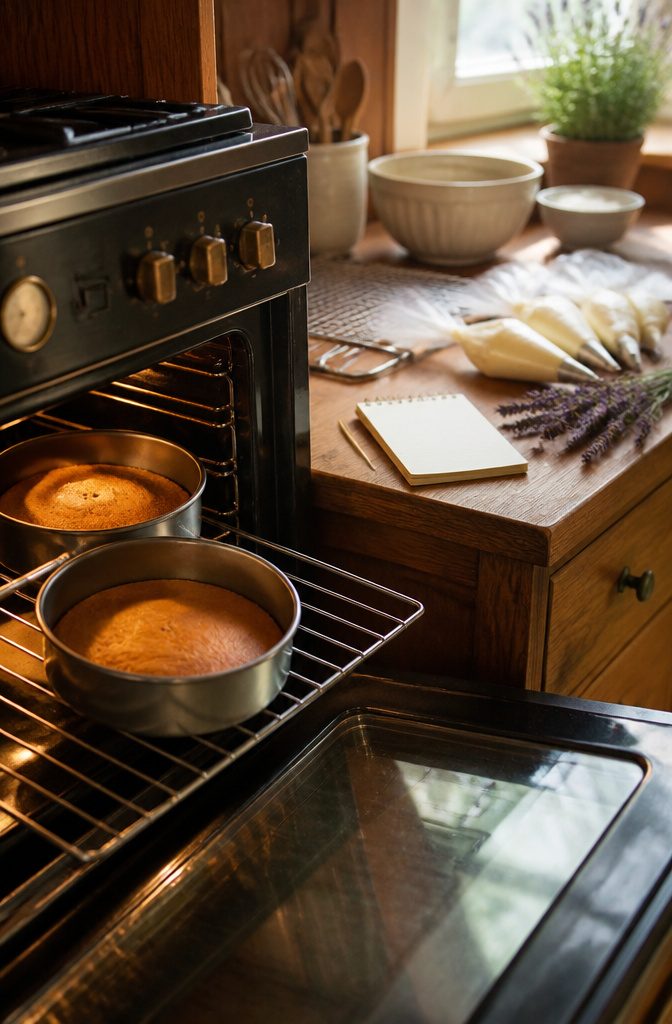
The toothpick test at 30–35 minutes is the main cue for doneness, though I also watch for the edges pulling slightly from the pan and the top springing back when I press it gently.
Those visual signs keep me from opening the oven more than once.
For decoration, ombre effects and piped flowers are options some bakers reach for, but I find a simple offset-spread of cream cheese frosting with fresh lavender sprigs reads as intentional rather than unfinished.
The lavender must be culinary-grade, not decorative or sprayed. Food coloring is optional; the pale yellow crumb and white frosting already carry the color story without it.
Storage and Make-Ahead
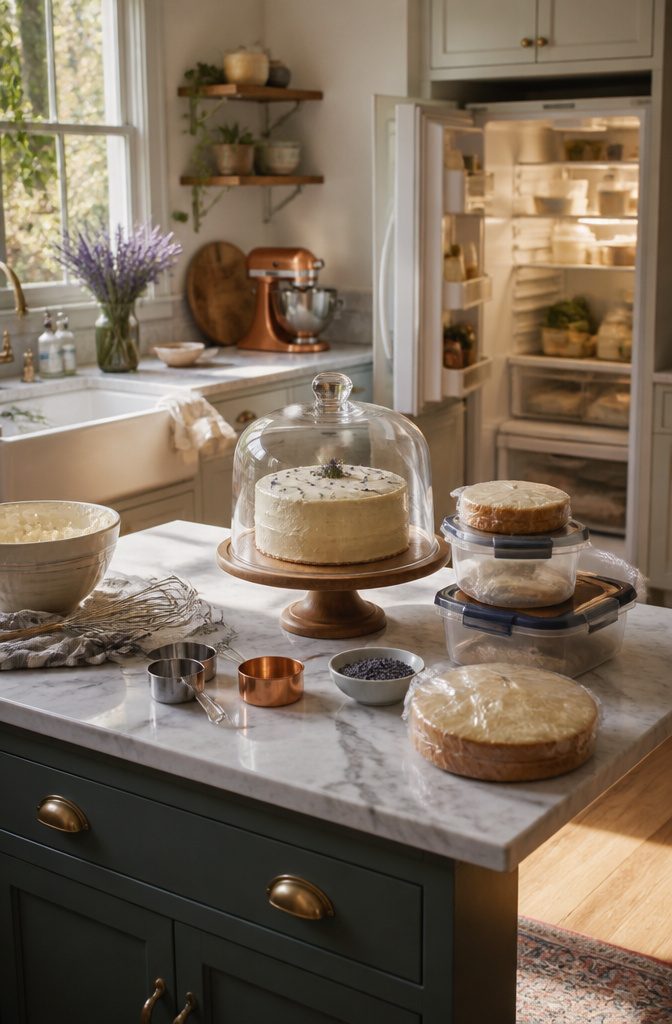
Baking the layers a day ahead works well.
I wrap them tightly once they are fully cool and leave them at room temperature. The cream cheese frosting can be made the night before and refrigerated, but it needs a good stir to loosen before spreading.
I assemble the cake the day I plan to serve it. Clean slices come easier when the frosting has not set against plastic wrap or a cake dome for hours.
A fully frosted cake holds 2 to 3 days at room temperature under a dome or in a cake keeper. The refrigerator extends that, though the cold mutes the lavender scent some.
I notice the difference most in the first bite; it comes back as the slice warms. For a birthday, I would rather serve it fresh and store any leftovers after the candles are out.
Frequently Asked Questions
What does lavender cake taste like?
Lavender cake tastes floral and aromatic, but the flavor stays gentle rather than overpowering.
Lemon zest and vanilla keep it grounded in familiar birthday-cake territory, so it reads as special without feeling fussy. Culinary-grade lavender is what you want; decorative buds turn bitter or soapy once heated.
What flavors does lavender go with?
Lavender pairs best with lemon, vanilla, and tea.
Lemon juice and zest cut through lavender’s floral weight so the cake tastes fresh rather than soapy. Vanilla rounds the edges so neither note dominates, and some bakers also infuse black tea into the milk for extra depth.
How do you make lavender milk?
Heat milk until very warm but not boiling, then steep dried culinary lavender for 10 to 15 minutes.
Strain out the buds and use the infused milk in both the cake batter and the frosting. Whole milk and almond milk both work; the steeping step is what carries the true lavender flavor through the whole cake.