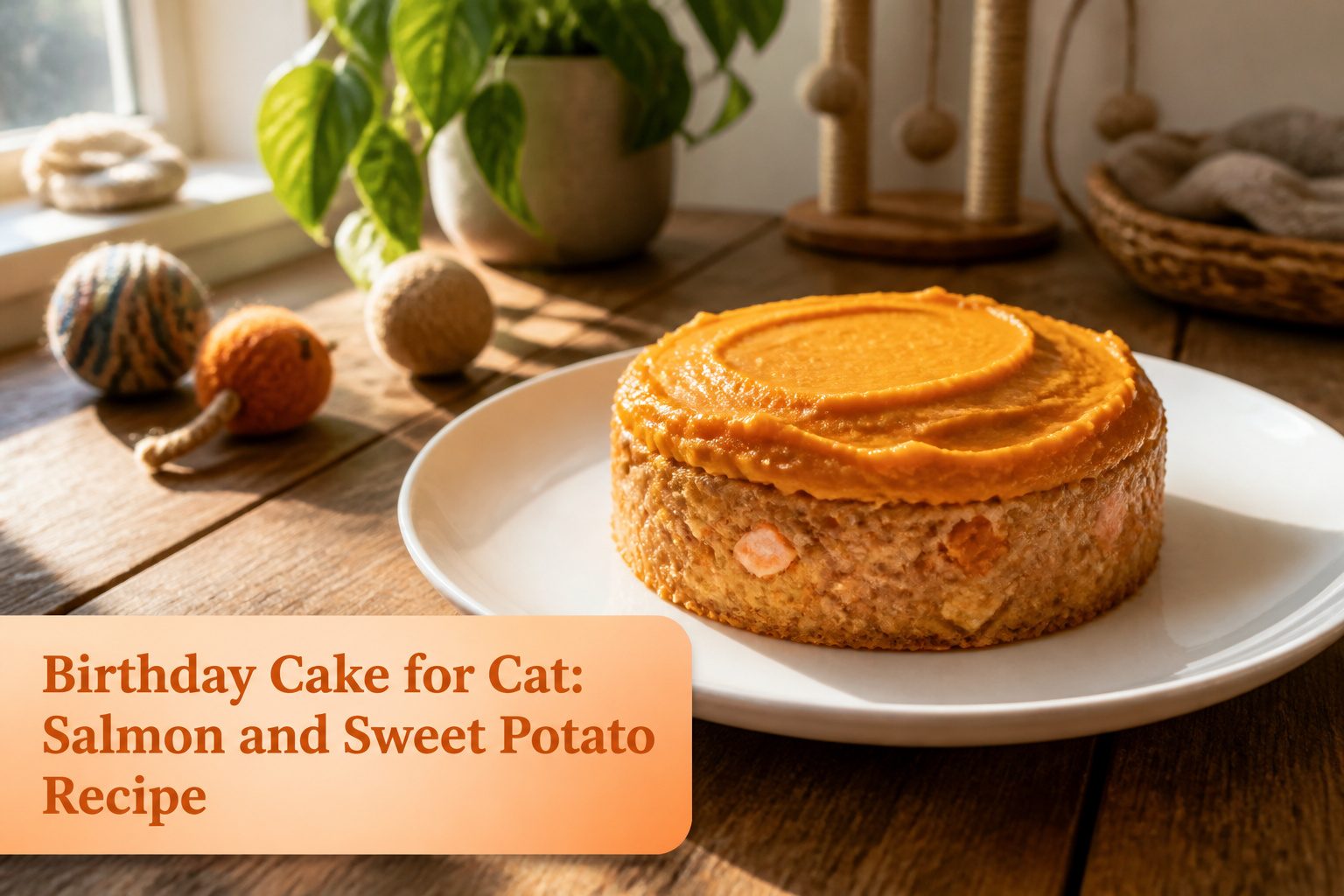
This salmon and sweet potato cat cake bakes in eight minutes flat, which matters because you can remember the birthday at breakfast and still serve something warm by dinner.
The oven rule is the part that trips people up. Microwaves restructure fat molecules in ways a cat cannot digest, so the shortcut is off the table even if it is faster.
One 5-ounce can of chicken, one egg, and a quarter cup of pumpkin for frosting. That is the entire ingredient list, and every grain, sugar, and seasoning stays in the cupboard where it belongs.
What This Is and When to Make It
A birthday cake for cat celebrations is a small baked treat, not a meal replacement, meant for a birthday or adoption day.
This one comes together with grocery-store ingredients in under 20 minutes start to finish, which matters when you remember the occasion the morning of.
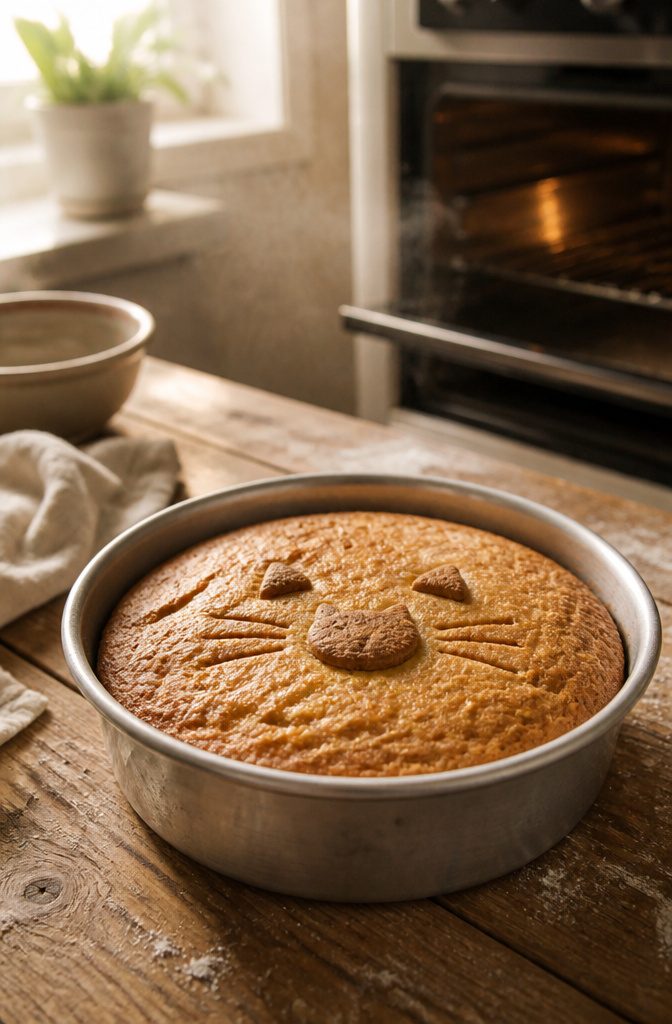
The oven goes to 425°F, and the pan sits inside for eight minutes. That speed is the practical reason this recipe works for a weeknight-level celebration instead of a weekend project.
Do not microwave. Microwaves affect fat molecules in food, making them harmful for cats to ingest.
That rule from Taste of Home is worth following precisely.
The oven path is already fast, and the microwave shortcut carries a specific risk to the fat structure that a cat’s digestion won’t handle. Eight minutes of baking buys safety without costing time.
Ingredients
A cat cake needs restraint more than creativity. Their bodies do not process salt, oil, sugar, flour, or seasonings the way ours do, so leave all of it out.
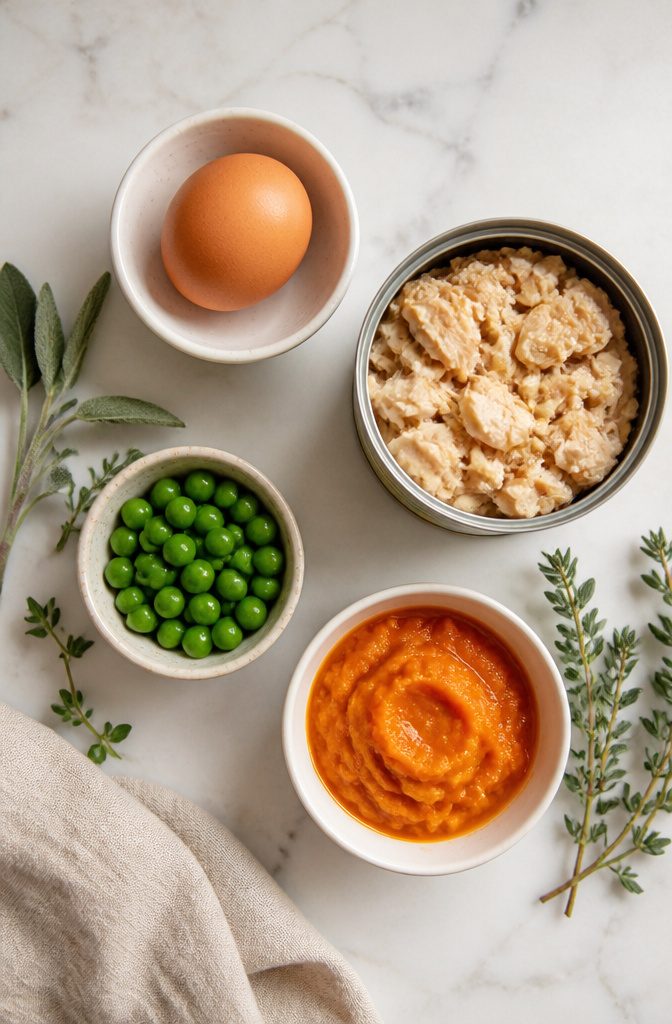
Here is what goes in:
- 1 small egg
- 1 can (5 oz) cooked chicken breast, drained
- 1/4 cup plain pumpkin puree (this is for frosting, not the batter)
- 2 tablespoons green peas, optional
The chicken provides the structure. The egg binds it.
The pumpkin spreads on top after baking for color and moisture. Peas add visual interest if your cat already accepts them, though plenty of cats will pick around them.
Method
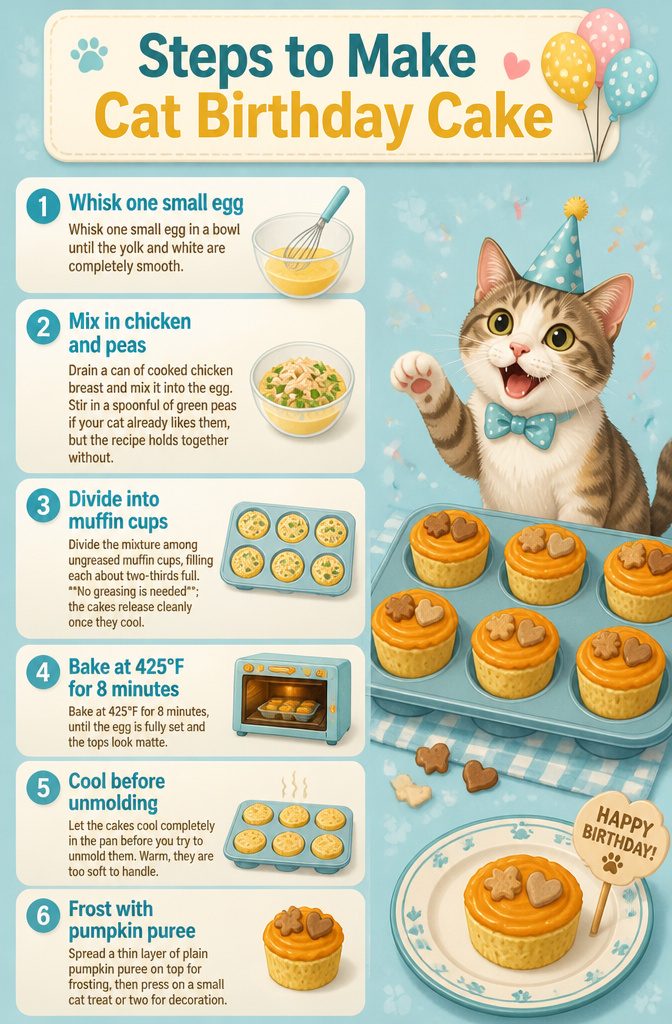
- Whisk one small egg in a bowl until the yolk and white are completely smooth. A fork works fine if you do not keep a small whisk.
- Drain a can of cooked chicken breast and mix it into the egg. Stir in a spoonful of green peas if your cat already likes them, but the recipe holds together without.
- Divide the mixture among ungreased muffin cups, filling each about two-thirds full. No greasing is needed; the cakes release cleanly once they cool.
- Bake at 425°F for 8 minutes, until the egg is fully set and the tops look matte.
- Let the cakes cool completely in the pan before you try to unmold them. Warm, they are too soft to handle.
- Spread a thin layer of plain pumpkin puree on top for frosting, then press on a small cat treat or two for decoration.
- Serve right away, or chill briefly if you want the puree to firm up for a cleaner slice.
Yield and Storage
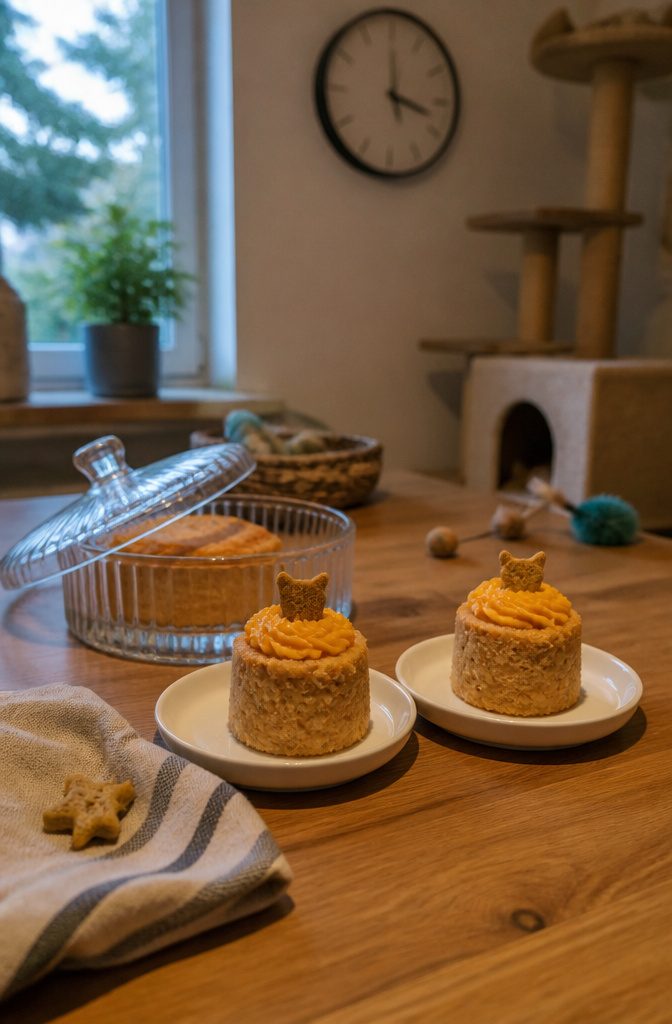
This batch makes 2–3 small cakes, enough for a single birthday plus leftovers or a multi-cat household. I portion one cake per cat; the salmon and sweet potato base is rich, and a whole cake is plenty for a celebration meal.
Refrigerate any uneaten cakes promptly and use them within 2 days. The cooked egg in the binding does not hold up to freezing; the texture turns rubbery once thawed, and most cats will refuse it.
If you do save one, mark the container with the date. Two days passes quickly, and salmon left too long is not worth the risk.
Substitutions and Variations
A few swaps keep this cake workable when the pantry doesn’t cooperate.
- Tuna stands in for chicken at a straight one-to-one swap; just drain it well and check the label for added oils.
- Sweet potato puree replaces pumpkin puree with no measurement change. The flavor shifts slightly earthier, but the moisture stays the same.
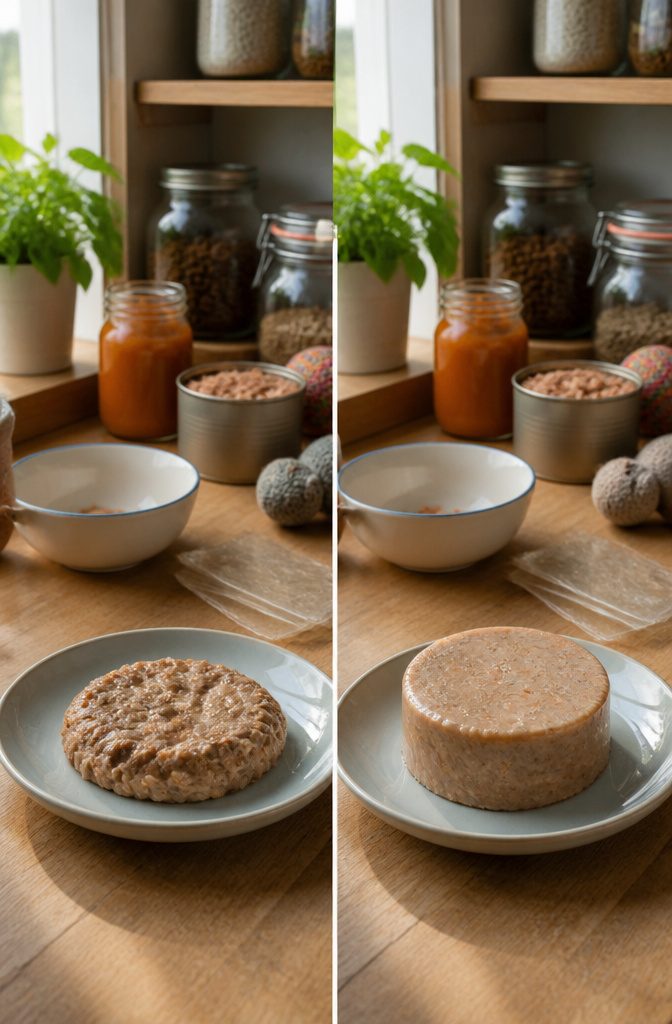
- Salmon works beautifully as the set protein: one 200g (7 oz) tin of fish in spring water, bound with one sheet of gelatin leaf bloomed first in water. Press it into a small jelly mold and chill until firm.
- For a no-bake version, pulse 1 1/2 cups dry cat food with 1/4 cup peanut butter and 1/4 cup pumpkin puree until it clumps like coarse crumbs. Press into a mold and chill 4 hours. One sheet of gelatin leaf, bloomed in water first, helps it hold shape for slicing.
- Grain-free is automatic here: no flour means no grains, full stop. That makes this an easy fit for cats on restricted diets without any extra substitution work.
Healthy Ingredients
Cats are obligate carnivores, which means their digestive systems never evolved to process carbohydrates. A real birthday cake for a cat skips flour, sugar, and baking powder entirely, since those ingredients offer no nutritional value and can cause real harm.
Chocolate and vanilla are outright toxic to cats, and even small amounts warrant a call to the vet.
The safe approach leans on what cats actually need.
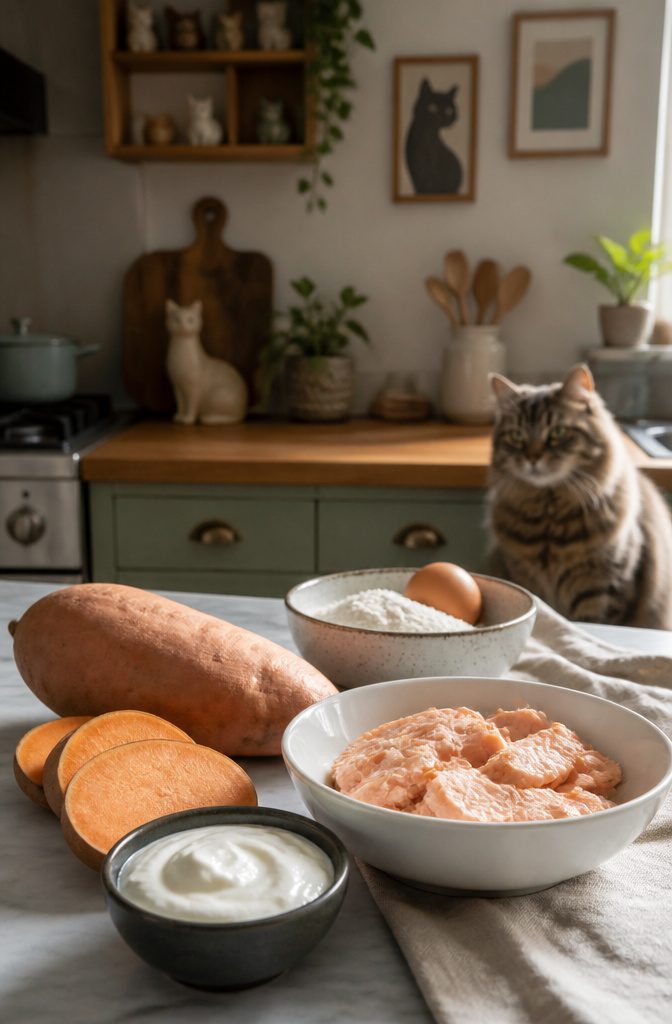
Egg provides complete protein in a form they digest easily. Salmon or chicken delivers the amino acids, particularly taurine, that cats cannot synthesize on their own.
Sweet potato or plain pumpkin adds moisture and fiber to bind the cake without grains, though the vegetable portion should stay modest, a quarter cup at most, so the protein remains the point.
Some recipes swap tuna for chicken, and that works if the tuna is packed in water with no added oils or seasonings. Keep every ingredient recognizable from the grocery store and skip anything from the baking aisle.
Moderation
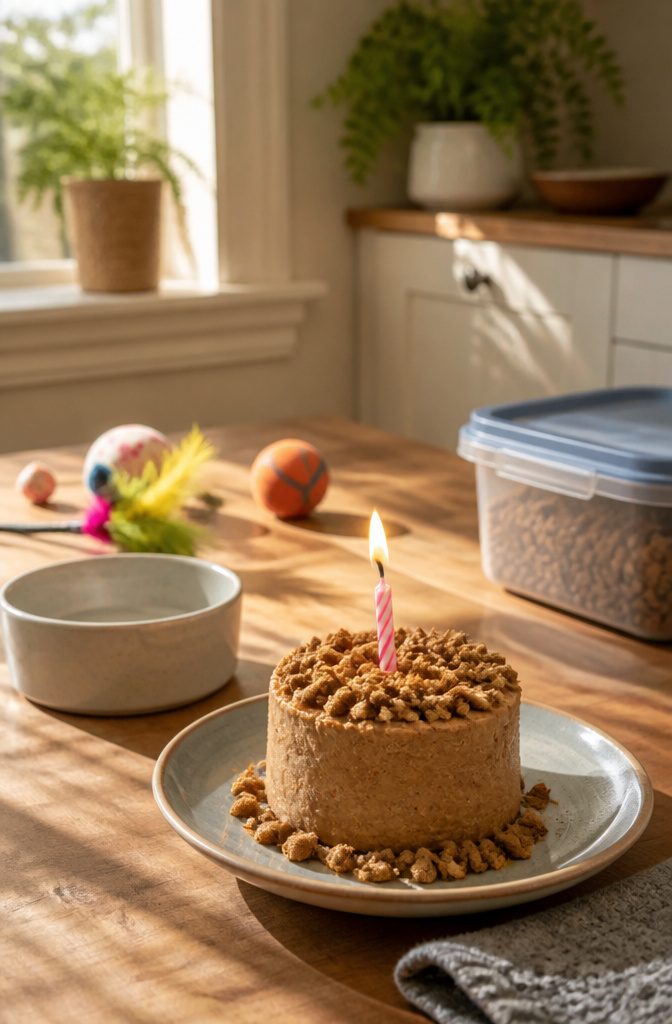
This salmon and sweet potato cake is a treat, not a meal replacement. One small cake on the actual birthday, then straight back to the cat’s regular food the next day.
The egg and fish make it rich, and richness in quantity loosens stool.
The same sources that suggest this recipe note it counts as a treat, which means the whole cake lands at roughly a day’s worth of treats in one sitting.
Overfeeding here leads to straightforward digestive upset: vomiting, diarrhea, or a miserable pet and a worse floor.
If you want certainty, check with your veterinarian before serving. They know your cat’s baseline diet and can flag whether the egg or the salmon volume is likely to push a sensitive stomach over the edge.
For most cats, the safe play is a single portion on the birthday, then regular food resumes.
Decoration Ideas
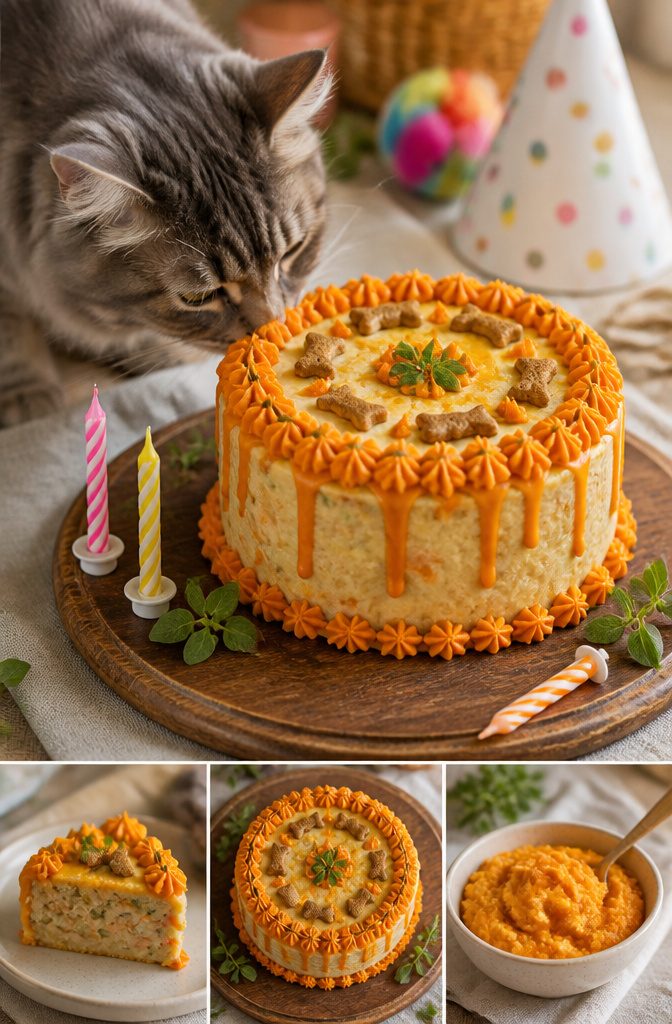
Pumpkin puree firms up in the refrigerator and spreads like actual frosting once cold.
Mashed sweet potato, meanwhile, holds its shape if you load it into a piping bag and work it onto the cake in rosettes or a simple border.
A few options that work, and one that usually does not:
- Pumpkin puree, chilled, for smooth coverage you can spread with a spoon or knife
- Mashed sweet potato, piped, for shapes and height that keep their form
- Greek yogurt with a touch of honey, for a loose drizzle that runs down the sides
- Whipped coconut cream, which most cats find too thin to bother with
For texture, press a few cat treats into the frosting while it is still tacky. They give the cake a crunch layer a cat will actually notice.
One practical note on the candle: a single candle, unlit, makes the photograph. Remove it before serving.
Baking Tips
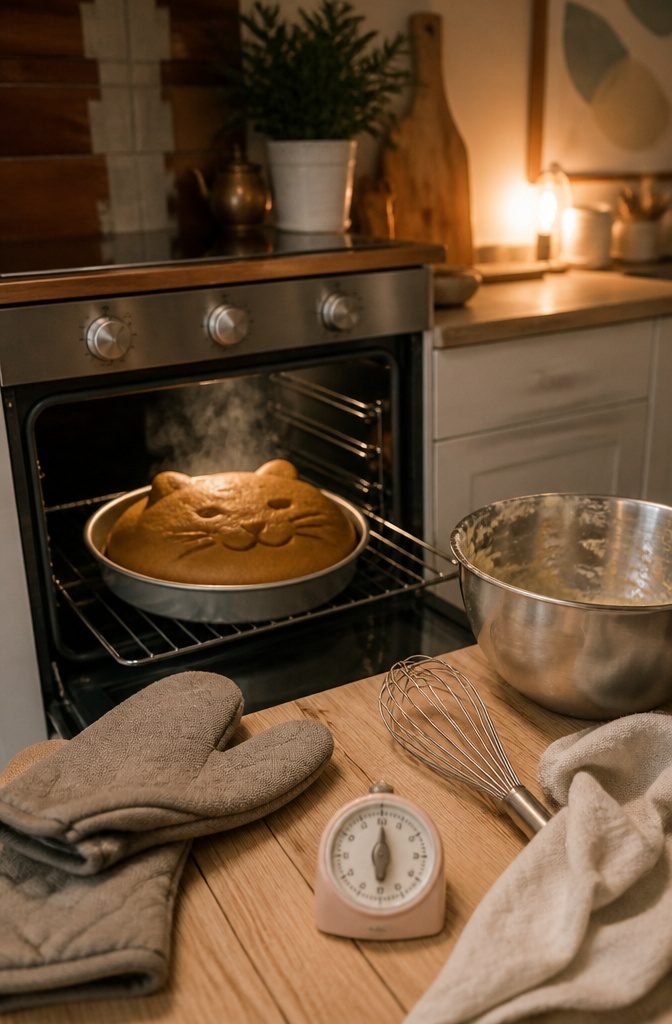
Cat cakes bake at 425°F, higher than the 350°F I use for most human cakes, because these are thin and egg-based and need a fast set before they dry out.
At the lower temperature, 20 to 25 minutes leaves a cat cake rubbery; the proteins squeeze out moisture they can’t get back.
I leave the tin ungreased.
The salmon and egg proteins need something to grip so the cake can rise a little and hold together when sliced. A slick surface lets the batter slide and pool instead.
Check the oven at 6 minutes. Carryover cooking finishes the center on the counter, so pulling it when it looks almost done is the right call.
I skip the toothpick test here; the surface should look matte, not wet, and that’s reliable enough for something this thin. Let it rest in the tin for 5 minutes before unmolding so it firms up without cracking.
Frequently Asked Questions
Can cats eat cake?
Yes, but only if it is made from cat-friendly ingredients. A real birthday cake for a cat skips flour, sugar, baking powder, chocolate, and vanilla, all of which offer no nutritional value and can cause real harm.
Stick to proteins like cooked chicken, salmon, or tuna, plus a small amount of vegetable puree for moisture.
What are some healthy ingredients for a cat birthday cake?
Cooked chicken breast, canned salmon or tuna in water, egg, plain pumpkin puree, and sweet potato puree are all safe choices.
These provide protein, moisture, and fiber without the grains, sugars, or seasonings that cats cannot process. Keep the vegetable portion modest, about a quarter cup at most, so the protein stays central.
Can I give my cat treats on their birthday?
Yes, but keep them healthy and do not let treats replace regular meals.
One small cake on the actual birthday is plenty; the egg and fish make it rich, and too much leads to digestive upset. Resume normal feeding the next day.
What are some cat-friendly frosting options?
Chilled pumpkin puree spreads smoothly like frosting, and mashed sweet potato can be piped into shapes that hold their form.
Greek yogurt with a touch of honey works for a loose drizzle. Whipped coconut cream is an option, though most cats find it too thin to bother with.
Can you make a cat friendly cake?
Yes, and this recipe proves it is quick work.
The batter mixes in minutes, bakes at 425°F for 8 minutes, and uses only grocery-store ingredients: egg, canned chicken, and pumpkin puree. No flour, sugar, or special equipment needed.
Where can I buy a cat friendly cake?
The recipe here is designed for home baking with common ingredients, finished start to finish in under 20 minutes.
Can I make pumpkin cake for my cat?
Yes, plain pumpkin puree works perfectly as both a binder and a frosting.
Use it in the batter for moisture, or spread it on top after baking for color and texture. Do not use pumpkin pie filling, which contains sugar and spices that are unsafe for cats.
Can you buy a cat birthday cake?
The recipe provided is a homemade alternative that comes together faster than a store run, using ingredients most households already have.