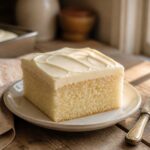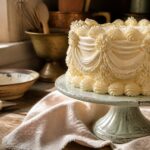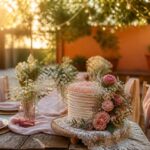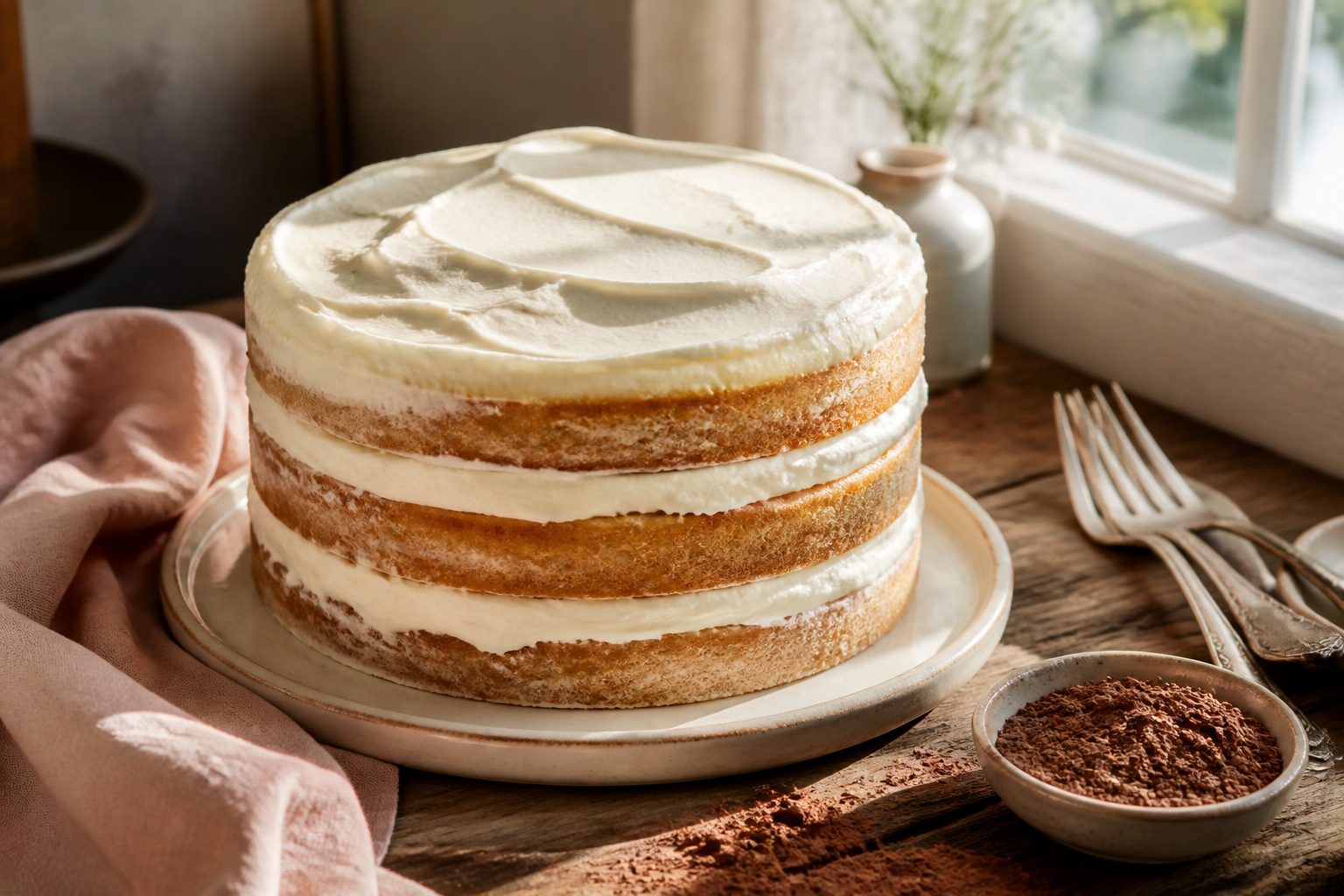
This vanilla cake tastes like actual vanilla, not just sweetness, and the buttercream stays creamy enough to slice cleanly after chilling.
Three layers need about three hours of active work plus cooling, and skipping the chill between the crumb coat and final coat means speckled frosting.
Weighing 16 ounces of batter into each 8-inch pan keeps the stack level without trimming domes later.
The Cake Layers
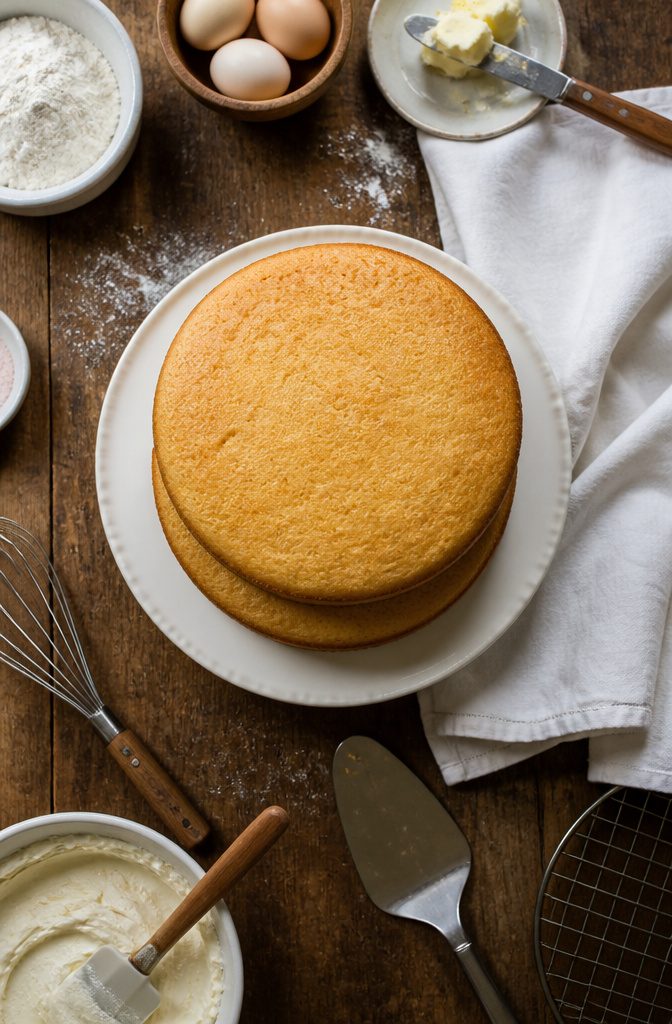
Three 8-inch layers need a batter that bakes flat and stays moist, so the ingredient list sticks to what your regular grocery store stocks. Here is what goes into the cake:
- All-purpose flour gives the crumb enough structure to stack without turning dense. Cake flour is softer, but all-purpose holds up to three layers and the buttercream weight on top.
- Granulated sugar sweetens and tenderizes; the amount is balanced so the vanilla comes through rather than reading as plain sweetness.
- Unsalted butter, softened, creams with the sugar for the base. I use unsalted because salted butter varies too much brand to brand; you control the salt yourself.
- Whole eggs plus extra yolks add richness that keeps the crumb soft after a day or two in the refrigerator.
- Buttermilk reacts with the baking powder for lift and adds the faint tang that keeps vanilla cake from tasting one-note. The DIY version, whole milk plus a spoon of vinegar or lemon juice, works fine here.
- Baking powder leavens; the quantity is calibrated for three pans, not two, so the rise reaches the pan’s height without doming excessively.
- Pure vanilla extract, enough that you taste it against the butter and sugar. Imitation vanilla bakes flatter; this is the one place I would not substitute.
- Salt, fine table salt, measured precisely. It sharpens the sweetness the same way it does in caramel.
The Frosting Ingredients
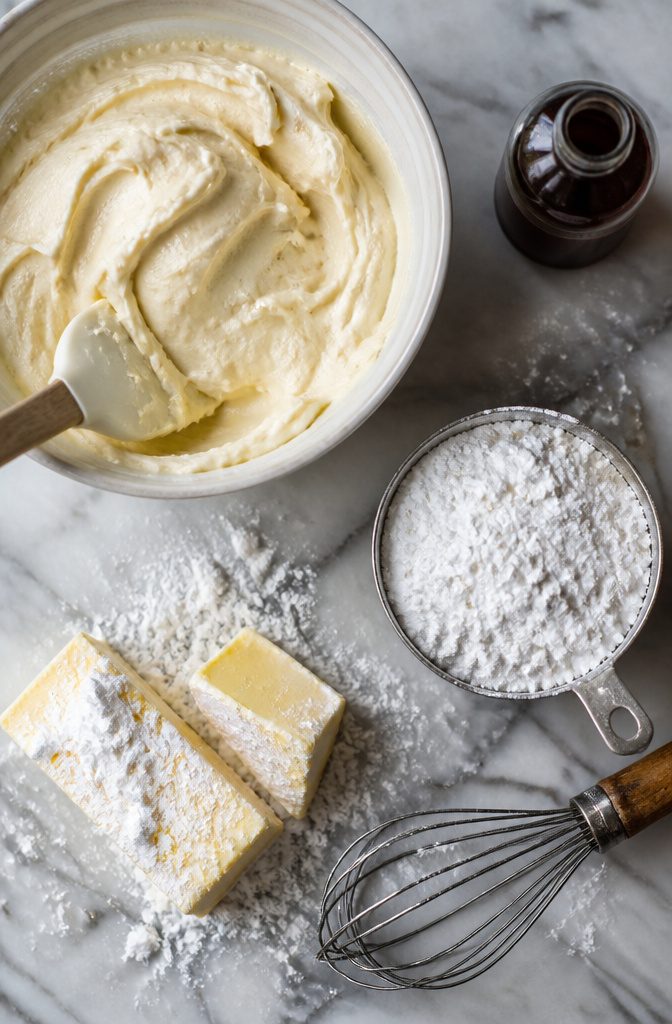
The frosting is built on five ingredients, and the same batch fills the layers and covers the outside. Here’s what goes in:
- Unsalted butter forms the base. Salted butter makes the finished frosting too sharp, and the amount of salt varies by brand, so unsalted lets you control the balance yourself.
- Powdered sugar sweetens and stiffens. I sift it first; lumps in the sugar become pebbles in the buttercream that no amount of beating smooths out.
- Heavy cream loosens the texture. Whole milk works in a pinch, but the frosting sets softer and can slide on a warm day.
- Vanilla extract is the only flavoring, so use the real thing. The imitation version reads as sweet but flat against the plain butter backdrop.
- A pinch of salt wakes everything up. Without it, the frosting tastes one-dimensional no matter how good your vanilla is.
The full batch yields about 6 cups. That breaks down to roughly 1 cup between each of the three layers, with the remaining 3 cups split between a thin crumb coat and the final finish.
Running short on the outside is the usual beginner mistake; a 3 layer cake needs more surface area than it looks like.
Method
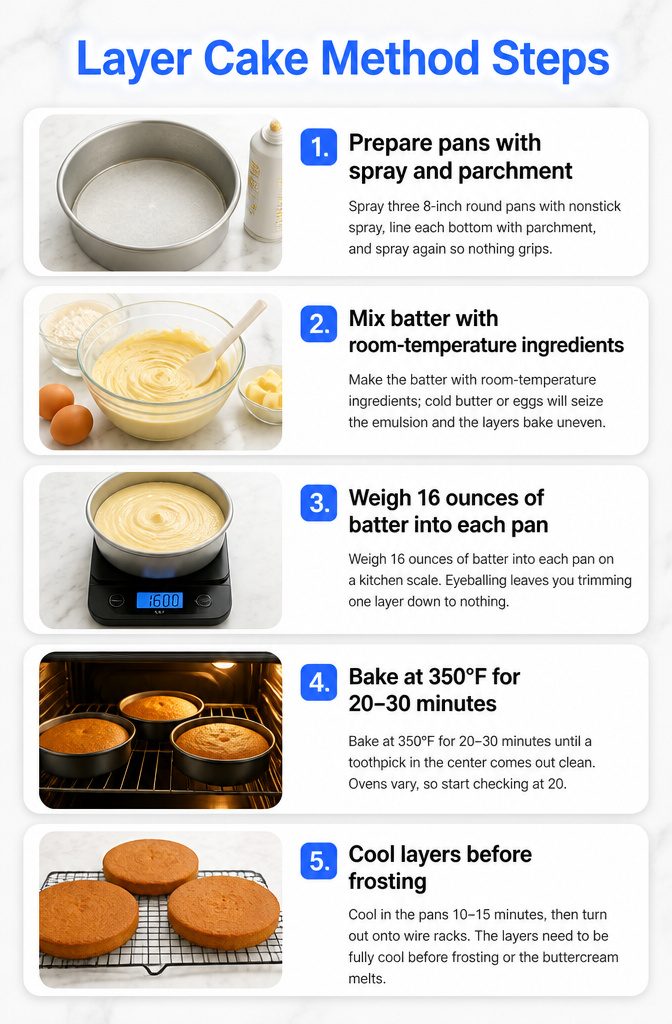
- Spray three 8-inch round pans with nonstick spray, line each bottom with parchment, and spray again so nothing grips.
- Make the batter with room-temperature ingredients; cold butter or eggs will seize the emulsion and the layers bake uneven.
- Weigh 16 ounces of batter into each pan on a kitchen scale. Eyeballing leaves you trimming one layer down to nothing.
- Bake at 350°F for 20–30 minutes until a toothpick in the center comes out clean. Ovens vary, so start checking at 20.
- Cool in the pans 10–15 minutes, then turn out onto wire racks. The layers need to be fully cool before frosting or the buttercream melts.
- Level any domed tops with a serrated knife. Flat layers stack without gaps.
- Wrap and chill the layers at least 1 hour, or freeze them. Cold cake is firm cake, and firm cake doesn’t crumble under the spatula.
- Make the vanilla buttercream while the layers chill.
- Assemble: a dab of frosting on the board anchors the first layer, then spread about 1 cup of buttercream between each layer. Place the final layer top-side down for the cleanest edge.
- Apply a thin crumb coat, then chill 10–15 minutes to set the buttercream before the final coat.
- Frost and decorate. Plan on roughly 3 hours of active work, plus cooling and chilling time.
Baking Tips
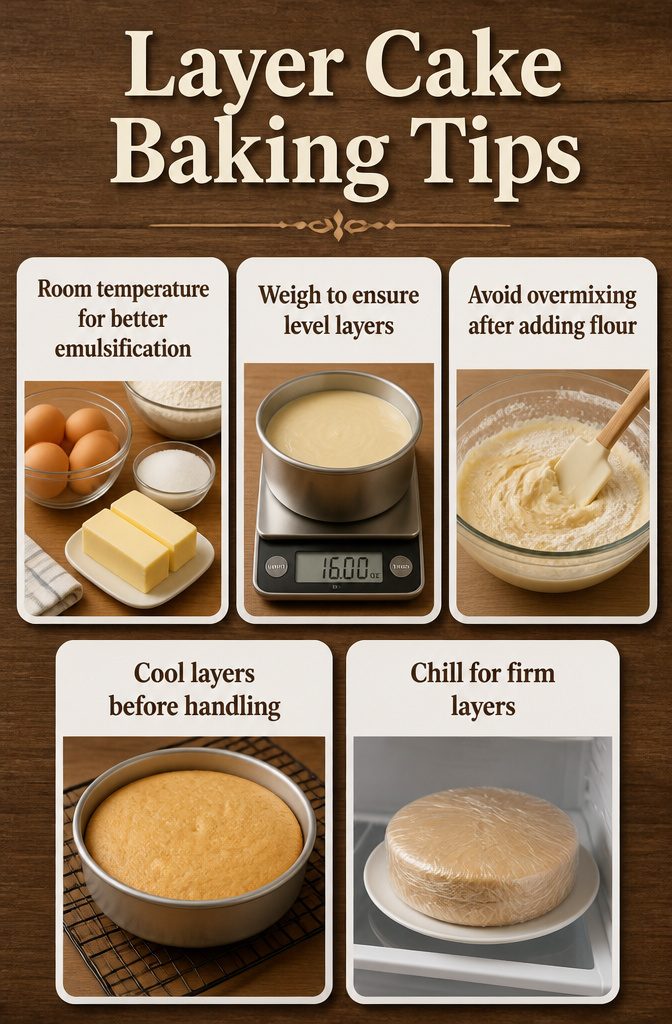
Room temperature ingredients emulsify more cleanly than cold ones straight from the refrigerator, and the difference shows in the crumb.
I weigh batter into each pan rather than eyeballing it; about 16 ounces per 8-inch layer keeps the stack level without trimming later.
A scale beats guessing weights either way; sources vary on exact amounts, with some calling closer to 500 grams per pan.
Overmixing after the flour goes in develops gluten and turns the crumb tough and tight, so I stop as soon as the streaks disappear.
Once the layers leave the oven, they need to cool in their pans for 10 to 15 minutes before turning out, then sit on the rack until they no longer feel warm to the touch.
Wrapping and chilling firms the butter in the crumb, which keeps the layers from crumbling when you split or stack them. An hour in the refrigerator does it, though I have gone longer when the schedule demands.
Frosting Options
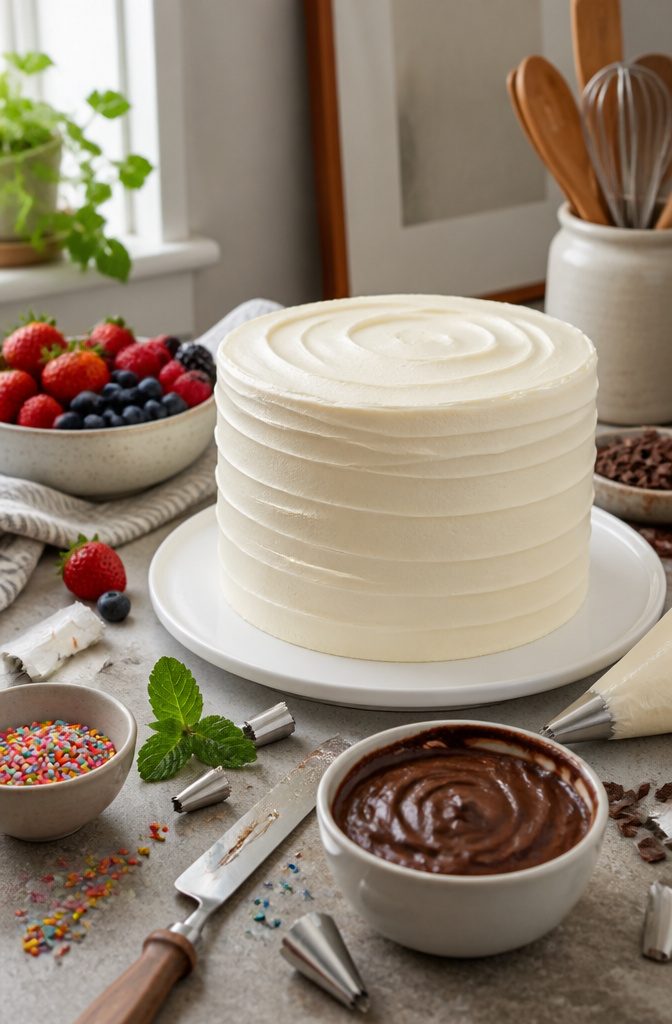
Buttercream is the standard pairing for vanilla and chocolate layers because it stays smooth, holds its shape, and takes flavoring without fighting back.
Cream cheese frosting belongs with red velvet, carrot, or hummingbird cake; its tang is the point, not the backup. Whipped ganache works for a triple chocolate build, where more chocolate is exactly what the cake is already doing.
For a first three-layer cake, I default to buttercream.
Room temperature shifts that can make cream cheese weep or ganache stiffen barely register with a butter base. If you nick the finish or need to re-spread a seam, buttercream lets you patch and smooth without starting over.
That forgiveness matters when you are still learning how much pressure an offset spatula needs and how fast a crumb coat sets.
Layering and Smoothing
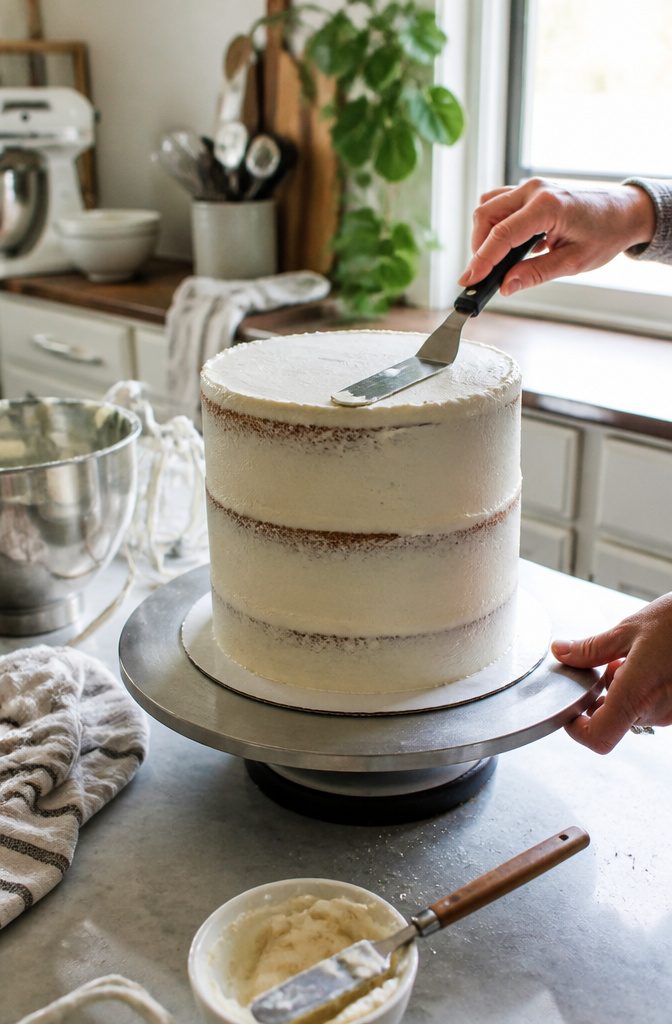
A crumb coat is non-negotiable if you want frosting that looks finished rather than speckled.
Spread a thin layer of buttercream over the whole cake, then freeze it for 10 to 15 minutes to set the buttercream hard. That chill firms everything up so the final coat goes on clean.
An offset spatula and a turntable do the real work here. The turntable does not need to be expensive; a $10 model spins just fine.
I smooth the sides with the spatula held nearly vertical, turning the cake slowly and scraping off excess as I go. A bench scraper helps, but the spatula edge gets you close enough if that is what you have.
For the top layer, flip it top-side-down. The bottom of the cake, baked against the pan, is already flat; the domed top becomes the base instead.
That gives you a level surface to frost, which matters more than any smoothing trick once you start stacking three layers high.
Decorating Ideas
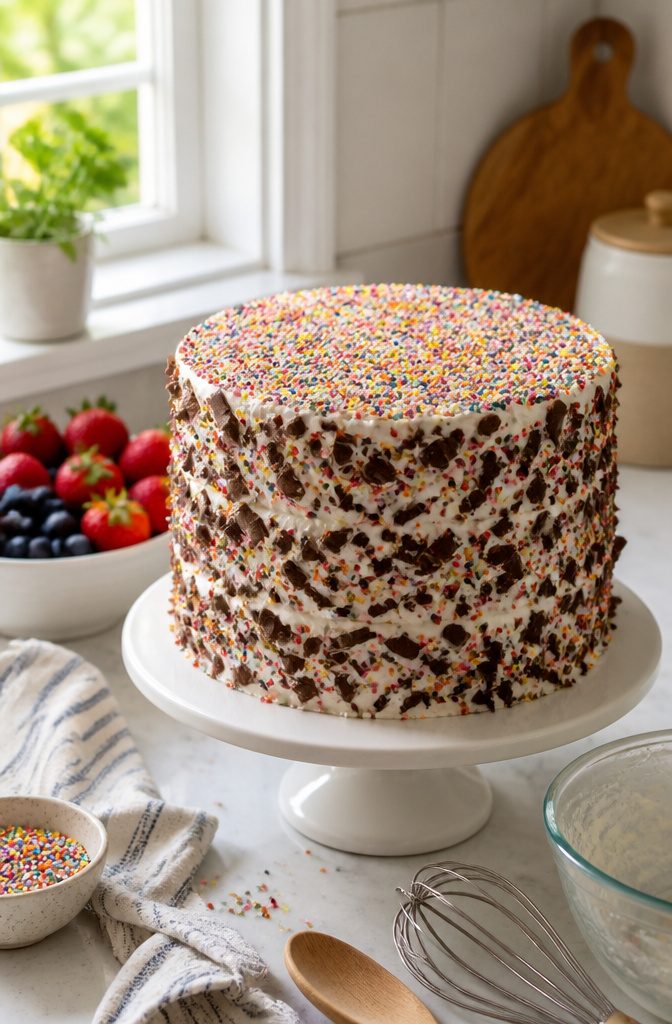
Fresh fruit on buttercream looks stunning, but it weeps after a few hours and slides where it sits. Add it just before serving, or skip it entirely if the cake needs to travel.
Sprinkles, chocolate shavings, and a simple piped border hold up far better for advance prep. They stick to the frosting and keep their shape through a car ride or a morning on the counter.
When I am out of time and the cake still needs to look intentional, I go heavy on one texture. A thick coat of shavings pressed into the sides covers uneven spots and reads as deliberate.
A single row of sprinkles along the base edge does the same with less work. Choose one element and use plenty of it rather than scattering a little of everything and looking like you gave up halfway through.
A cake that is plainly finished in one way always looks more planned than a cake that is half-finished in three.
Storage
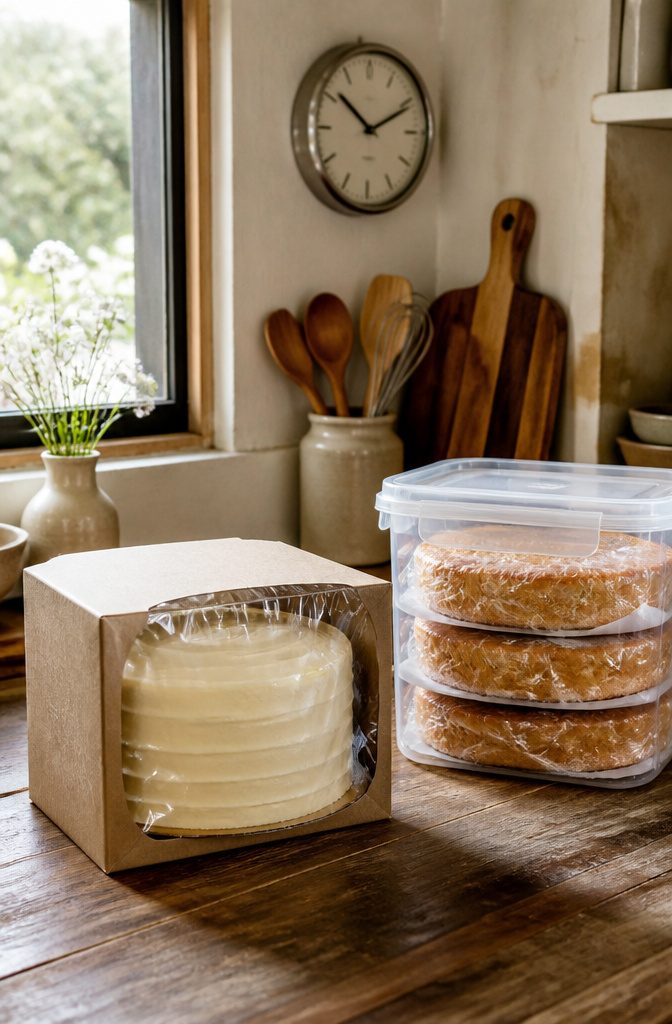
Unfrosted cake layers keep perfectly well at room temperature for up to 2 days if you seal them airtight.
That window gives you plenty of breathing room for spreading the baking and decorating across a weekend. For longer storage, wrap each layer tightly in plastic, then foil, and freeze for up to 3 months.
I have never had trouble with freezer burn when I double-wrap, and the layers thaw overnight on the counter with no loss of moisture.
A fully frosted cake goes in the fridge and holds there for 3–4 days.
The buttercream firms up and protects the crumb, so the cake stays as moist as the day you assembled it. The one catch is serving temperature: cold buttercream tastes fine, but the texture is stiff and the flavor muted.
Pull the cake from the refrigerator 30 minutes before you slice it, and the buttercream softens to that creamy, spreadable consistency you worked for.
Here is the part most home cooks miss. A chilled cake slices cleaner than a room-temperature one.
If you need neat, professional-looking wedges for a birthday or a potluck, refrigerate the cake first, cut it cold, then let the slices sit out those same 30 minutes. You get the best of both worlds: tidy edges and soft frosting.
Frequently Asked Questions
What is a three layered cake called?
A three layered cake is simply called a 3 layer cake. The term describes any cake built from three separate sponge or cake layers stacked with frosting between them.
How to make a perfect 3 layer cake?
Weigh 16 ounces of batter into each 8-inch pan on a kitchen scale, then bake at 350°F for 20–30 minutes.
Chill the layers at least 1 hour before stacking, level any domed tops, and always use room temperature ingredients so the batter emulsifies cleanly.
How many cake mixes for a 3 layer cake?
For three layers, you would need roughly 1.5 boxes, though results vary by brand.
What is the difference between a 3-layer cake and a 3-tier cake?
A 3 layer cake has three cake layers stacked into one single cake. A 3 tier cake has three separate cakes, each on its own stand or separator, often with different diameters, like a wedding cake.
What is the best frosting for a layer cake?
Buttercream is the standard for vanilla layer cakes because it stays smooth, holds its shape, and forgives patching. Cream cheese frosting suits carrot or red velvet, while whipped ganache works for chocolate builds.
How do I prevent my cake from collapsing?
Chill the layers at least 1 hour before stacking so the butter in the crumb firms up, and level the tops so the stack sits flat. Cold cake does not crumble under the weight or the spatula.
Can I make a three-layer cake ahead of time?
Yes.
Unfrosted layers keep airtight at room temperature for 2 days, or freeze double-wrapped for up to 3 months. A fully frosted cake refrigerates for 3–4 days; pull it out 30 minutes before serving so the buttercream softens.
What are some common mistakes when baking layer cakes?
Using cold ingredients kills the emulsion, and overmixing after adding flour develops gluten and toughens the crumb. Weighing batter per pan prevents uneven layers that need trimming down to nothing.