Birthday cake pops taste like vanilla cake and white chocolate in one bite, and the difference here is that they cost $0.35 each at home instead of $3.75 at Starbucks.
Rolling and dipping two dozen takes longer than frosting a single cake, and the coating cracks if your balls are too cold when you dip.
I use a box mix because its tighter crumb holds together once you work in the frosting, and I chill the shaped balls for two hours so the second roll actually smooths them.
What Birthday Cake Pops Actually Are
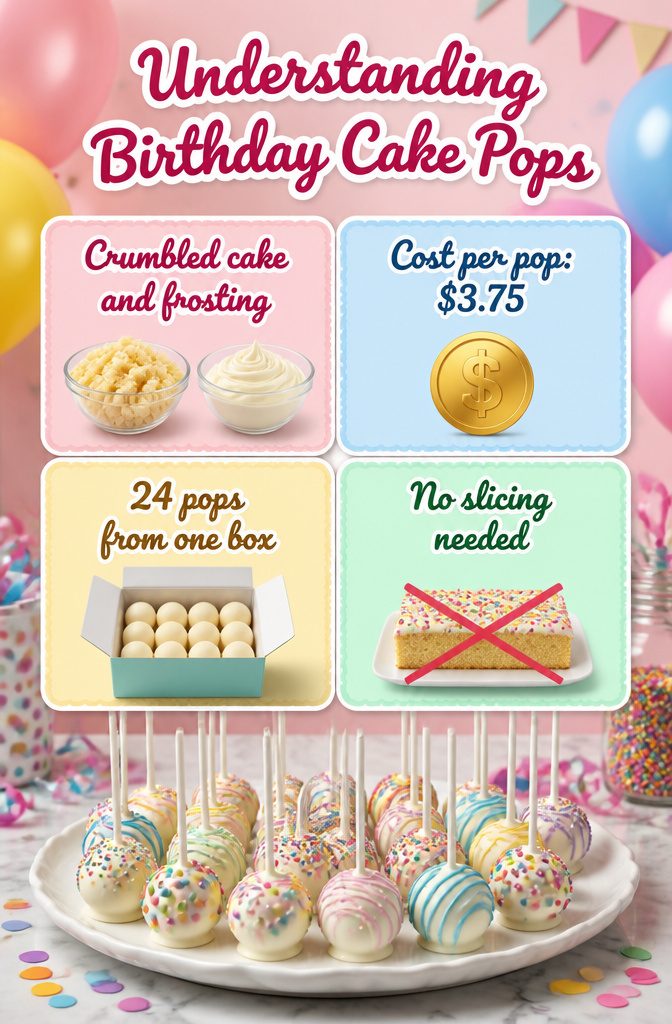
A birthday cake pop is baked cake crumbled into frosting, rolled into a ball, and dipped in candy coating: the same vanilla cake and white chocolate shell that Starbucks made famous at $3.75 per pop.
One box of cake mix yields 24 pops, which pencils out to roughly $0.35 each at home once you factor in frosting and candy melts.
I make them for birthdays because they solve the problem a sheet cake doesn’t.
No slicing, no forks, no leftover wedges drying out in the refrigerator. Guests pick one up from the dessert table and move on.
The process uses grocery-store ingredients and no specialty equipment. Box cake mix works better than from-scratch here; its tighter crumb holds together when you mix in frosting.
Candy melts set without tempering, which saves the trouble chocolate demands. You will need lollipop sticks, but a 100-count bag costs a couple of dollars in the baking aisle and lasts through multiple batches.
You trade time for the other benefits.
Rolling and dipping two dozen pops takes longer than frosting a single cake. For me, the payoff is the portion control and the look: rainbow sprinkles on white coating reads "birthday" without any piping bags or fondant work.
Ingredients
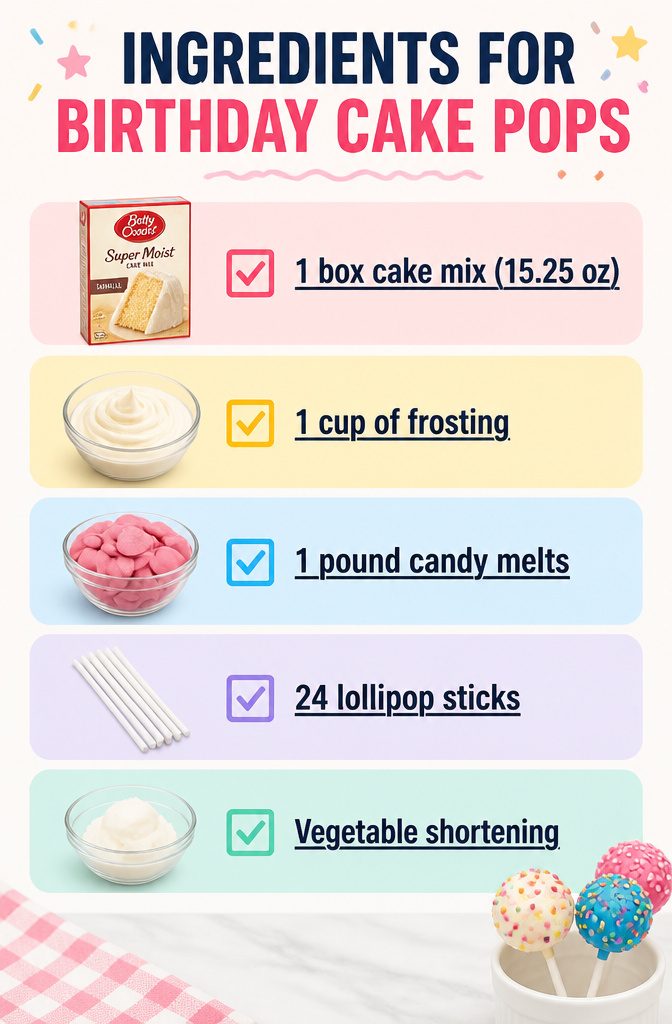
A boxed cake mix keeps the base simple.
I use one 15.25-ounce box plus whatever eggs, oil, and water the back calls for. Once the cake bakes and cools, 1 cup of frosting is the exact amount that binds the crumbs without turning the mixture greasy or soft.
For the shell, 1 pound of candy melts or chocolate coating covers roughly two dozen pops with a little room for error.
Ghirardelli melting wafers are my preference here. They melt to a genuinely smooth finish and set hard enough that the pops don’t crack when you bite.
The rest of the list is short:
- 24 lollipop sticks
- Vegetable shortening, for thinning the coating if it seizes
- Sprinkles, for decorating while the shell is still wet
That’s the full lineup. No specialty equipment, nothing beyond a standard grocery run.
Method
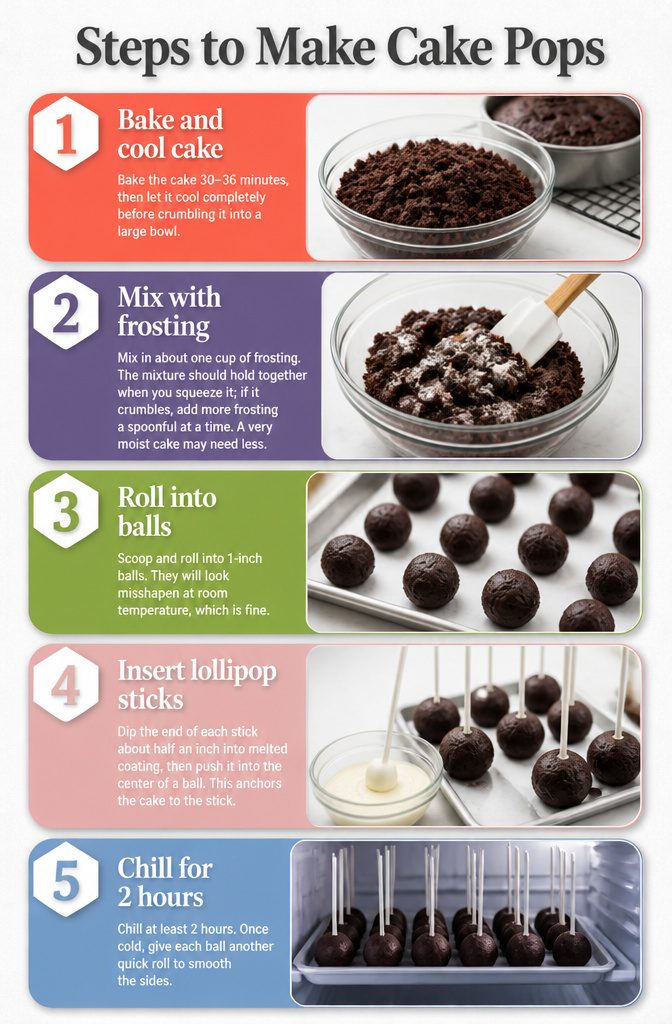
- Bake the cake 30–36 minutes, then let it cool completely before crumbling it into a large bowl.
- Mix in about one cup of frosting. The mixture should hold together when you squeeze it; if it crumbles, add more frosting a spoonful at a time. A very moist cake may need less.
- Scoop and roll into 1-inch balls. They will look misshapen at room temperature, which is fine.
- Insert the sticks: dip the end of each stick about half an inch into melted coating, then push it into the center of a ball. This anchors the cake to the stick.
- Chill at least 2 hours. Once cold, give each ball another quick roll to smooth the sides.
- Melt your coating in 20-second increments. A 2-cup liquid measuring cup gives the right depth for dipping.
- Dip and coat one ball at a time, keeping the rest chilled. Cover the base where stick meets cake, then tap gently against the cup to remove excess.
- Decorate immediately with sprinkles or other toppings; the coating sets fast.
- Let the coating set upright in a block or box with holes poked in it. Cracking means your coating is too hot or your balls are too cold, so if you froze them, move them to the refrigerator before dipping.
- The coating will set within an hour, after which the cake pops are ready to serve.
Flavor Variations
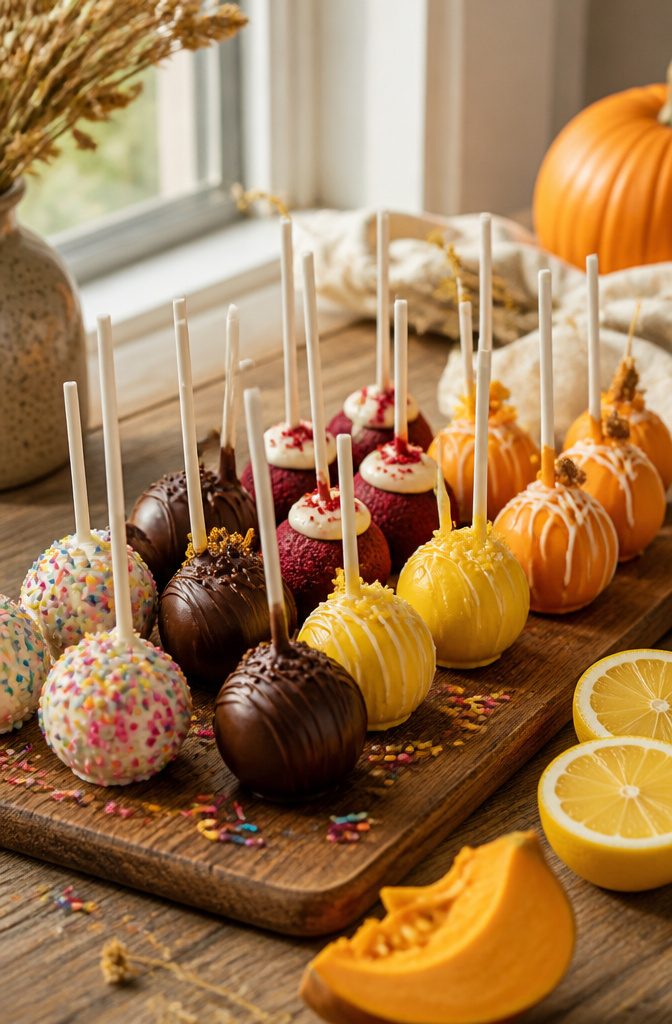
You can build birthday cake pops from just about any cake-and-frosting pair that holds together when crumbed. I stick to smooth batters without chunky mix-ins so the mixture binds evenly.
- Funfetti is the obvious starting point and the most popular choice for the birthday theme; the sprinkles melt into bright spots through the cake and read as celebratory without extra decorating work.
- Chocolate cake with chocolate buttercream doubles down on the cocoa, though a classic buttercream works if you want a lighter coating contrast. Dark or white chocolate coating both pair well here.
- Red velvet with cream cheese frosting gives a tangy center that stands up to sweet coating, but the cream cheese means the finished pops need refrigeration and will only keep 4–5 days. Chocolate coating on these tends to sweat and crack in the fridge, so I use candy melts or plan to serve them the same day.
- Lemon cake with lemon frosting keeps the flavor clean and bright; it is a good option when you want something that reads as fresh rather than rich.
- Pumpkin cake with vanilla frosting is an out-of-season sleeper that works for fall birthdays and holds moisture well.
For the shell, candy melts are the practical choice when you want color without tinting chocolate yourself.
They set hard and come in colors that buttercream or sprinkles can then accent. White chocolate coating is the standard base if you are drizzling or adding nonpareils on top.
Shaping Ideas
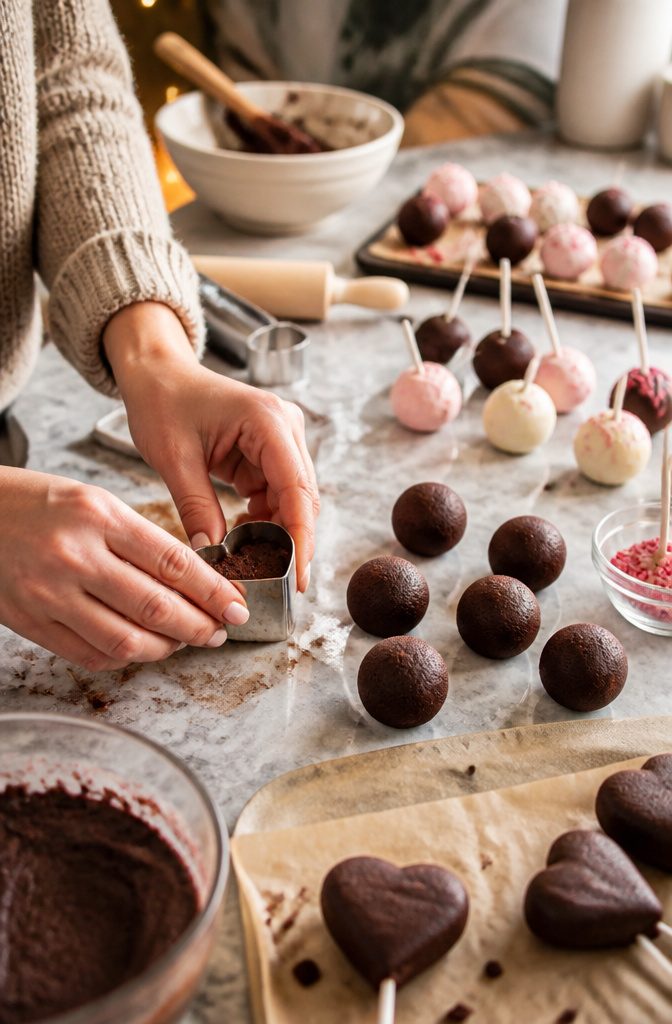
Start with the standard ball shape, and chill the mixture for at least 2 hours before the final roll.
Cold firms up the cake and frosting blend so the second shaping pass actually smooths the surface instead of smearing it. I roll mine immediately after mixing, park the tray in the refrigerator, then come back to finish the job.
Round balls are not the only option, though a mini birthday cake shape, layered with tiny tiers and piped details, turns the stick itself into a candle holder.
The same chilled mixture that holds a sphere will hold an angle if you press it into a small cutter and smooth the seams with a fingertip.
Themed designs work the same way. Hearts, stars, or whatever matches the party require the same two-step chill and reshape method; the only difference is the initial form you press them into.
The finer your cake crumbs, the cleaner those edges will be. Large chunks resist sharp corners and show through the coating later.
Storage
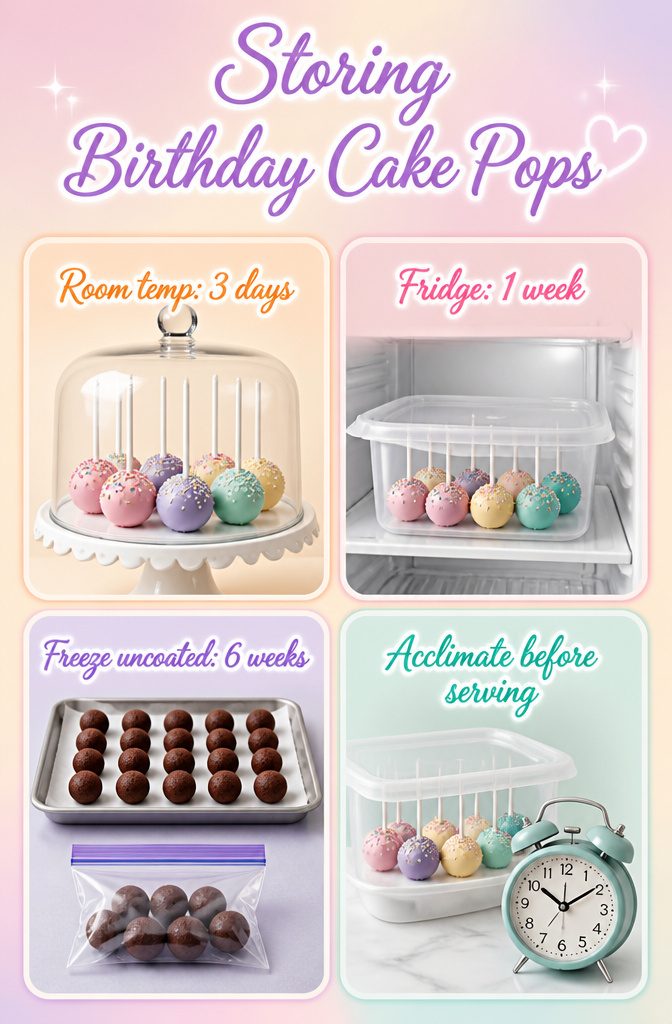
Room temperature keeps birthday cake pops fresh for up to 3 days, which is plenty of time if you are serving them the same weekend you make them.
I keep mine under a cake dome or in a container with a loose lid so the coating does not soften against plastic wrap.
The refrigerator extends that to 1 week, but here is the catch I learned the hard way: moving coated pops straight from cold to warm air makes them sweat. The condensation beads on the candy shell and can streak your decorations.
If you refrigerate them, let the container sit out on the counter for 20 to 30 minutes before you open it. The shell gradually acclimates, and the moisture stays off your work.
For longer storage, freeze the uncoated balls up to 6 weeks. Lay them on a parchment-lined baking sheet until solid, then transfer to a freezer bag.
Thaw them in the refrigerator overnight or at room temperature, then dip and decorate fresh. Freezing already-coated pops is possible, but the texture suffers more than it is worth for a birthday treat you want to look polished.
Decorating
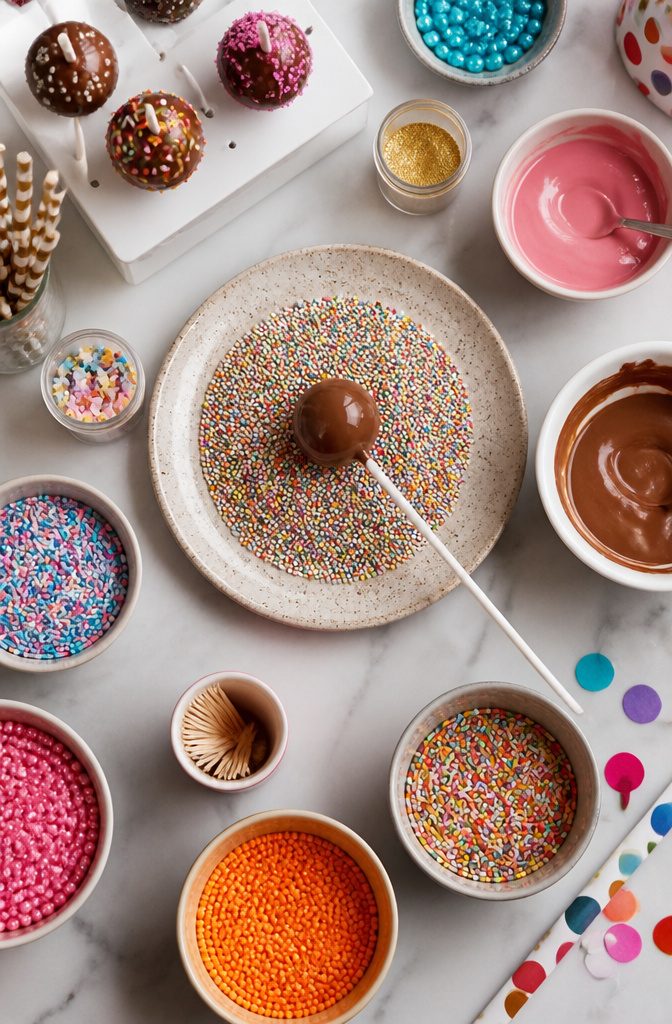
Sprinkles are the obvious move, and they work best when the coating is still tacky. Dip the pop, then roll or sprinkle nonpareils on right away.
The coating sets in 30 minutes to 1 hour, so any decoration has to happen immediately after dipping. Wait even five minutes and the surface is too firm for anything to stick.
Color matching is straightforward if you plan the palette before you melt the coating.
White coating takes dye well, or you can buy candy melts already tinted. For a confetti-cake look, stir tiny nonpareils into the melted coating itself so the specks show through every dip.
Toothpicks give you finer control than a spoon. Draw drips down the sides, add a second layer of coating on the back of a cake-slice shape, or clean up a wobbly edge.
A 1-inch section of slender candle pressed into the top with a dab of wet coating finishes the look without extra tools.
You trade speed for precision. Work in small batches, keep the undipped cake balls cold in the fridge, and accept that the last pop in a batch of twenty will never look quite as crisp as the first.
Frequently Asked Questions
What is the best way to store cake pops?
Room temperature works for up to 3 days under a loose lid or cake dome. The refrigerator stretches that to 1 week, but let the container sit out 20 to 30 minutes before opening so condensation does not streak the coating.
How do you keep cake pops from falling apart?
Mix in enough frosting that the crumb holds together when squeezed, then chill the balls at least 2 hours before dipping. The cold firms the mixture so the stick anchors properly and the coating goes on smooth.
Can you freeze cake pops?
Freeze the uncoated balls for up to 6 weeks on a parchment-lined sheet, then bag them once solid.
Thaw overnight in the refrigerator or at room temperature, then dip and decorate fresh. Freezing already-coated pops is possible but the texture suffers.
How long do cake pops last?
Three days at room temperature, or about a week in the refrigerator. Pops made with cream cheese frosting need refrigeration and keep only 4 to 5 days.
What types of cake can be used for cake pops?
Any smooth cake flavor that binds with frosting works: funfetti, chocolate, red velvet, lemon, and pumpkin all make good centers. Avoid batters with chunky mix-ins, since large pieces resist smooth rolling and show through the coating.
What can I add to cake to make cake pops?
About 1 cup of frosting per 15.25-ounce box of baked cake crumbles the mixture into a moldable consistency. Add it gradually until a squeeze holds its shape; too much makes the balls greasy, too little and they crumble.
What is the trick to cake pops?
Chill the shaped balls at least 2 hours, then roll them again cold to smooth the surface before dipping. Keep undipped balls refrigerated while you work in small batches, and tap excess coating off gently so the shell stays even.
What are the top cake pop flavors?
Funfetti leads for birthdays because the sprinkles melt into bright spots that read as celebratory without extra decorating. Chocolate, red velvet with cream cheese, lemon, and pumpkin with vanilla frosting are reliable alternatives depending on the season and crowd.
Should I let my cake pops cool before dipping?
Yes. The baked cake must cool completely before you crumble it, and the shaped balls need at least 2 hours in the refrigerator before dipping.
Cracking happens if the coating is too hot or the balls are too cold, so move frozen balls to the refrigerator before you start.