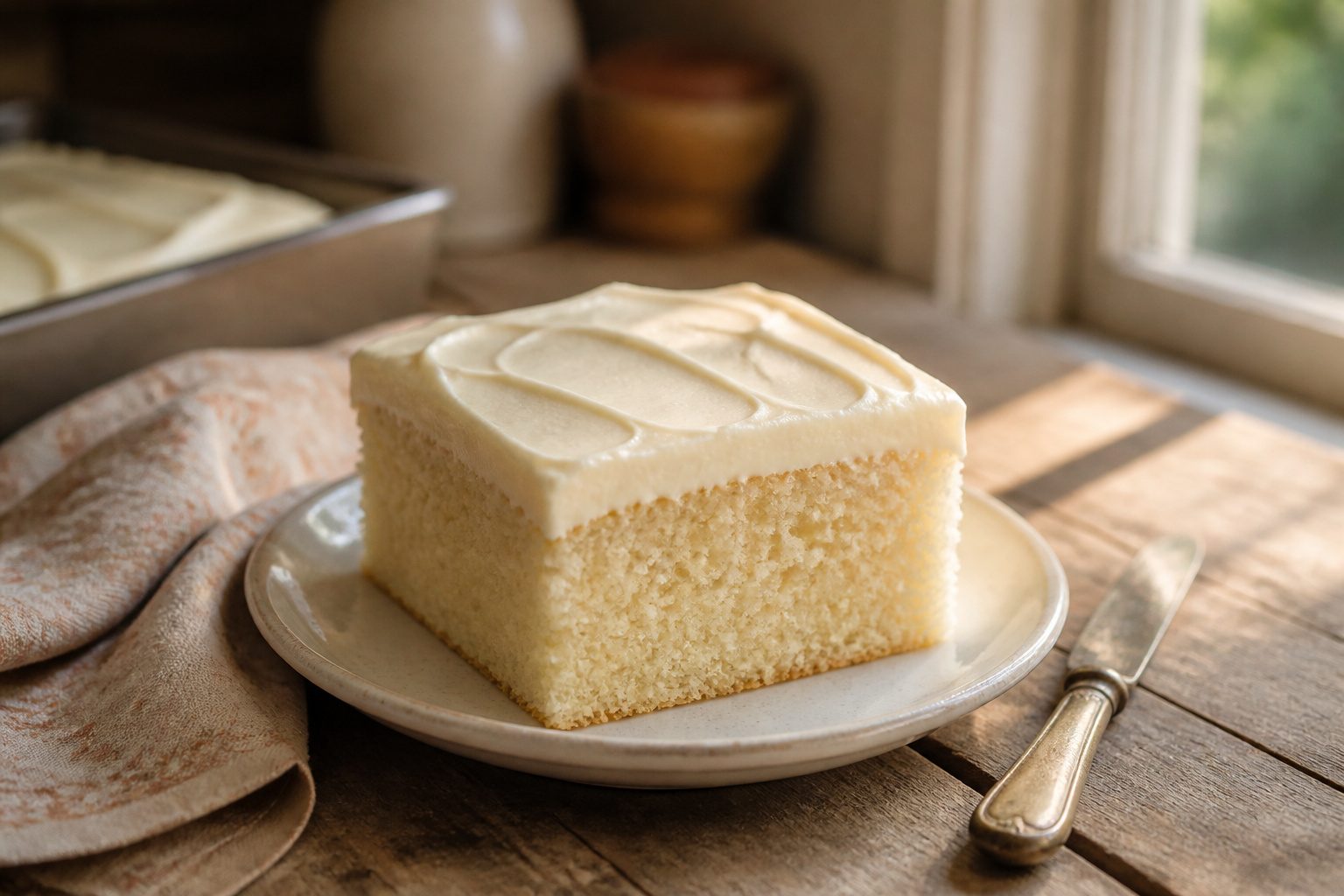
This vanilla sheet cake is soft and straightforward, with a real buttercream that sets firm enough to wrap in cellophane without smearing.
The difference is the cold: 30 minutes in the refrigerator before you cut is what turns a frosted slab into clean-edged slices you can stack and sell. Total time runs about 3 hours, most of it cooling.
Ingredients
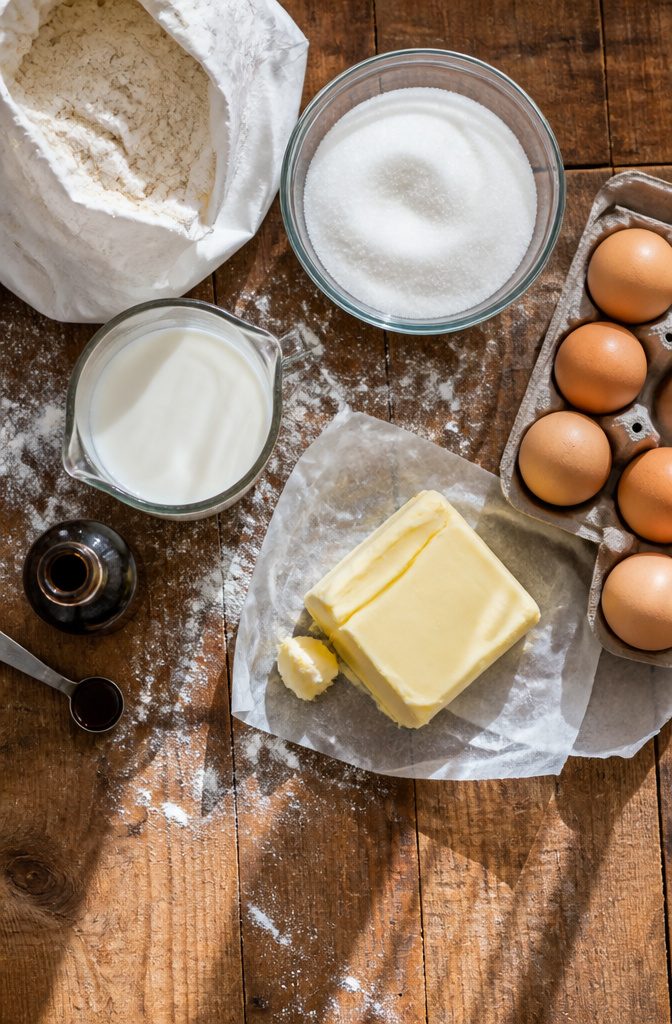
A two-layer 9×13 inch vanilla sheet cake with filling takes standard pantry items and 7 to 7.5 cups of frosting total.
That breaks down into 2 cups for the layer filling, 4 cups for the top and sides, and another 1 to 1.5 cups if you want a piped border along both the top and bottom edges.
I always make the full amount; running short halfway through frosting is the kind of mistake that shows.
For the cake layers:
- 3 cups all-purpose flour
- 2 cups granulated sugar
- 1 tablespoon baking powder
- 1 teaspoon salt
- 1 cup unsalted butter, softened
- 4 large eggs, room temperature
- 1 cup whole milk
- 2 teaspoons vanilla extract
For the vanilla buttercream frosting (full 7.5 cup batch):
- 3 cups unsalted butter, softened
- 10 cups powdered sugar
- 1/4 cup heavy cream
- 2 tablespoons vanilla extract
- 1/2 teaspoon salt
The butter temperature matters more than the brand.
Softened means it still holds its shape when pressed, not melted around the edges. Cold butter won’t cream properly, and too warm gives you a greasy frosting that won’t hold a border.
Method
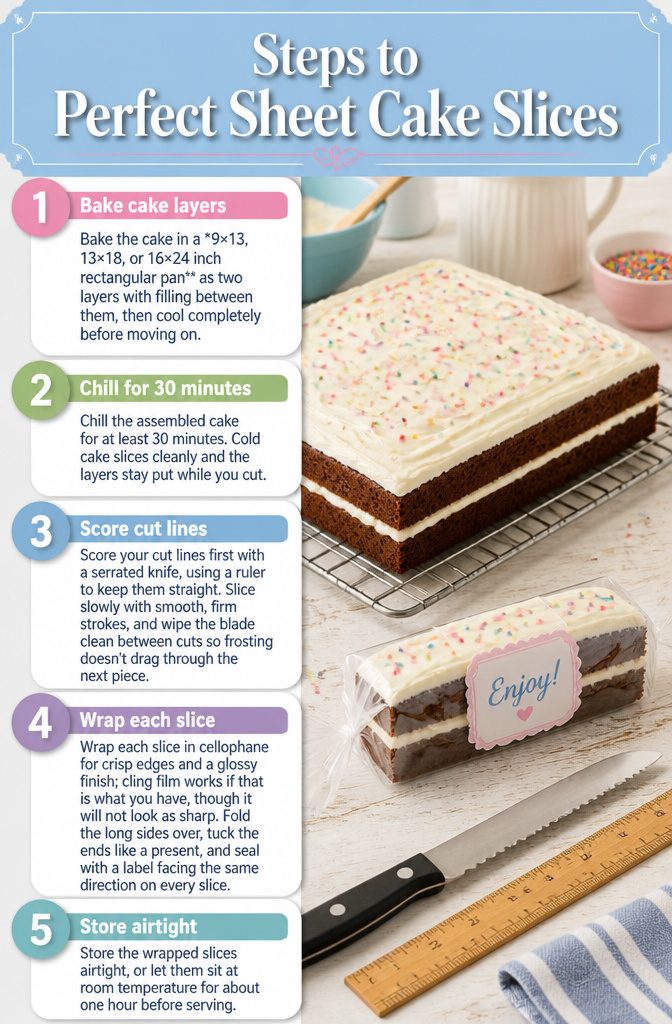
- Bake the cake in a 9×13, 13×18, or 16×24 inch rectangular pan as two layers with filling between them, then cool completely before moving on.
- Chill the assembled cake for at least 30 minutes. Cold cake slices cleanly and the layers stay put while you cut.
- Score your cut lines first with a serrated knife, using a ruler to keep them straight. Slice slowly with smooth, firm strokes, and wipe the blade clean between cuts so frosting doesn’t drag through the next piece.
- Wrap each slice in cellophane for crisp edges and a glossy finish; cling film works if that is what you have, though it will not look as sharp. Fold the long sides over, tuck the ends like a present, and seal with a label facing the same direction on every slice.
- Store the wrapped slices airtight, or let them sit at room temperature for about one hour before serving.
Sheet Cake Sizes
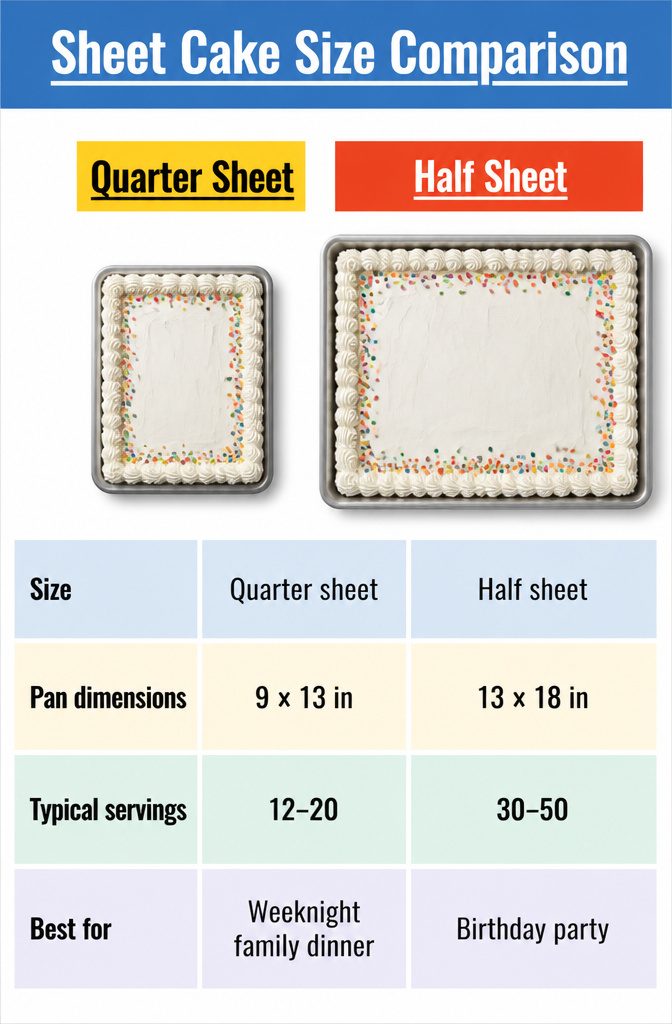
The three standard sheet cake sizes start with the quarter sheet at 9×13 inches, which feeds 12 to 20 people depending on how generous you cut.
A half sheet runs 13×18 inches and stretches to serve 30 to 50. The full sheet, at 16×24 inches, starts around 96 servings and keeps going.
Slice size is what moves those numbers. Party-style 2×2 inch pieces push the count up; dessert-plate 2×3 inch pieces pull it down.
The pan dimensions stay fixed, so the math is straightforward: multiply pan width by length, divide by your chosen slice width and length, and you have your head count.
| Size | Pan dimensions | Typical servings | Best for |
|---|---|---|---|
| Quarter sheet | 9 × 13 in | 12–20 | Weeknight family dinner, small gathering |
| Half sheet | 13 × 18 in | 30–50 | Birthday party, office event |
| Full sheet | 16 × 24 in | 96+ | Large celebration, buffet line |
I keep a half sheet on hand for most occasions. It fits a standard home oven, feeds a crowd without leftovers that outstay their welcome, and slices neatly into either 2×2 or 2×3 inch pieces without looking skimpy.
How Much Batter Fits Each Pan
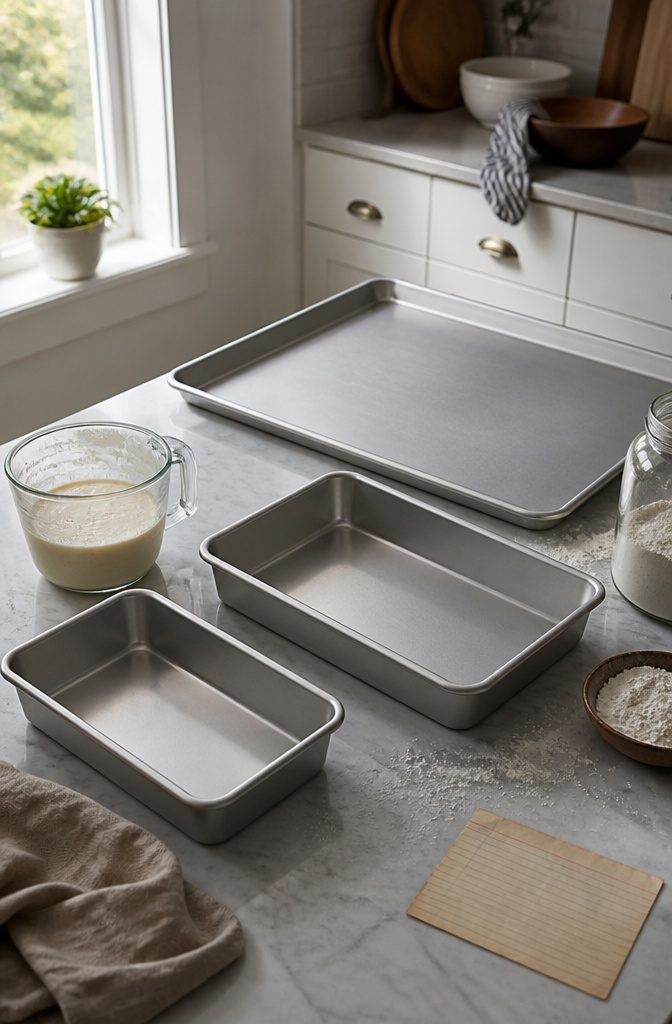
A 9×13 inch pan holds roughly the batter of one standard layer cake recipe, which is why most home bakers reach for it first. The half-sheet pan, at 18×13 inches, needs closer to double that amount, and a full-sheet pan doubles again.
These are the three sizes worth keeping in your kitchen: anything smaller than 9×13 is better suited to brownies and bars, while anything larger than half-sheet usually requires a commercial oven.
Formulas for batter amounts base themselves on volume, multiplying length by width by desired depth. I find those calculations useful as a starting point, but only that.
A butter cake using the reverse crumb method rises less than a sponge cake, so the same volume yields a thinner or thicker layer depending on your recipe. This is why testing matters.
Bake your chosen recipe in a 9×13 first, measure the baked height, and scale from there. The math gets you close; the test run gets you exact.
Non-standard sizes, the 11×15s and quarter-sheets of the world, lack reliable conversion formulas. I would not bother buying them unless you already own one and are determined to use it.
In that case, pour water into the pan to measure its capacity in cups, then match that volume against what your tested recipe produces. It is slower, but it works.
Slice Sizes and Servings
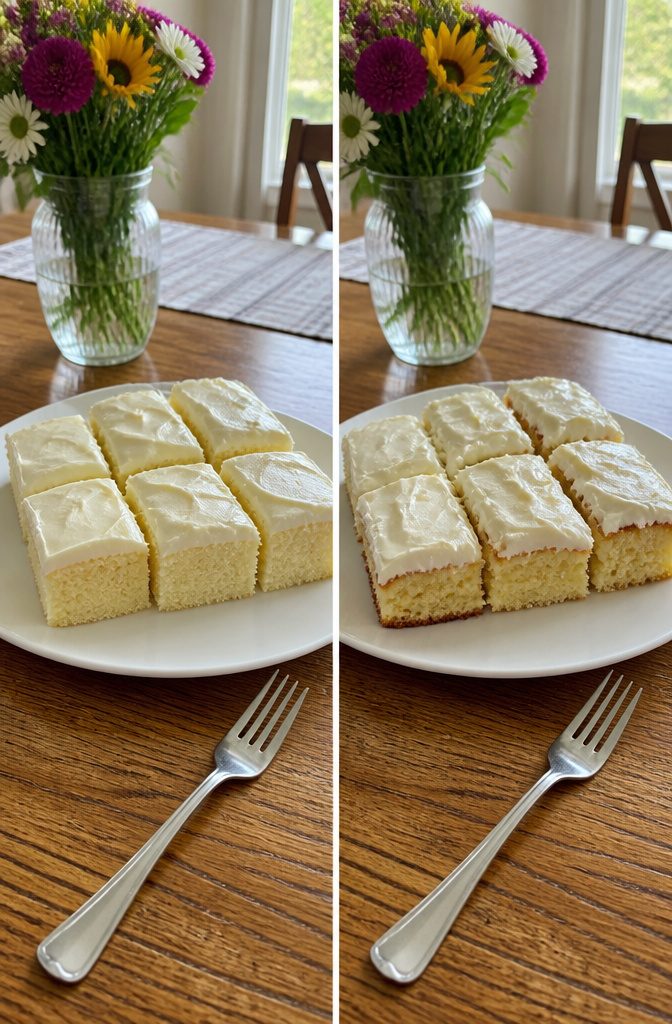
A standard party slice of sheet cake runs 2×2 inches, which is the cut most guests expect when the cake is one of several desserts on the table.
For hungrier crowds or when the cake is the main event, a 2×3 inch rectangle gives a more generous plate without looking oversized.
The math is straightforward: divide the pan’s area by the slice’s area.
An 18×24 inch sheet cake yields 72 of those larger 2×3 inch servings, or 108 of the smaller 2×2 inch cuts. I keep this equation handy when someone asks me to scale up for a bigger guest list.
Height changes the equation in practice, if not on paper. A single-layer cake at 2×2 inches reads as modest; the same footprint from a double-layer cake feels substantial because the fork meets more cake before it hits the plate.
I plan for slightly smaller cuts on double layers, or I warn the host that guests will leave half-eaten squares when the portion is too tall and too wide at once.
Cutting for Clean Edges
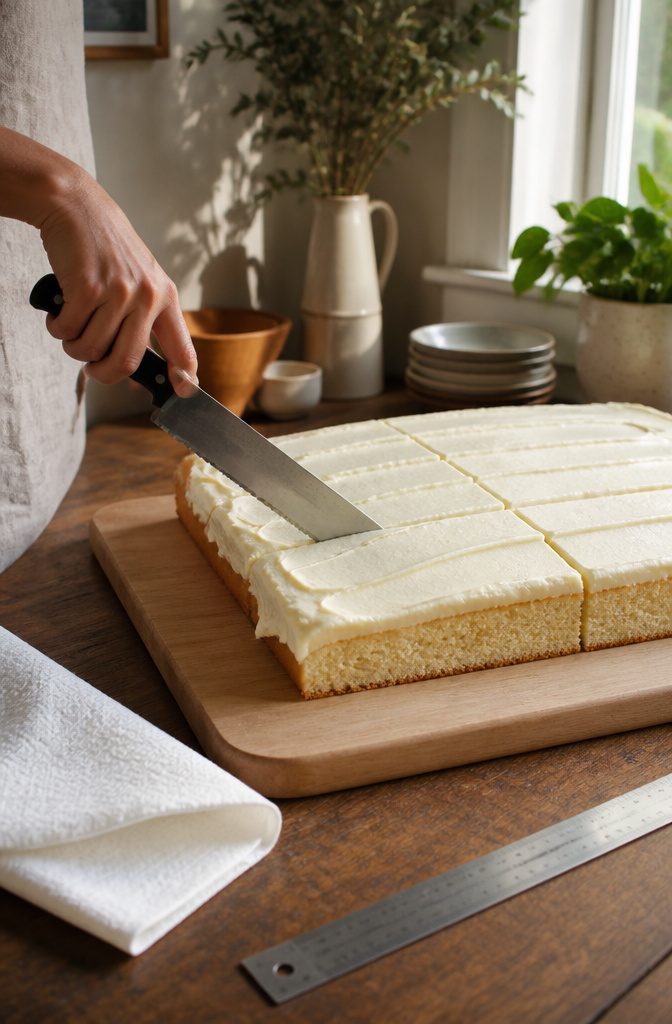
A serrated knife is the right tool here. The teeth saw through cold frosting without pressing down and smearing it, which is what a straight blade tends to do.
Chill the cake at least 30 minutes before you cut.
Cold firms the crumb and sets the buttercream so the knife goes through clean instead of dragging filling through the layers. I skip this when I’m in a hurry and always regret the ragged edges.
Scoring comes next. Lightly mark the top with your knife where you want the cuts, using a ruler to keep the portions even.
This gives you a track to follow so the blade doesn’t wander on the second pass. Slice slowly with a smooth, firm stroke; let the serrated edge do the work rather than hacking through.
Wipe the blade clean between cuts.
Frosting buildup on the knife transfers back onto the next slice and throws off your line. A quick pass with a paper towel takes two seconds and keeps every edge neat.
Storage and Freshness
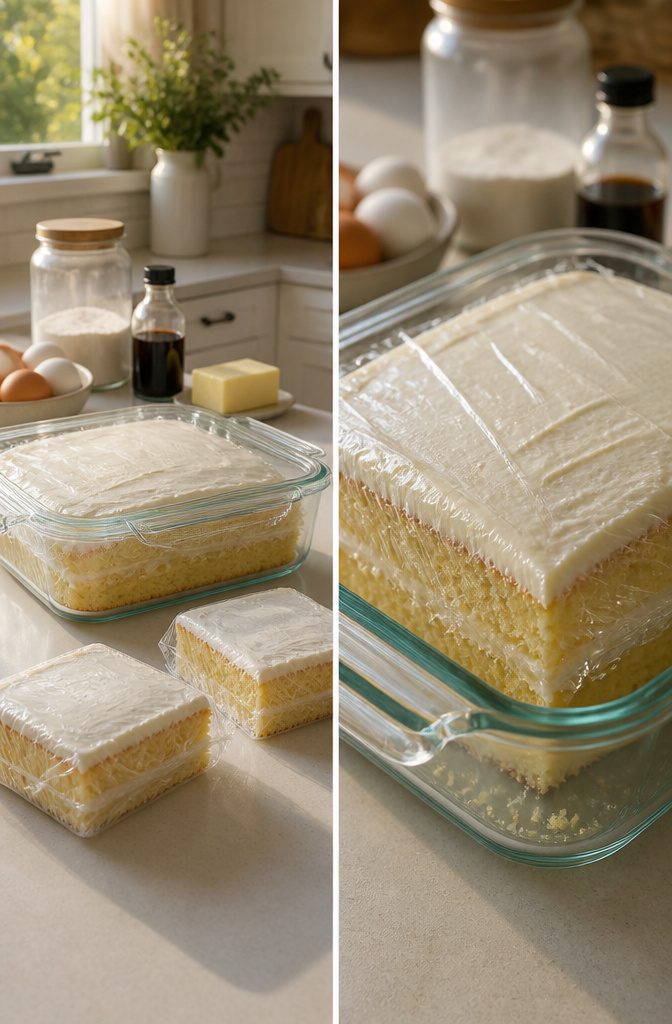
A frosted vanilla sheet cake sits fine at room temperature for 2 days, provided the filling is not perishable, there is no fresh fruit, and the frosting is not cream cheese-based.
After that, the refrigerator buys you up to 5 days. For longer storage, the freezer is your friend: wrap the whole cake tightly in plastic wrap or seal it in an airtight container, and it keeps for up to a month.
Individual slices are more practical for most households.
Wrap each one in plastic, then tuck them into an airtight container, a zip-top bag, or a cling-film-covered tray. This double layer prevents the cake from drying out or picking up stray freezer flavors.
Frozen slices also last a month. Move them to the refrigerator the day before you want them; they will thaw evenly and taste fresh.
Cold cake is a disappointment. The buttercream firms up, the sponge tightens, and the whole slice reads dry on the palate.
I always let slices sit out for about an hour before serving. The buttercream softens, the crumb relaxes, and the vanilla comes through the way it should: creamy, fresh, like it was mixed that morning.
Frequently Asked Questions
How many servings are in a sheet cake?
A quarter sheet (9×13 inches) serves 12 to 20, a half sheet (13×18 inches) serves 30 to 50, and a full sheet (16×24 inches) starts at 96 servings.
The count moves up with smaller 2×2 inch party slices or down with larger 2×3 inch dessert cuts. Divide the pan area by your chosen slice area to get the exact number.
What is the best way to cut a sheet cake?
Use a serrated knife on a chilled cake, then score straight lines with a ruler before slicing.
Cold buttercream and firm crumb let the teeth saw through cleanly without smearing. Wipe the blade between each cut so frosting buildup does not drag through the next piece.
How do you package cake slices for events?
Wrap each slice in cellophane for crisp edges and a glossy finish; cling wrap works if that is what you have, though it looks less sharp.
Fold the long sides over, tuck the ends like a present, and seal with a label facing the same direction on every slice. Tall cakes need bigger wraps so you can fold and seal neatly.
How many slices is a sheet cake?
A 9×13 inch quarter sheet yields 12 to 20 slices, a 13×18 inch half sheet yields 30 to 50, and a 16×24 inch full sheet yields 96 or more.
Party-style 2×2 inch cuts push the count higher; 2×3 inch dessert cuts lower it. The math is simple: pan area divided by slice area.
What size sheet cake do I need to feed 25 people?
A half sheet (13×18 inches) is the right choice for 25 guests.
It yields 30 to 50 servings depending on slice size, so you have buffer without overbuying. A quarter sheet would be tight at 12 to 20 servings; a full sheet is overkill.
How many slices is a Costco sheet cake?
Standard half sheets serve 30 to 50 and full sheets serve 96 or more, but warehouse club cakes may differ in pan size or cutting style from the classic vanilla recipe discussed here.