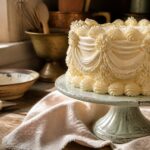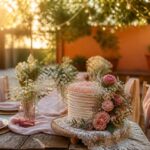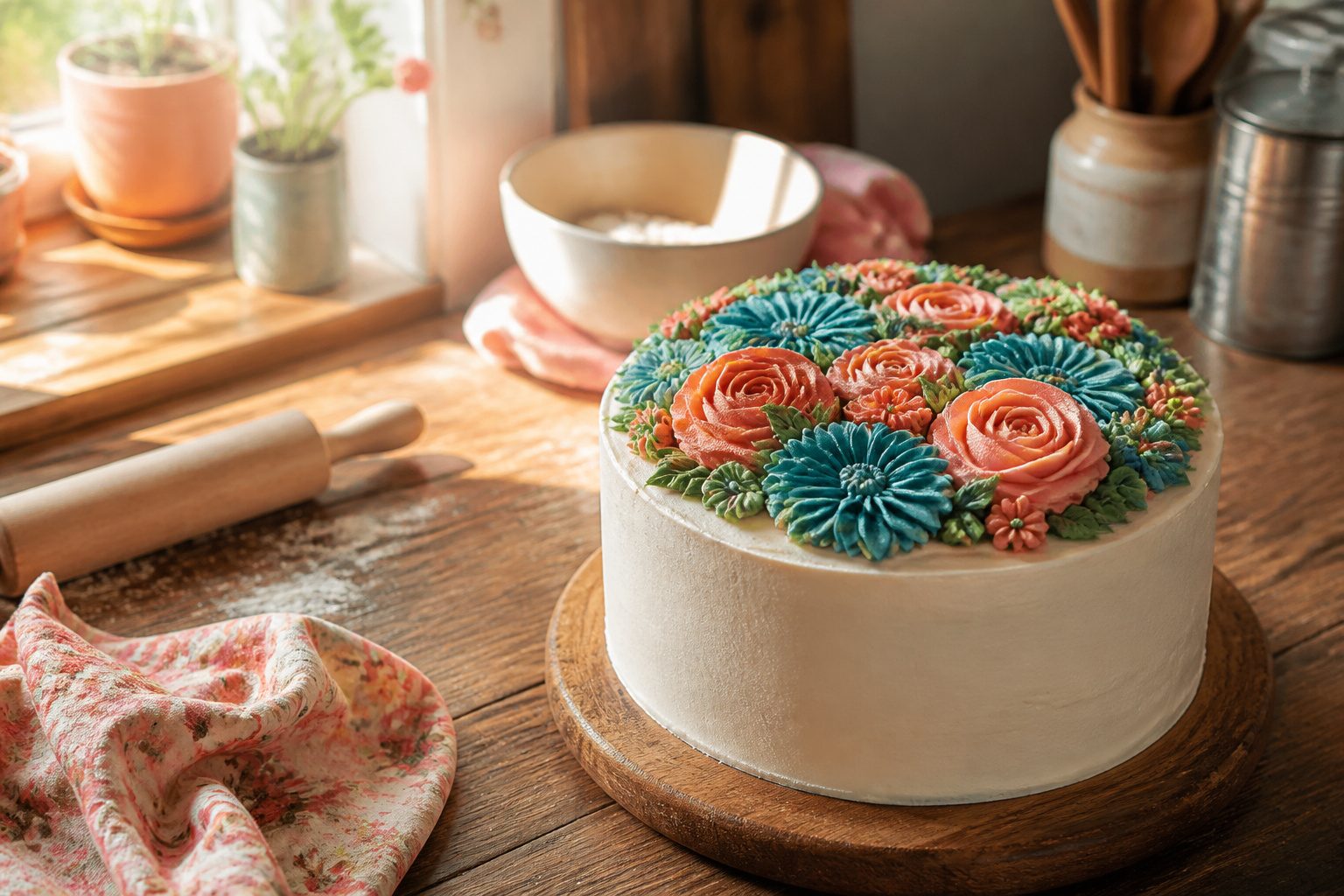
This cake tastes like a straightforward vanilla party cake, but the buttercream flowers on top stay crisp for hours because American buttercream crusts hard as it sits. Total time is about three hours, plus cooling.
The hard part is timing.
Pipe too early and the petals soften; pipe onto warm cake and they melt outright. You need the cake chilled to the point that the surface feels almost porcelain, usually 20 minutes in the refrigerator, before the tip touches it.
I use a Wilton #103 for the petals and a #352 for leaves. Those two tips are enough for roses, daisies, and the ridged foliage that sells the whole arrangement.
Ingredients
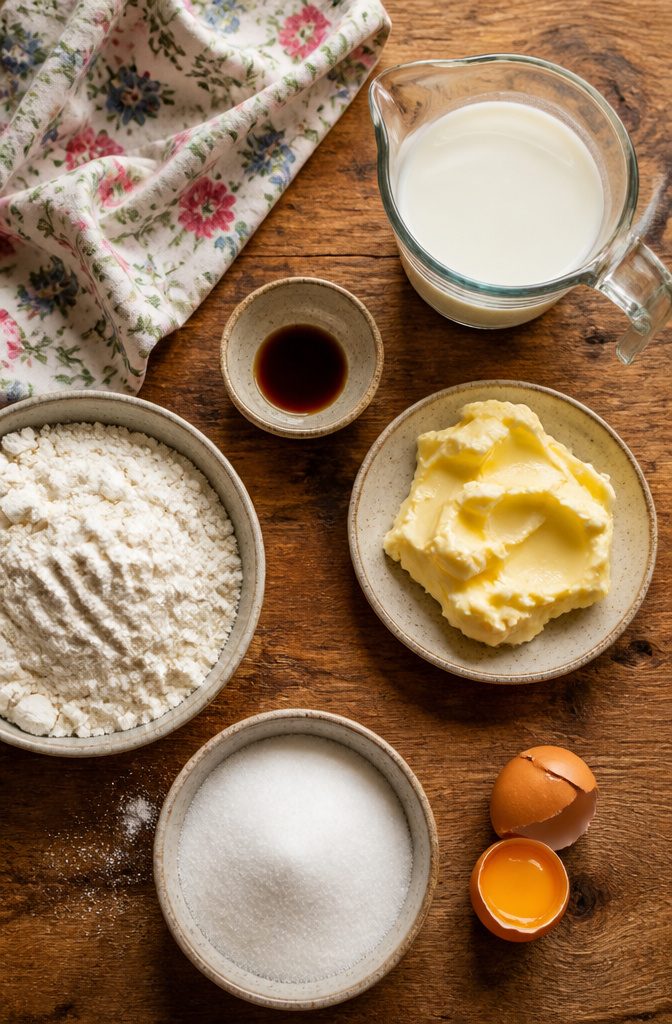
The ingredient list splits cleanly between what builds the cake and what lets you pipe flowers that hold their shape through the whole party.
For the cake layers:
- 2 1/2 cups all-purpose flour
- 2 cups granulated sugar
- 1 cup unsalted butter, softened
- 4 large eggs, room temperature
- 1 cup whole milk
- 2 teaspoons vanilla extract
For American buttercream:
- 1 1/2 cups unsalted butter, softened
- 5–6 cups powdered sugar, sifted
- 3–4 tablespoons heavy cream
- 2 teaspoons vanilla extract
For coloring:
- Gel food coloring in your chosen flower shades
I use American buttercream here rather than Swiss or Italian because it crusts hard as it sits, and that crust is what keeps piped petals from sagging.
Butter and powdered sugar are non-negotiable; the high sugar content drives the crust. Heavy cream thins the mixture just enough for smooth piping without softening the final set.
Skip liquid food coloring, which throws off the consistency. Gel gives you deep color with barely any added moisture.
Method
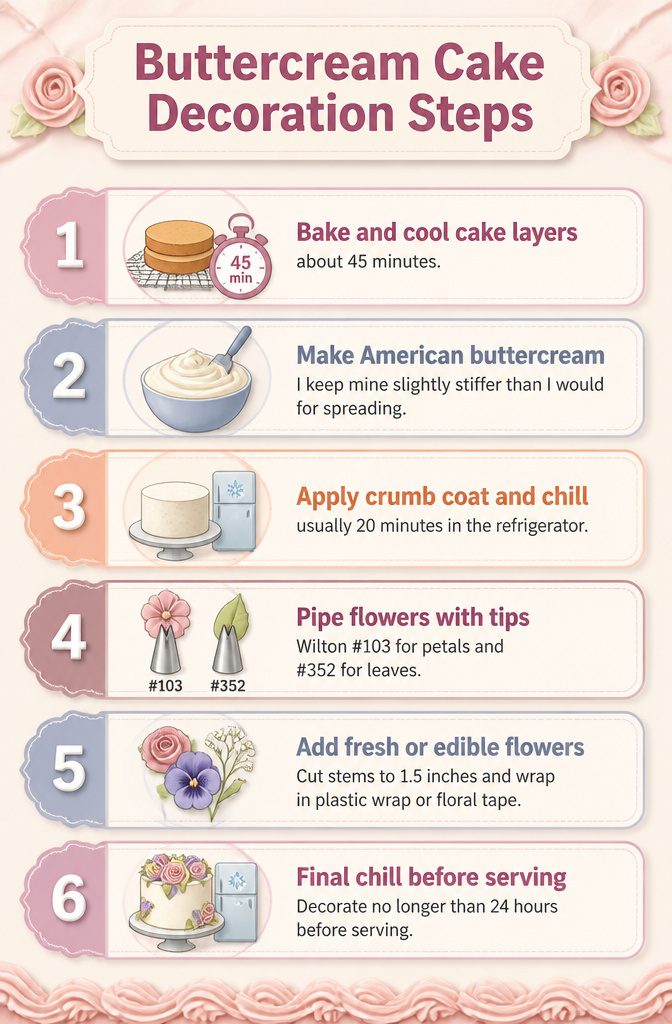
- Bake your cake layers and let them cool completely, about 45 minutes. Warm cake will melt the buttercream, so this step is non-negotiable.
- Make a batch of American buttercream. I keep mine slightly stiffer than I would for spreading; the extra body holds a piped petal shape without sagging.
- Apply a thin crumb coat to seal in the loose crumbs, then chill the cake until the buttercream crusts over, usually 20 minutes in the refrigerator. A firm surface is what lets you pipe directly onto the finished cake without denting your work.
- Pipe the flowers using a Wilton #103 tip for petals and a #352 for leaves. The #103 is narrow enough for small roses and ruffled daisies; the #352 gives you a ridged leaf with one squeeze and pull.
- If you are adding fresh or edible flowers, place them now. For non-edible varieties, cut stems to 1.5 inches and wrap each one in plastic wrap or floral tape so no sap or pesticide touches the cake.
- Return the cake to the refrigerator for a final chill. Decorate no longer than 24 hours before serving; buttercream flowers soften and fresh flowers wilt with time.
Edible Flowers
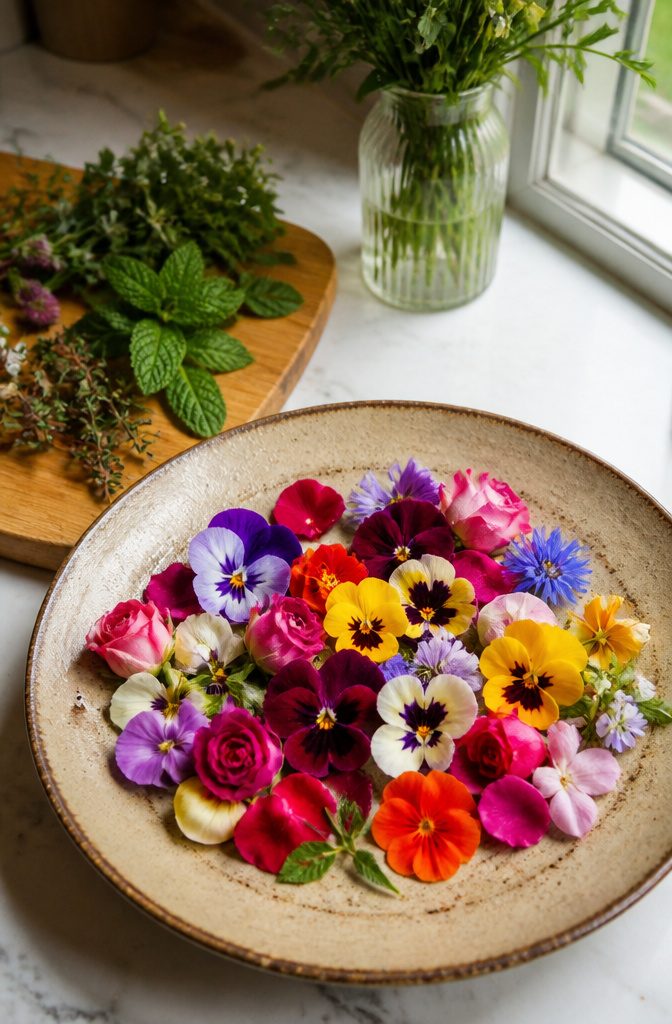
Not every bloom belongs on a cake.
Pansies, roses, and nasturtiums are safe choices with mild flavors that read as floral rather than vegetal. Chive blossoms and other herb flowers can overpower buttercream; I skip them unless the cake itself is savory.
Fresh edible flowers need gentle handling: wash in cool water, pat completely dry, and use within 3–4 days of purchase while they still hold their structure.
Most edible flowers come from flowering herbs like lavender, rosemary, cilantro etc. A lot of perennials are edible including violas, pansies, and nasturtiums.
That distinction matters because grocery store floral departments stock roses that are pesticide-treated; the produce section is the right place to ask for edibles, or you will need to order from a specialty grower and absorb the shipping cost.
Non-Edible Flowers
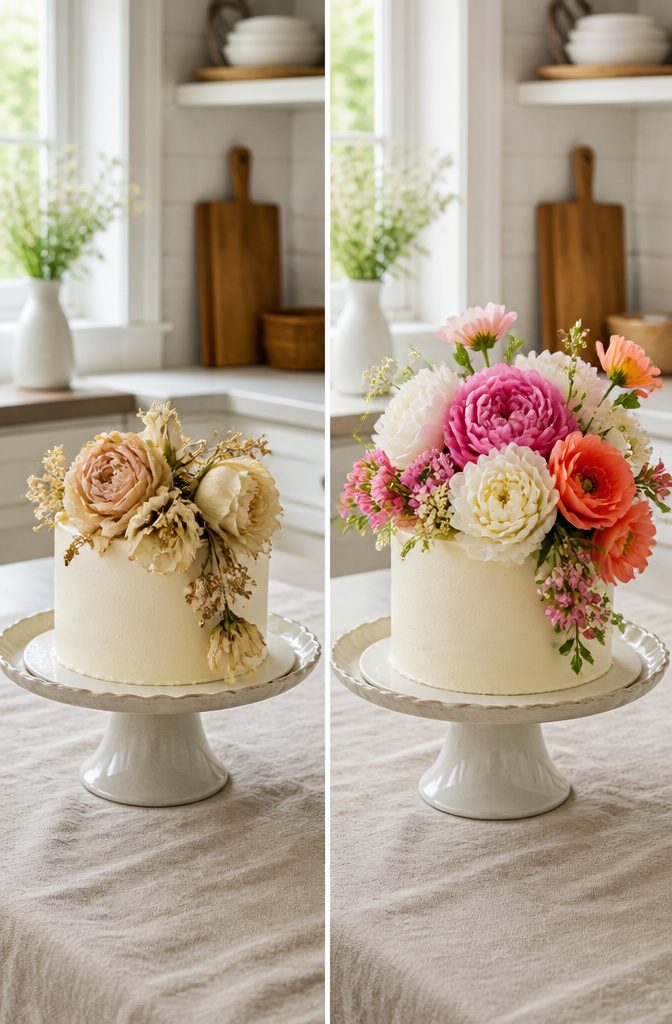
Fresh flowers can look stunning on a cake, but most varieties are not meant to be eaten. The safest approach is to treat every bloom as non-edible unless you have verified otherwise.
Cut stems to about 1.5 inches so they sit cleanly without piercing too deep. Before inserting, wrap the stem ends in floral tape or slip them into straws to block sap and moisture from seeping into the cake.
A ridge of buttercream built up on the surface works well as a base, so the flowers rest in frosting that gets removed rather than the cake itself.
Some flowers are outright toxic.
Poinsettias and foxglove are two to avoid entirely. A flower that looks harmless is not proof that it is food-safe, and organic status does not change that.
Owners on Reddit mention dipping stems in white chocolate as a barrier, though I still prefer the straw method for the cleanest separation.
Decorate no more than a day ahead, and tell guests to lift the flowers off before serving.
Buttercream Against Other Icings
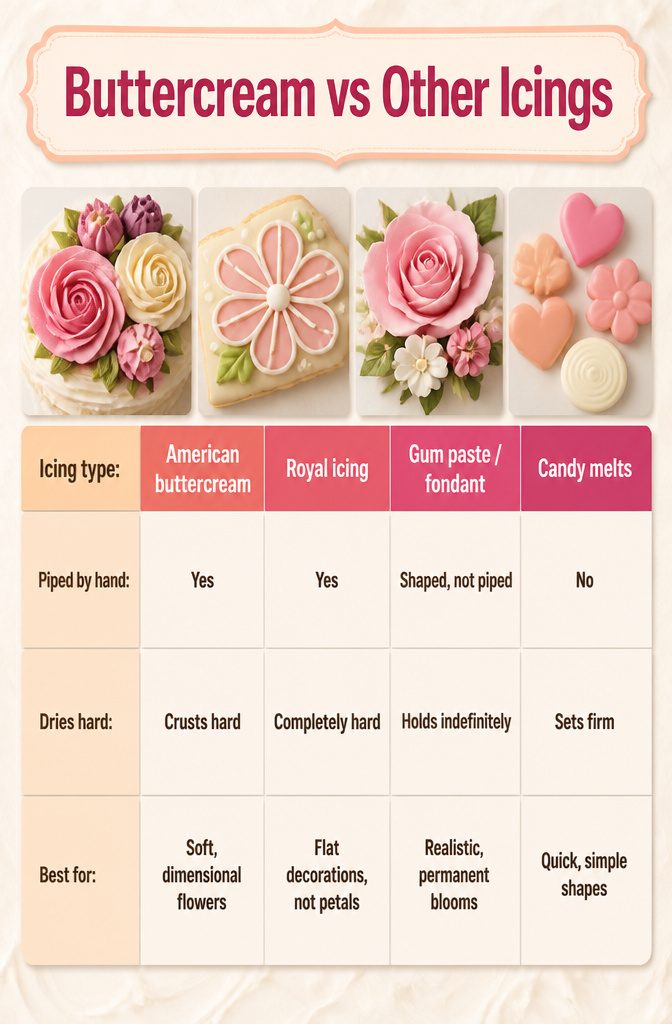
American buttercream is the standard for piped flowers because it crusts hard enough to hold its shape while still tasting like frosting, not candy.
Royal icing dries completely stiff and works well for flat decorations, but the brittle surface cracks on soft petals.
Gum paste and fondant flowers are shaped by hand rather than piped; they take more time and skill to learn, yet they hold indefinitely and read as more realistic.
Candy melts set the fastest and need no piping bag at all, though the sweetness is one-note and the shapes stay simple.
| Icing type | Piped by hand | Dries hard | Best for |
|---|---|---|---|
| American buttercream | Yes | Crusts hard | Soft, dimensional flowers |
| Royal icing | Yes | Completely hard | Flat decorations, not petals |
| Gum paste / fondant | Shaped, not piped | Holds indefinitely | Realistic, permanent blooms |
| Candy melts | No | Sets firm | Quick, simple shapes |
Tools Worth Having
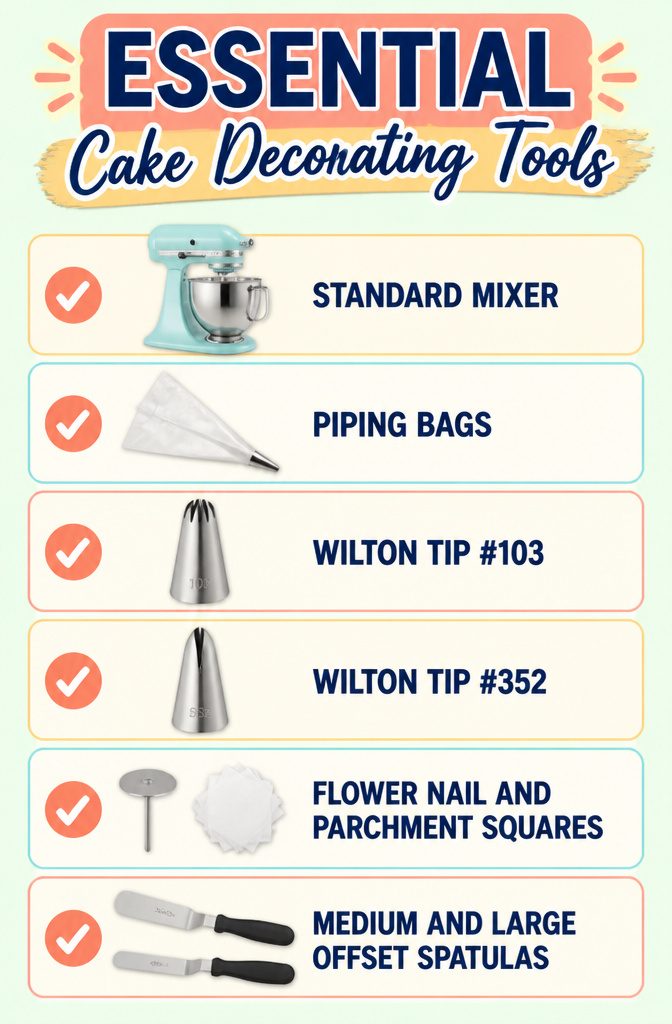
Most cake decorating kits push tools you’ll use once and lose in a drawer. I keep my setup narrow.
- A standard mixer handles the buttercream base. No specialty machine needed.
- Piping bags are non-negotiable. Disposable or reusable, your call.
- Wilton tip #103 shapes the petals. It’s the one I reach for most.
- Wilton tip #352 does leaves. Pair it with the petal tip and you’ve got a full flower.
- A flower nail and parchment squares speed things up, especially for roses you build off-cake. Skip them and you can still pipe directly onto the surface; it just takes steadier hands.
- Medium and large offset spatulas spread and smooth. One angled blade beats three novelty scrapers.
The spatulas-only method works too. Wilton’s summer cake builds buttercream flowers with just a couple of spatulas, no tips at all.
The petals come out looser, more impressionistic. I prefer the control of a tip, but if you’re not buying anything new, start with what you have.
Cupcake Bouquets
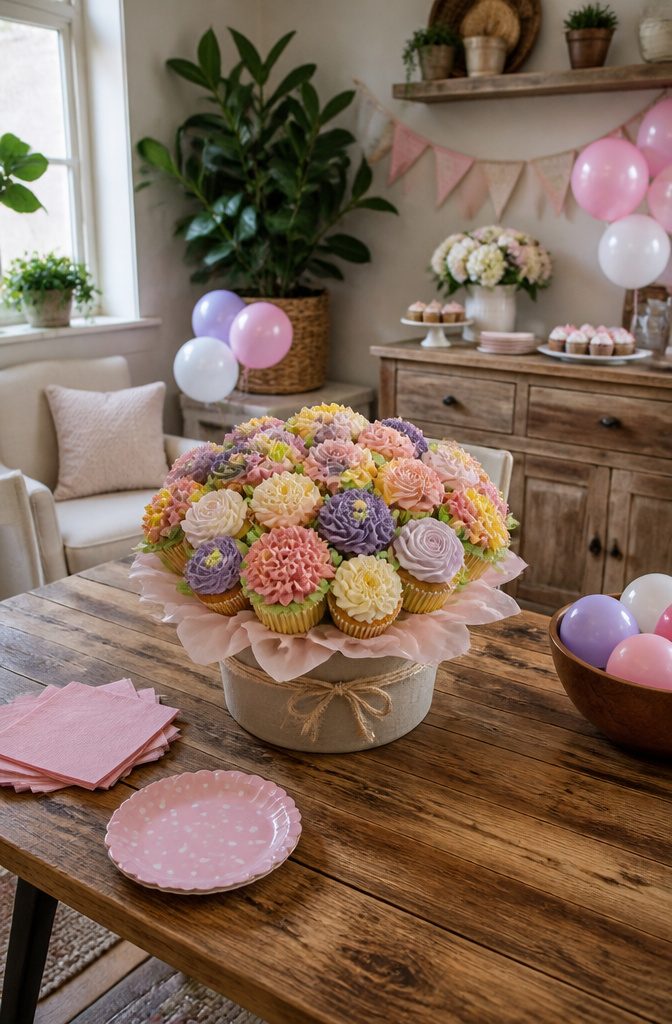
A cupcake bouquet puts the same buttercream flowers on individual cakes instead of one large one. Each cupcake gets its own piped bloom, then the batch nests into a container so the whole arrangement looks like a florist’s delivery.
The piping skills are identical to what you’d use on a full cake, but what you get back is portability: no slicing, no serving spatula, no plates drifting around a party where people are already juggling drinks and gift bags.
American buttercream works here, and it crusts hard enough that the flowers survive the trip. That crust is useful because the cupcakes touch each other and the container walls; softer frosting would smudge on contact.
The portions sort themselves, which matters more than it sounds for kids’ birthdays or office gatherings where a knife and plate feel like an event. What you give up is visual scale.
A single cake gives you one continuous canvas; a bouquet breaks the design into a dozen or so small circles, so the overall effect reads as cheerful rather than formally composed. For most weeknight celebrations, that trade-off favors the bouquet.
Storage and Timing
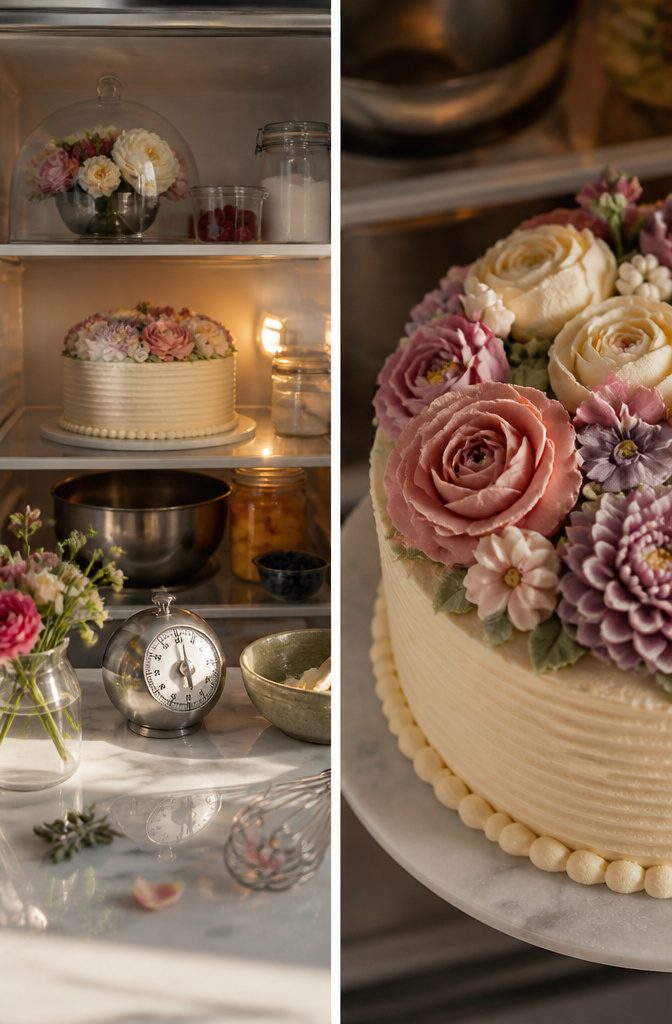
Buttercream flowers hold their shape best when the cake has had a few hours in the refrigerator, so I plan my timeline backward from when guests will actually cut in.
Decorate no longer than 24 hours before serving; the frosting stays safe, but the cake beneath it starts to stale and the brightest flavors fade.
I chill the finished cake uncovered until the buttercream sets hard, then tent it loosely with plastic so nothing smudges the petals.
Cold tightens buttercream into something almost porcelain, which is exactly what you want for transport.
Set the cake out 30 minutes before slicing and those flowers soften back to something pleasant against a fork. Fresh flowers on top are a different case.
Refrigeration does them no favors; the damp cold wilts petals and can spot delicate colors. Add those at the last possible moment, or keep them in water nearby and place them as you set the cake on the table.
Frequently Asked Questions
What types of flowers can I use to decorate a cake?
You can use edible flowers like pansies, roses, and nasturtiums, or non-edible fresh flowers treated as decoration only.
Edible varieties should come from the produce section or a specialty grower, not a standard floral department where pesticide-treated blooms are common. For non-edible flowers, wrap stems and tell guests to lift them off before eating.
How do you put fresh flowers on top of a cake?
Cut stems to 1.5 inches, then wrap each stem in plastic wrap or floral tape before inserting. Some bakers slip stems into straws as a barrier, or dip them in white chocolate.
Build a ridge of buttercream on the surface so flowers rest in frosting that gets removed rather than the cake itself. Add them no more than 24 hours before serving, and avoid known toxic varieties like poinsettias or foxglove.
How do I prepare flowers for cake decoration?
For edible flowers, wash in cool water, pat completely dry, and use within 3–4 days of purchase while they still hold their structure.
For non-edible flowers, cut stems to about 1.5 inches, wash under cold water, and wrap the stem ends before inserting into the cake. Check organic blooms carefully for insects hiding under petals.
What is the best frosting for piping flowers?
American buttercream is the standard choice because it crusts hard as it sits, and that crust keeps piped petals from sagging. The high ratio of powdered sugar to butter drives the crust.
Keep the mix slightly stiffer than you would for spreading so the extra body holds its shape. Royal icing dries too brittle for soft petals, while gum paste and fondant are shaped by hand rather than piped.
How do you make a cake topper with flowers?
Pipe buttercream flowers directly onto a chilled, crusted cake using a Wilton #103 tip for petals and a #352 for leaves. Chill the finished cake until the buttercream sets hard, then tent loosely with plastic for transport.
For fresh or edible flowers, place them at the last possible moment since refrigeration wilts petals and spots delicate colors. Set the cake out 30 minutes before slicing so buttercream softens back to a pleasant texture.