The right shade of dark pink depends on whether you need the color to come from the ingredient or from a bottle.
Fresh strawberry puree stains batter honestly but can brown in the oven; gel dye gives you control, though the flavor stays plain vanilla underneath.
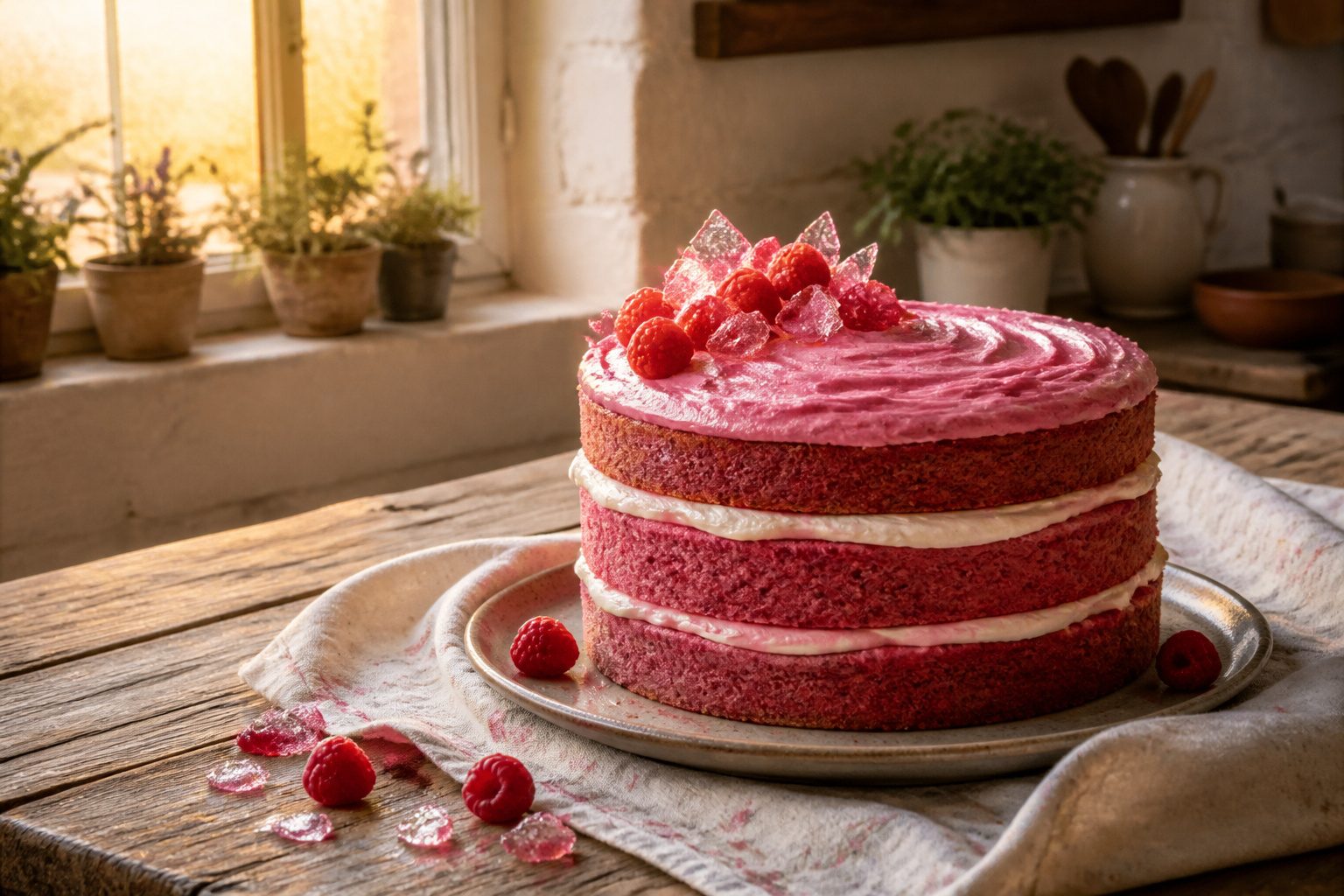
A Barbie cake demands that specific saturated rose, while a naked cake with pink layers lets the sponge itself carry the color, framed by white frosting between tiers.
1. Classic Strawberry Cake
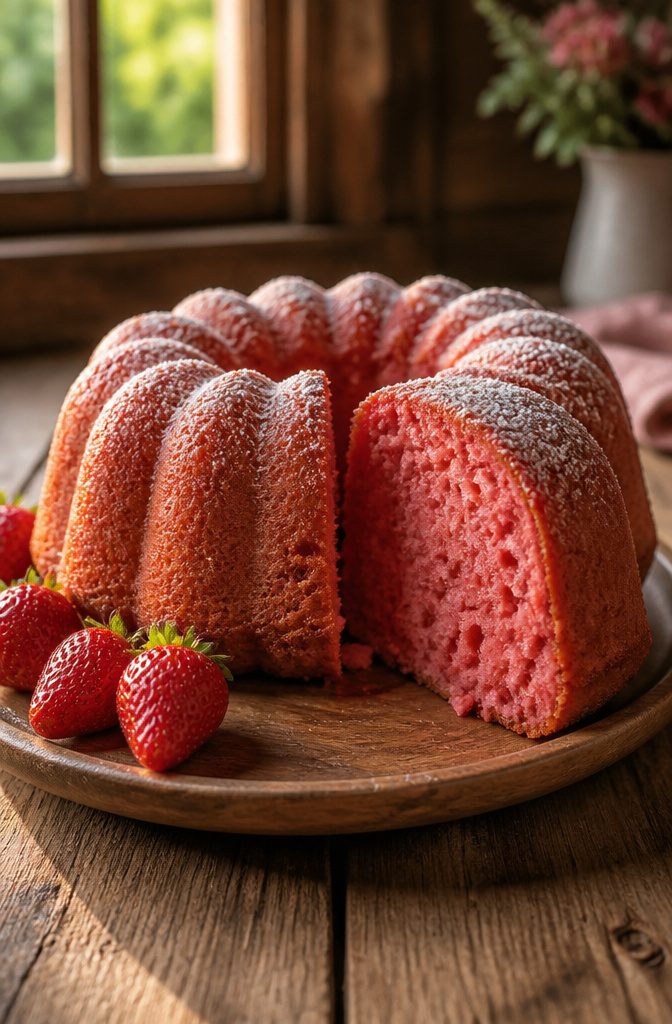
A strawberry cake built on fresh fruit or puree carries its color honestly, no bottle of dye required.
The berries stain the batter a deep, muted pink that reads as dark pink once the cake bakes, and their natural sugars keep the sweetness from tasting one-note.
The texture runs soft and moist, which makes this the cake I reach for when the guest list mixes kids at a birthday party and adults who want something that feels a little refined.
It holds up to tea-party forks without crumbling, and the crumb stays tender even a day after baking.
Strawberry puree does the double work here: color and sweetness both come from the same ingredient, so the flavor and the hue actually match.
That coherence is what separates a natural dark pink cake from one that looks strawberry-red but tastes only of vanilla and food coloring.
2. Vanilla Cake with Pink Buttercream
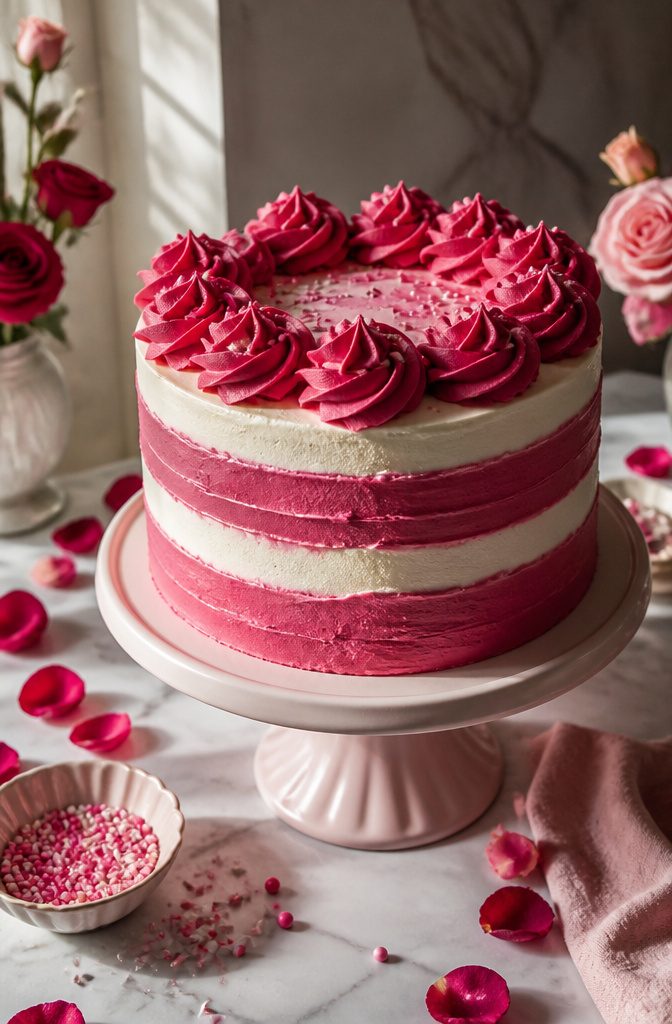
A vanilla sponge layered with pink-tinted buttercream gives you control over the exact depth of color without touching the cake batter at all.
The base stays familiar, the flavor stays classic, and the pink lives only in the frosting, where a few extra drops of gel dye push it from pale blush to deep rose.
This setup forgives hesitation. If the first tint looks too light, you beat in more color and refrost.
If a layer goes too dark, the next one balances it. The buttercream acts as a buffer between you and commitment.
For texture contrast, divide your batch: keep one portion white, tint the other pink, then swirl them in a single piping bag.
The streaked finish reads as more effort than it is. Add sprinkles to the pink portion if you want, or leave the surface clean and let the shade alone carry the celebration.
3. Barbie Cake
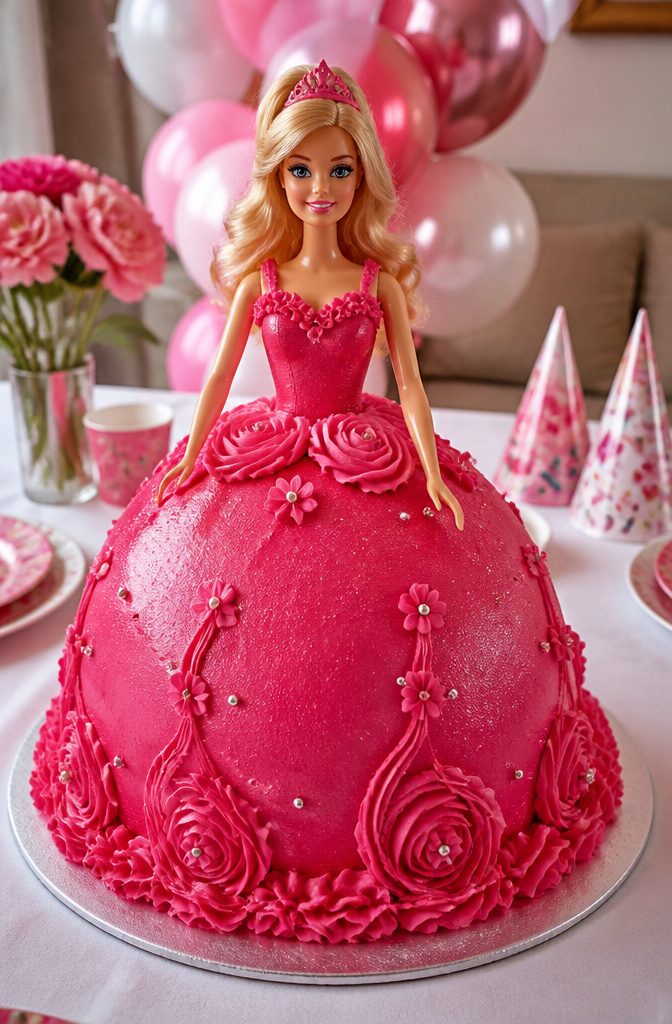
A Barbie cake starts with a doll pick stuck into a domed cake, then frosted from waist to base so the cake becomes the gown.
The frosting works as fabric: swirls, ruffles, or smooth fondant panels in dark pink, with edible shimmer pressed on wet buttercream if you want the glitter children expect.
This is the cake children request by name, and the request comes with requirements, the pink has to read as Barbie’s signature shade, not light, not bubblegum, dark enough to look deliberate against a white tablecloth.
The construction is straightforward. Bake in a rounded pan or a half-sphere, flip it domed-side up, carve a narrow well in the center for the doll’s legs, and crumb-coat before the final layer of color.
Piping ruffles with a petal tip hides every flaw and takes zero fondant skill.
The doll’s torso stays plastic; the cake owns everything below the waist. A 9-inch dome serves eight to ten slices, enough for a party table without leftovers that go stale.
A Barbie cake takes more time than it does advanced skill. You are not sculpting anything freehand, just frosting a shaped cake and adding shimmer.
The result reads as expensive bakery work because the silhouette is so specific, a figure in a ball gown, even though your grocery store carried every ingredient.
4. Pink Drip Cake
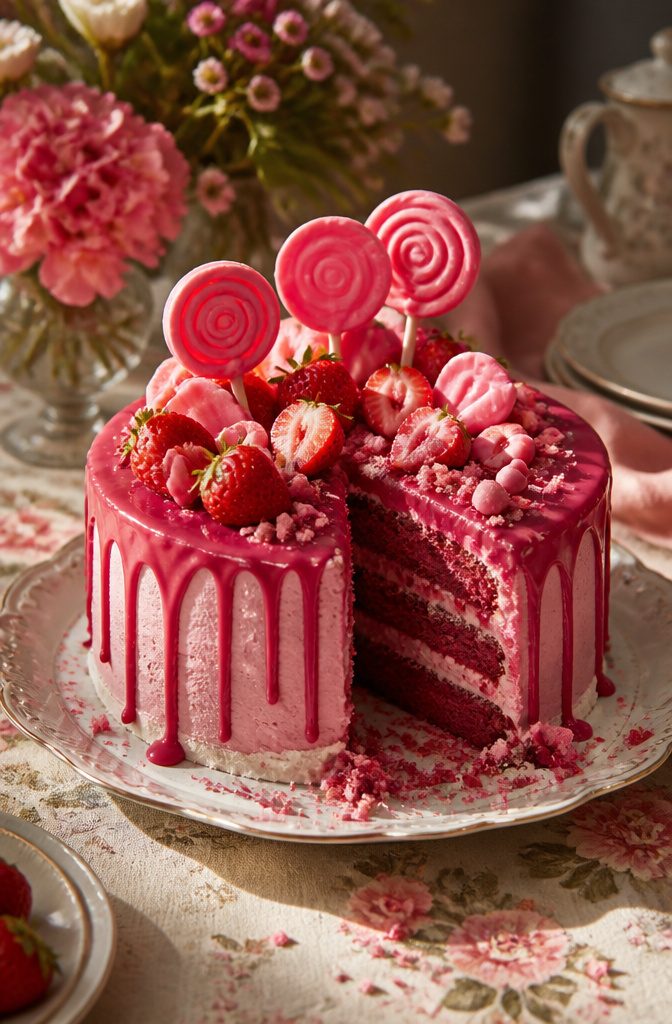
A drip cake earns its name from the moment the ganache hits the top edge and you let it run. For a dark pink effect with real depth, tint white chocolate ganache with enough gel color to push past pastel.
The fat in the white chocolate carries the pigment densely, so the drips read as saturated rather than washed out, and the ganache sets with a gloss that buttercream never achieves.
The assembly is forgiving. Frost your base cake smooth, chill it until the buttercream hardens, then pour the pink ganache onto the center and nudge it toward the edges with an offset spatula.
The cold frosting sets the drips as they fall, which controls the length and keeps them from puddling at the bottom.
For toppings, strawberries and pink lollipops do the heavy lifting. The berries bring a natural red-pink that echoes the ganache without matching it exactly, and the lollipops add height and a little playfulness that works for birthdays or showers.
Marshmallows are an option if you want more texture, though I find they can crowd the silhouette. The finished cake looks more elaborate than the effort behind it, which is the point of this style.
5. Pink Velvet Cake
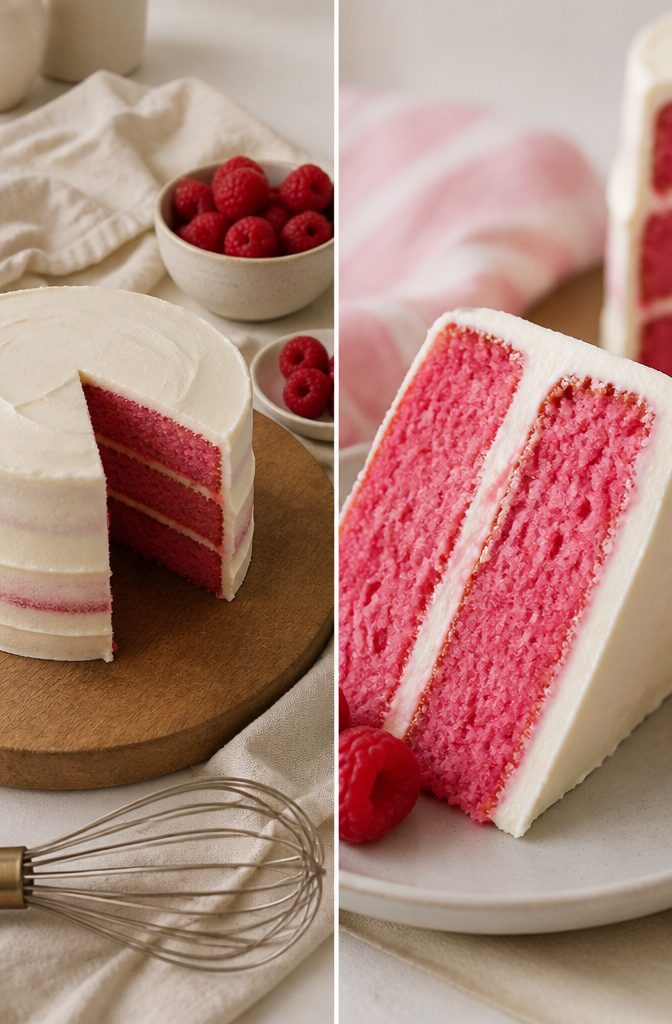
Pink velvet cake keeps the dense, tender crumb that makes red velvet famous, but leaves out the cocoa powder entirely.
Without that faint chocolate backbone, the tang from buttermilk and vinegar steps forward, and the color reads as a true dark pink rather than the deep burgundy red velvet demands.
The recipe I reach for yields 14 servings and moves fast: 45 minutes of prep, 20 minutes in the oven, 65 minutes total from start to finish.
The ingredient list is straightforward: 3/4 cup unsalted butter, 1 1/2 cups granulated sugar, and 3 cups cake flour for the base. Cream cheese frosting is the standard finish, and it works because the slight sharpness cuts what would otherwise be one-note sweetness.
Red velvet needs its cocoa to justify the name; pink velvet doesn’t pretend to be chocolate anything.
That honesty is what makes it the better choice when you want the color to be the point. The vintage piping you sometimes see on these cakes is optional, but the color itself carries the whole look.
6. Pink Marble Cake
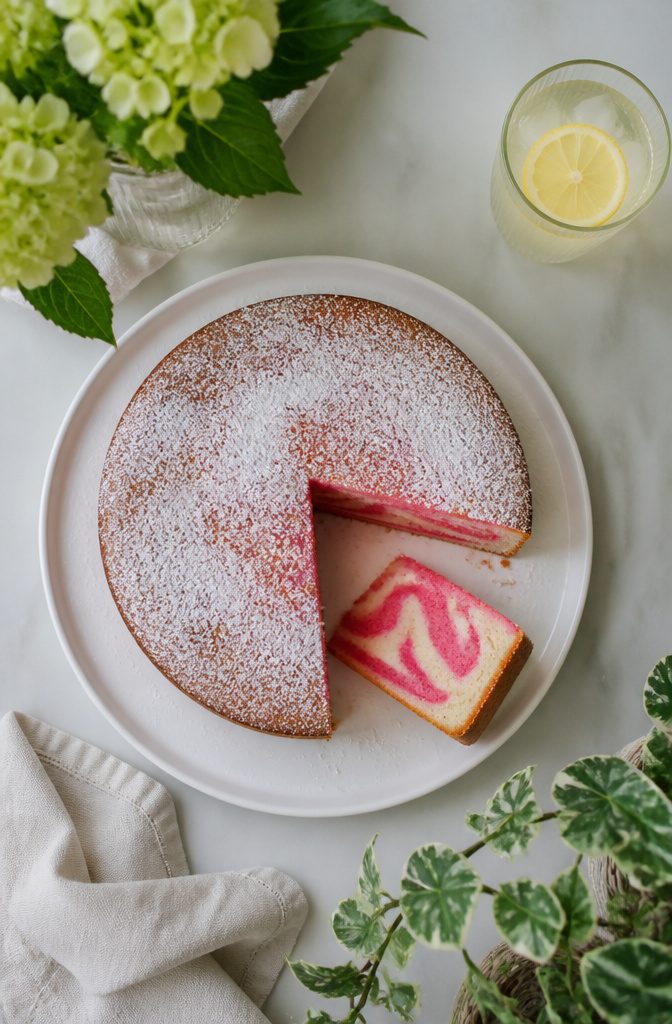
A pink marble cake starts with a straight vanilla batter, then you pull out roughly a third and tint it dark pink.
Drop that pink batter onto the white in spoonfuls, run a knife through it a couple of times, and bake. The marbling lands as patches of dark pink against white, not a uniform swirl, which is the look you want.
The outside stays plain or takes a light glaze, maybe a dusting of icing sugar.
That restraint keeps the focus on the interior pattern, and it works for anything from a casual afternoon to a small shower where you want some color without going full theme cake.
Two passes with the knife, three at most, or the pink and white muddy into a single dull shade. Under-swirl and you get distinct blocks of color; over-swirl and you lose the contrast entirely.
7. Pink Cupcakes
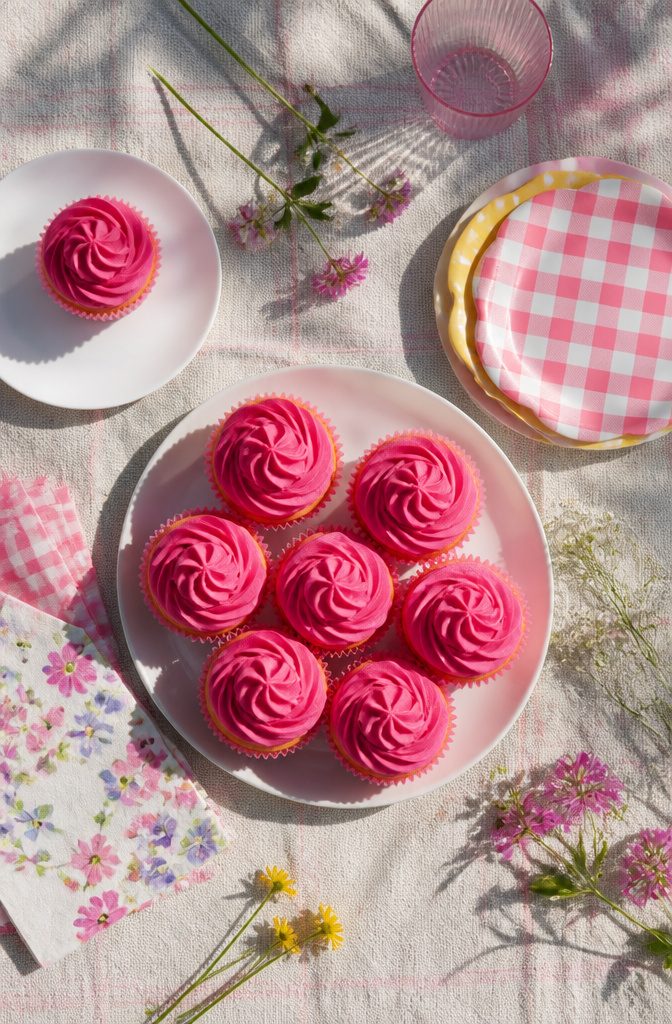
A dark pink swirl of buttercream on a single cupcake delivers the same visual punch as a tiered cake without the logistics.
Cupcakes travel in a standard bakery box and arrive at a party or office intact, which already puts them ahead of any layered cake that needs careful transport and a flat surface.
The portion control matters more than people expect.
For a gathering of eight to twelve, a full cake leaves half of it staring back at you; cupcakes let you bake exactly the count you need and freeze the rest of the batter for another round.
No knife, no serving plate, no crumbs on the tablecloth, and no one awkwardly trying to cut even slices while the coffee gets cold.
Vanilla, chocolate, or red velvet bases all take the same pink buttercream well, so the color stays consistent even when guests want a choice of cake flavor underneath.
School parties and baby showers are where I would reach for these first, but they work just as well for an afternoon tea where the host would rather pour than slice.
8. Naked Cake with Pink Layers
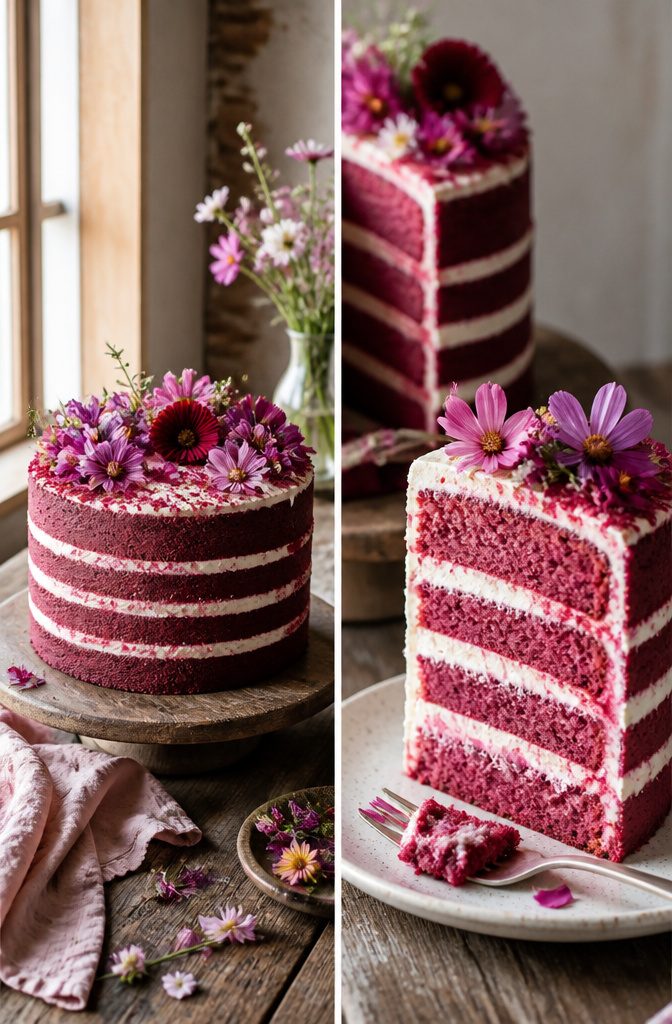
A naked cake with dark pink layers wins on the one detail that matters for this color: the contrast between the cake and the frosting.
The sponge itself carries the color, tinted with gel food coloring or with a touch of red to push it deeper, while the frosting between layers stays white or pale.
That thin stripe of frosting reads as a frame, not a cover, so the dark pink reads as the point of the whole dessert.
The outside gets only a light coat, scraped back until the cake edges show through.
You see the layers stacked like stripes, the color uninterrupted by heavy decoration. Fresh flowers or fruit on top finish it without fighting the structure.
This style has stayed popular because it solves a real problem: a fully frosted cake in dark pink can look like a toy, but the exposed layers keep the color grounded in something you actually want to eat.
The rustic look also forgives imperfections that would ruin a smooth finish, which matters if you are baking the night before and not hiring a pro.
Without thick frosting sealing the outside, a naked cake dries faster and needs to be served within a day of assembly. For a party where the cake sits out for hours, that is the limit to weigh.
9. Pink Sprinkle Cake
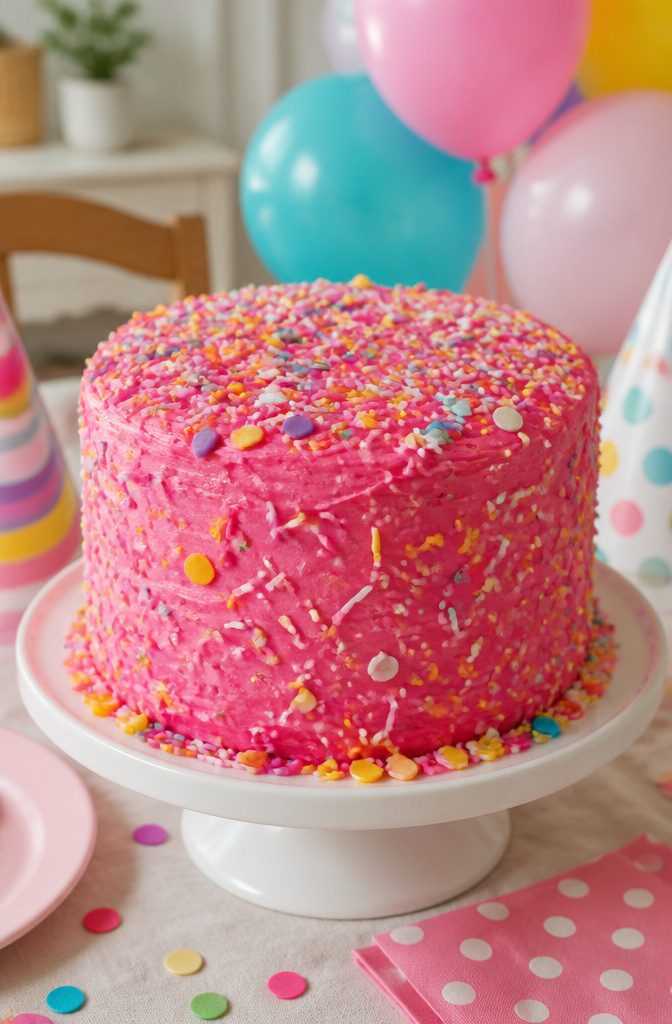
A pink sprinkle cake is the one to bake when the guest list runs heavy on children under ten.
The base is a straightforward vanilla sponge, nothing that fights the frosting for attention, and the buttercream gets tinted to a dark pink that reads as festive rather than pastel.
The real work is done by the sprinkles: pressed into the sides and scattered across the top, they add crunch against the soft crumb and enough visual noise to keep a roomful of kids circling the cake table.
The sponge can go into any standard tin you own, round or square, which matters more than it sounds when you are baking the night before a party and do not want to buy a specialty pan.
The shade of pink is adjustable by the drop, from blush up to a deep rose. More color does not change the taste, so you can match the frosting to the paper plates without a second thought.
This is not the cake for adults who flinch at sugar.
The sprinkles add texture but also sweetness, and the overall effect is unapologetically playful. For a mixed-age party I would still choose it, though I would set out a bowl of fresh berries on the side for the parents.
10. Pink Sheet Cake
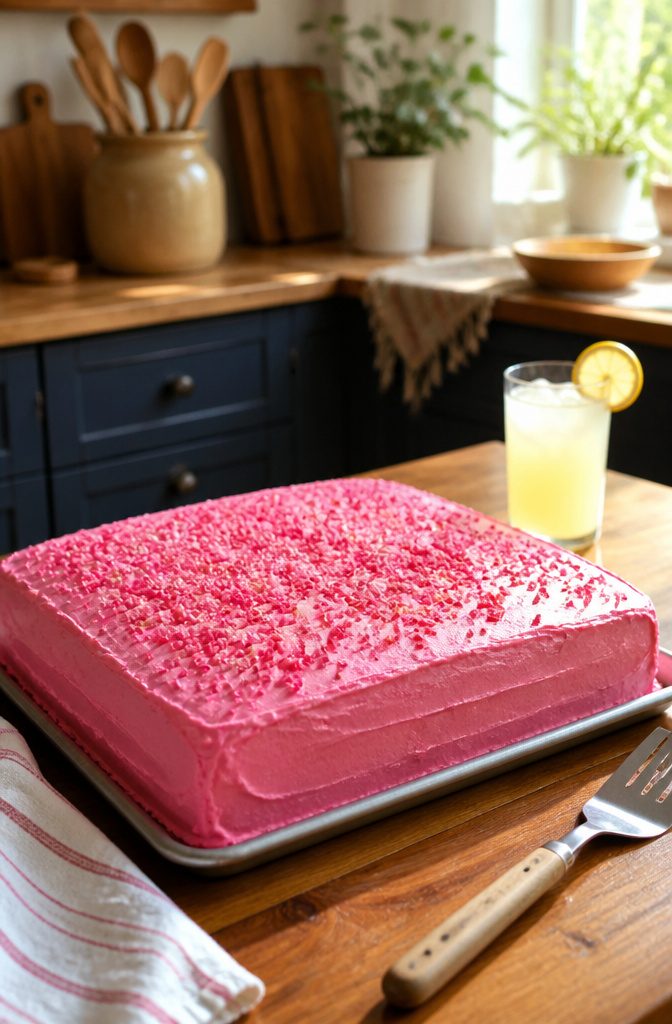
A single pan and one layer of frosting carry all the visual weight here, which makes this the practical choice when you need to feed twelve to twenty people without stacking, crumb-coating, or crossing your fingers that the layers slide.
The dark pink buttercream does the heavy lifting: spread it thick with an offset spatula, and the color reads as intentional rather than plain.
Sheet cakes bake in roughly thirty to thirty-five minutes, cool in the pan, and travel well with a lid snapped over the top.
For flavor, cherry or raspberry puree stirred into the batter deepens the pink naturally and gives the cake more character than vanilla with food coloring alone.
Rose water works too, though I would keep it light; a half-teaspoon is plenty before it starts to taste like soap.
The real advantage is portioning. Every slice is the same size, which matters at a school event or potluck where someone always ends up with the crooked corner piece from a round layer cake.
Frost the top, add sprinkles or piped dots if you have ten extra minutes, and you are done.
Ingredients for the Color
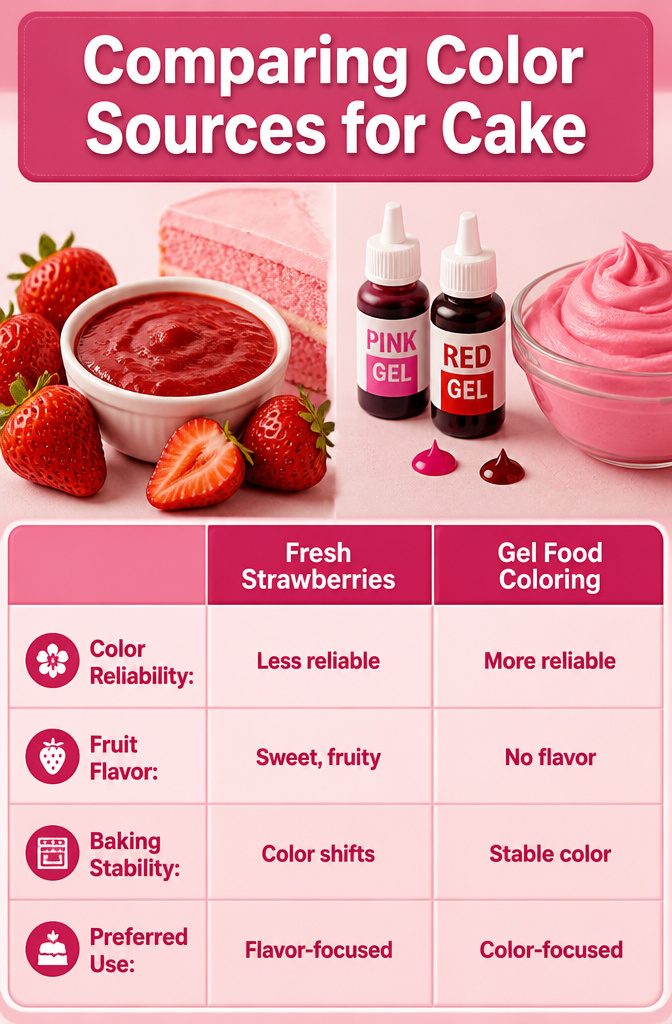
Fresh strawberries or strawberry puree in the batter and frosting will give you a natural pink hue and a sweet, nostalgic flavor.
That route carries risk: the heat and acid in cake batter can shift the color, especially with anthocyanin-based tints like beet juice or raspberry puree.
Beet-based coloring in particular is prone to changing shade when baked or paired with acidic ingredients. For frosting, where no heat hits it, natural colorants behave more predictably.
Gel food coloring is the surer path to the darkest, most reliable pink. For the deepest shades, use pink gel, sometimes with a touch of red gel layered in.
You trade away the fruit flavor, but you gain control: the color you mix is the color that sets, no browning or fading in the oven.
My own preference runs split. I will use strawberry puree in a vanilla cake with pink buttercream when I want the flavor to read as clearly as the color.
When the design needs to match a specific shade, say for a themed party where the pink has to read from across the room, I reach for gel.
Decoration Techniques
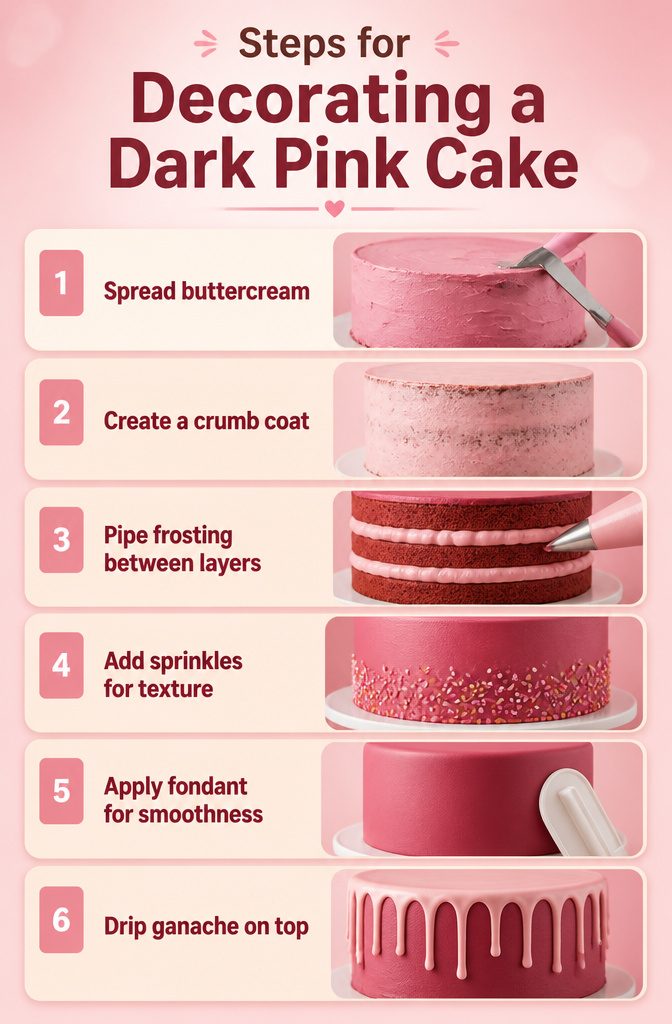
Buttercream is where most dark pink cakes start, and the method you choose decides how finished the cake looks.
A simple spread with an offset spatula gets you a rustic finish in minutes; a crumb coat chilled for about 10 minutes locks in the crumbs before the final layer goes on.
For something sharper, pipe the frosting between layers and smooth the exterior with a scraper. The two-tone effect one source describes, piping white and pink buttercream from a single bag, gives clean stripes without specialty tools.
Sprinkles are the fastest way to add texture. Press confetti sprinkles onto the bottom edge while the buttercream is still tacky, or coat the whole cake for a birthday look that hides imperfections.
Fondant delivers the smoothest surface and the truest color saturation, but it demands more time and a steadier hand. Most home bakers I know skip it unless the cake needs to travel.
The drip effect, done with tinted ganache or melted white chocolate poured over the top edge, looks dramatic and requires almost no piping skill.
Layered frosting, built up in contrasting shades of pink with different tips, reads more traditional and takes longer.
Drip suits a modern birthday or anniversary cake; layered piping fits showers and celebrations where you want the cake to look deliberately decorated.
When to Bake One
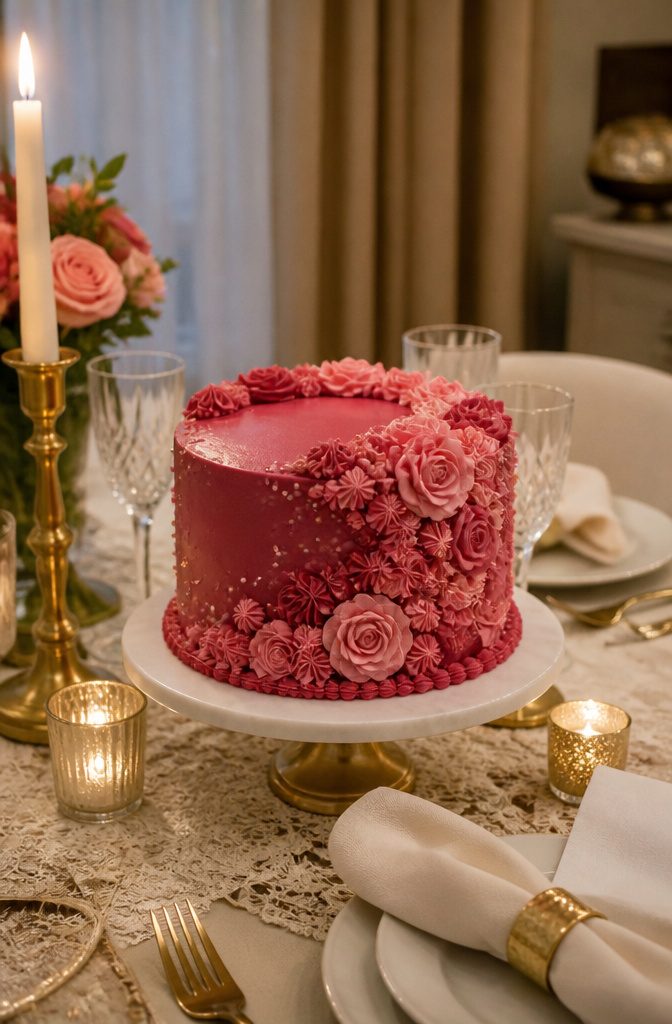
A dark pink cake earns its place at birthdays, baby showers, and bridal events for three different reasons that matter to the person cutting the first slice.
Birthdays call for color that reads as celebration from across the room. Dark pink carries enough saturation to feel festive without drifting into red territory that some guests find too loud for a family table.
The shade photographs well under indoor lighting, which matters when half the party is snapping phone pictures before the candles go out.
Baby showers lean on pink’s long-standing association with welcome and tenderness.
Dark pink specifically avoids the washed-out look of lighter shades that can read as uncertain or tentative; it signals intention rather than default. For hosts who want the color without the nursery-room cliché, the deeper tone does that work.
Bridal showers and bachelorette gatherings put a premium on how the cake performs on camera. Dark pink provides contrast against white plates, marble countertops, and the neutral backdrops most rental venues supply.
The color holds up in flash photography where paler pinks blow out to near-white, and it pairs cleanly with gold or silver accents that bridal decor tends to feature.
The common thread is visibility: dark pink reads clearly in every context where the cake doubles as both dessert and centerpiece.
Frequently Asked Questions
What ingredients can I use to make a dark pink cake?
Fresh strawberries or strawberry puree will give you a natural pink hue and sweet flavor, though heat and acid in the batter can shift the color during baking.
For the darkest, most reliable shade, use gel food coloring, sometimes with a touch of red gel layered in. Beet juice and raspberry puree are other natural options, but they are prone to browning or fading in the oven.
How do I decorate a pink cake?
Buttercream is the standard starting point: spread it rustic with an offset spatula, or chill a crumb coat for 10 minutes before smoothing the final layer.
Sprinkles pressed onto tacky buttercream add texture fast, while a drip of tinted ganache or melted white chocolate looks dramatic with almost no piping skill.
Fondant gives the smoothest surface and truest color saturation, but most home bakers skip it unless the cake needs to travel.
What occasions are suitable for a pink cake?
Dark pink cakes work well at birthdays, baby showers, and bridal events because the color reads clearly from across a room and photographs well under indoor lighting.
At birthdays the saturation feels festive without drifting into loud red territory. For showers the deeper tone signals intention rather than nursery cliché, and it holds up in flash photography where paler pinks blow out to near-white.
Is there pink velvet cake?
Yes. Pink velvet cake keeps the dense, tender crumb and tangy buttermilk-vinegar base that make red velvet famous, but leaves out the cocoa powder entirely.
Without that faint chocolate backbone, the color reads as a true dark pink rather than deep burgundy, and cream cheese frosting is the standard finish.