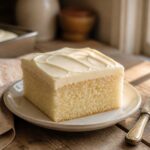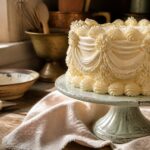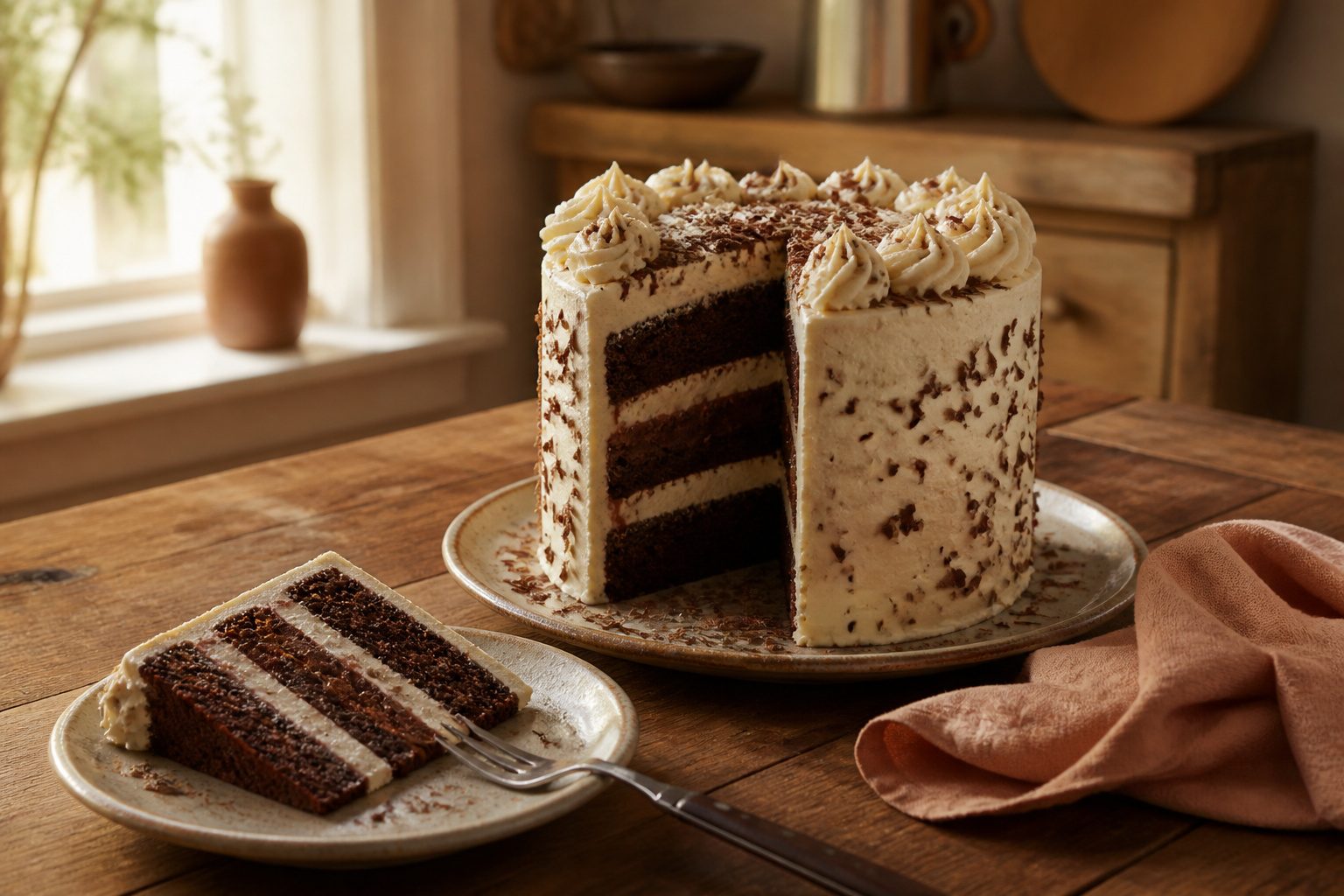
A 6 inch tall cake spans the practical to the celebratory, from a quiet midweek gluten-free bake to a stacked banana pudding centerpiece, and the single factor that decides which version belongs in your oven is the time you have before you need to slice it.
Pudding-filled builds demand an overnight chill so the custard firms; buttercream cakes can be frosted and served the same afternoon.
The 350°F baseline and the 0.56 pan-area multiplier stay constant across every flavor, but the leavening does not scale cleanly down from an 8- or 9-inch recipe, and a 6-inch chocolate crumb will read done on the outside while the center still holds wet batter beneath the dark cocoa surface.
1. Vanilla 6 Inch Cake
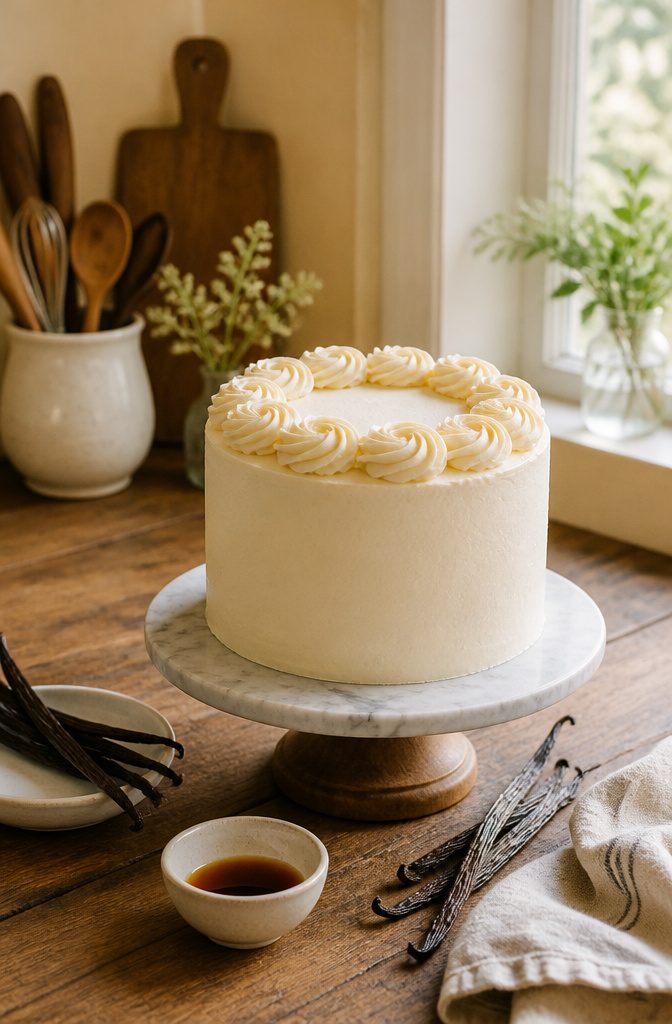
A vanilla 6 inch tall cake built from 270 grams all-purpose flour, 300 grams sugar, and 3 large eggs at room temperature gives you the cleanest canvas for whatever frosting or filling you have in mind.
I like this ratio because the batter stays pourable without being thin, and the crumb sets up fine enough to slice cleanly for a layer cake.
The fat here is split between 56 grams butter and 120 mL neutral oil, which keeps the cake moist past day one. Sour cream at 170 grams and 180 mL milk both need to be room temperature, or the batter seizes and bakes uneven.
Bake at 350°F for 25–35 minutes; my preference is the shorter end if your oven runs hot, since a 6-inch pan carries more batter depth per inch of surface than the 8- or 9-inch most home bakers are used to.
For American buttercream scaled to this pan size, I would start with 1 cup unsalted butter at room temperature, beaten pale, then work in 3 1/2 cups sifted powdered sugar with 2 to 3 tablespoons heavy cream to loosen it.
That quantity covers a two-layer 6-inch cake with a thin crumb coat and a finished layer, or a single tall layer with generous piping. Add the cream one tablespoon at a time; you can always thin, but you cannot un-thin.
2. Chocolate 6 Inch Cake
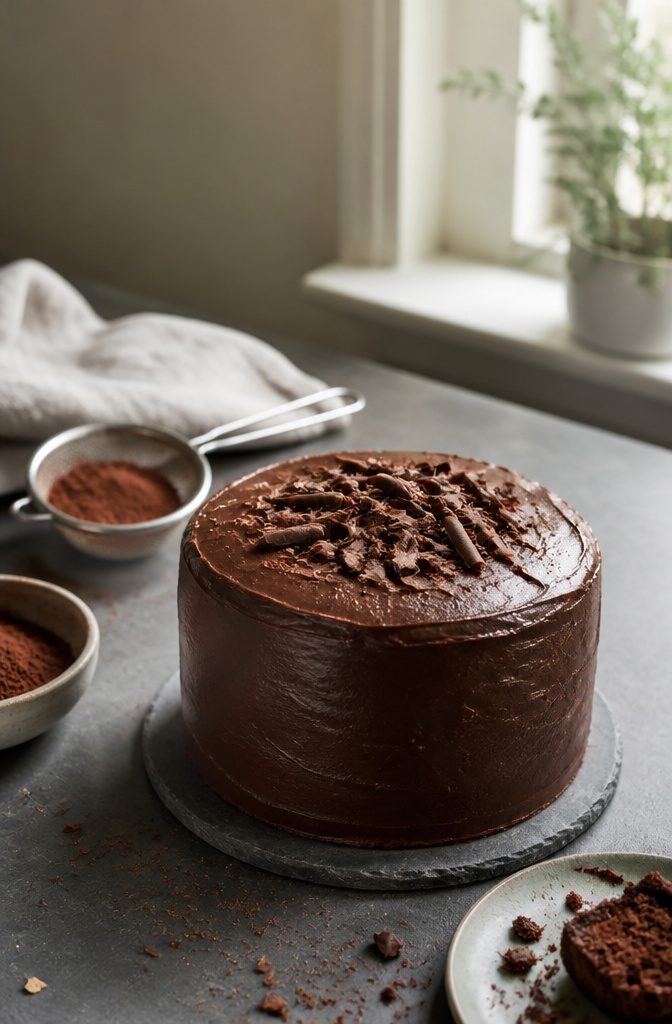
A chocolate 6 inch tall cake needs more than just cocoa powder to keep from drying out. I swap in 5 tablespoons of cocoa powder for an equal portion of flour and add 1/3 cup sour cream to the batter.
The sour cream does something specific here: its acidity reacts with the cocoa’s natural compounds to tenderize the crumb, giving you the moisture and density that chocolate cakes often lack without turning gummy.
The bake stays at 350°F for 25–35 minutes, same as the vanilla base. That range matters more with chocolate because the cocoa makes the crumb harder to read.
I start checking at 25 minutes with a tester, since the dark color hides the visual cues you’d get from a lighter cake. Spring back at the center still works, but the tester is the safer call.
The flavor stays rich without turning heavy. That much cocoa can push the cake toward a brownie-like texture if you overbake even slightly, and the sour cream adds a tang that needs balancing in your frosting choice.
A simple buttercream with a little extra salt works better than something already acidic.
3. Banana Pudding 6 Inch Cake
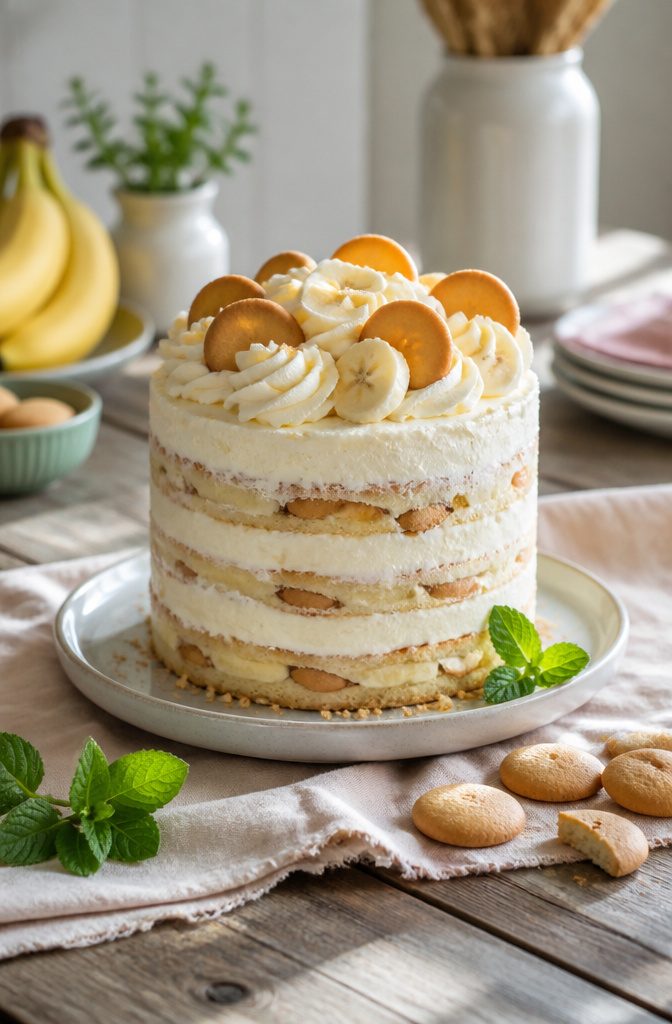
Banana pudding cake is the one 6 inch tall cake where the filling does more work than the frosting.
I build it with banana cake layers, vanilla pudding between them, and a thin coat of whipped cream or cream cheese frosting on the outside.
The pudding soaks into the crumb and gives you that dense, custardy bite people expect from the Southern classic, but it changes how you put the cake together.
Standard buttercream cakes get filled, frosted, and served.
Pudding-filled cakes need at least two hours in the refrigerator, preferably overnight, so the custard firms up enough to slice cleanly. Without that chill, the layers slide and the pudding squeezes out the sides when you cut.
I also dam my layers with a ring of stiff buttercream before adding the pudding, which keeps the filling from reaching the edge and softening the outer frosting.
The assembly order matters more here than with other 6 inch tall cakes. I level my layers while they are still slightly warm, then cool them completely before adding any moisture.
Warm cake turns pudding into soup. I have seen bakers try to rush this and end up with a trifle instead of a layer cake.
4. Funfetti 6 Inch Cake
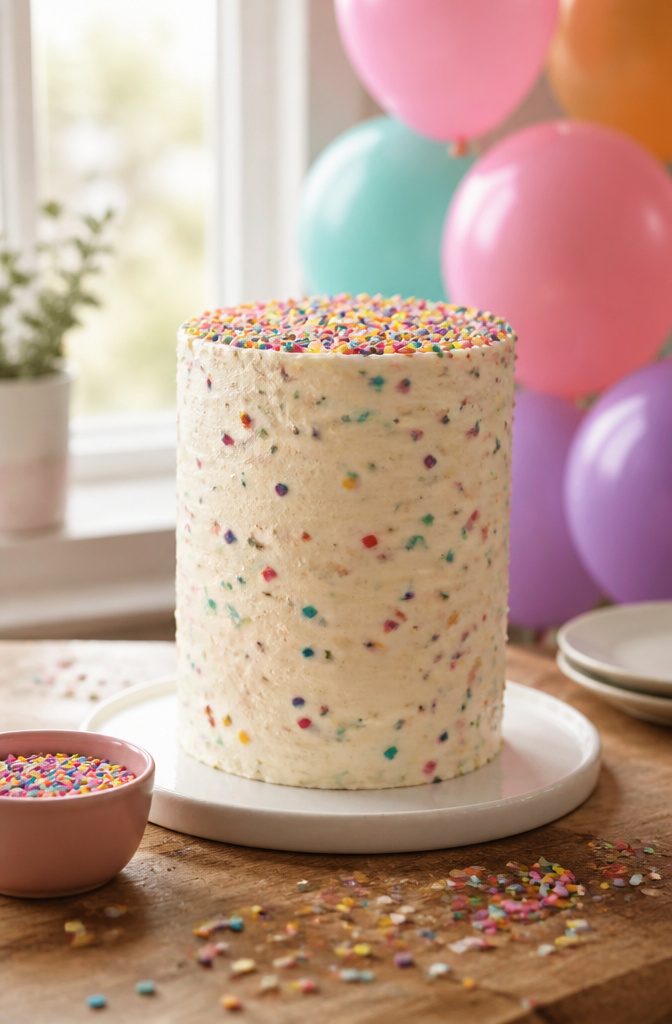
A Funfetti 6 inch tall cake is the small-batch answer to a birthday that does not need a sheet pan.
The batter starts with room-temperature butter and eggs, then sprinkles get folded in at the very end so the streaks stay distinct rather than muddying into gray.
Not all sprinkles behave the same way in a 25–35 minute bake.
Jimmies, the long sugar strands, hold their color and shape; nonpareils, the tiny balls, bleed dye into the crumb and can leave you with a streaked, almost tie-dyed interior that some people love and others do not.
Quins, the flat discs, split the difference: moderate bleed, moderate shape retention. If you want the classic confetti look with clean color dots, jimmies are the safer bet.
Fold gently and quickly, maybe ten strokes, then get the pan into the oven.
Overworking knocks the coating off and starts the bleed early, and a 6 inch pan means the batter is deeper than in a standard layer so the center takes longer to set.
The edges will read done before the middle does; a toothpick pulled from the center should come out with a few moist crumbs, not wet batter.
5. Gluten-Free 6 Inch Cake
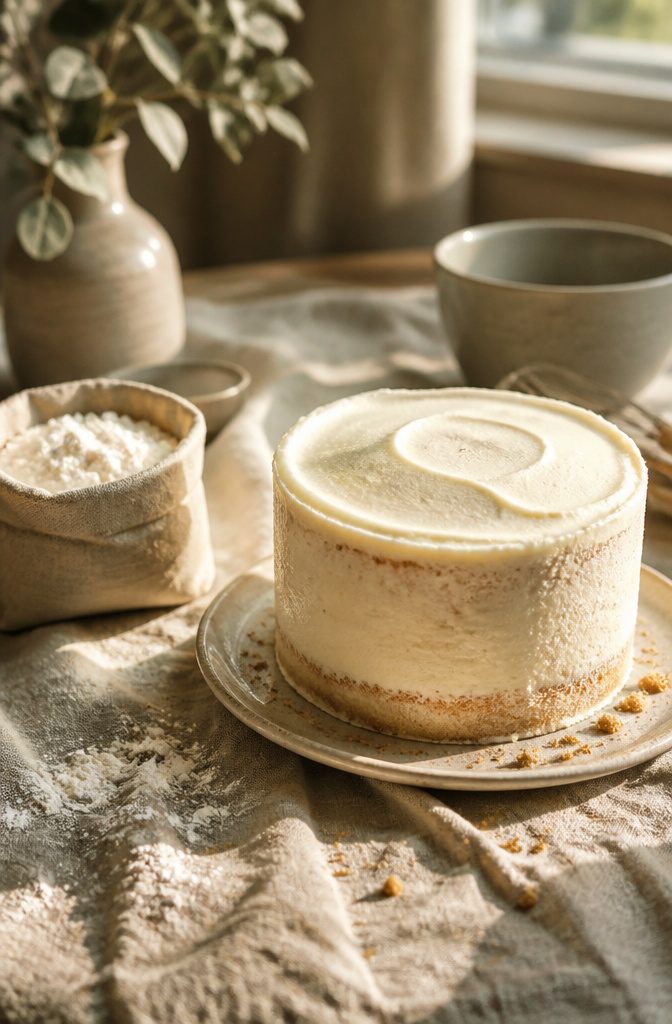
A gluten-free 6 inch cake needs a 1:1 blend with xanthan gum already in the mix.
I reach for Bob’s Red Mill or King Arthur’s measure-for-measure blends because they mimic the structure all-purpose flour gives a small, tall cake without turning gummy or crumbly.
Gluten-free batters set faster and firmer than wheat batters, so the toothpick test reads differently.
Start checking at the low end of your recipe’s range, and pull the cake when a tester comes out with a few moist crumbs clinging rather than perfectly clean.
The surface should spring back lightly when touched, and the edges will look slightly golden and just beginning to pull from the pan.
The aroma is your first cue; gluten-free cakes smell most fragrant right at doneness, and that signal is easy to miss if you’re waiting on the timer alone.
I rotate the pan once during baking, same as any cake, but I test earlier and more often. An extra 3 minutes can cross the line from tender to dry when there’s no gluten network holding moisture.
6. Other Flavor Variations
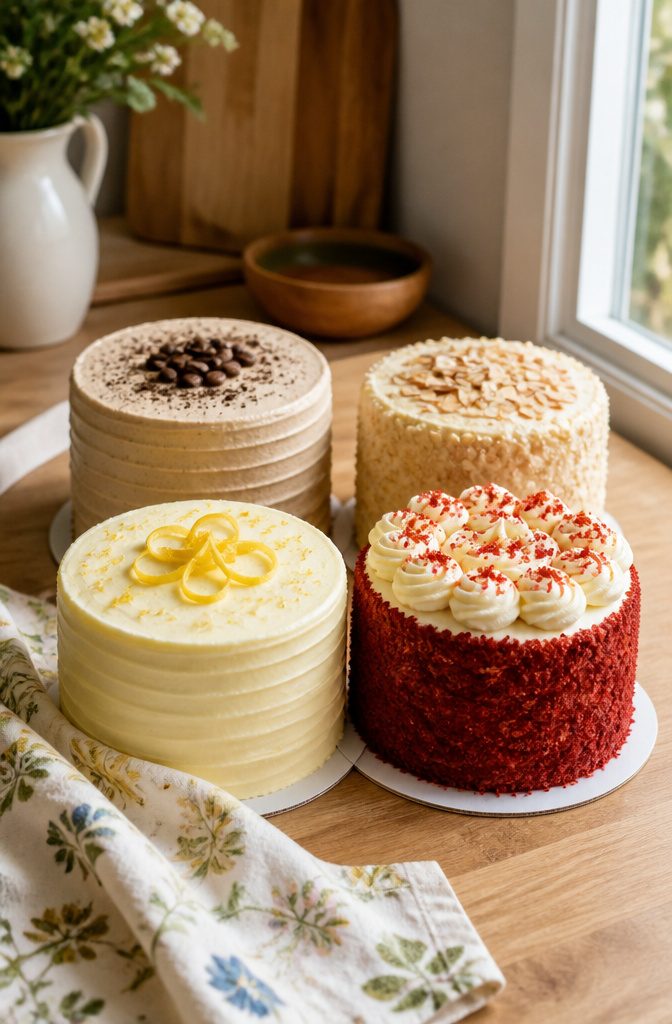
Lemon, red velvet, coffee, and almond all convert to the 6-inch format with the same core adjustment: drop the leavening slightly below the scaled percentage.
An 8-inch recipe converted at 57% still carries too much baking soda or powder for the smaller diameter, so the center domes or sinks before the edges set.
I pull it back by another 10–15% and watch the batter sit flatter in the pan.
Liquid needs the same discipline. Coffee cakes run especially wet, and that 57% multiplier on hot coffee or buttermilk leaves the crumb dense and eggy, which owners on Reddit report when their 6-inch chocolate sponges turn out "overly-close."
The fix is not more leavening to force rise; it is less liquid so the structure can set clean.
Grab a layer cake recipe that calls for 8- or 9-inch round pans and multiply each of the batter ingredients by 57% (if starting from an 8-inch recipe) or 45% (if starting from a 9-incher).
That 57% or 45% is your starting weight, not your final word. Almond paste and red velvet both carry fat-heavy add-ins that slow bake times, so the pan needs longer at the same 350°F, not hotter.
Lemon juice is acidic enough to activate reduced baking powder early; I cut it with a spoonful of extra sugar to keep the reaction in check until heat takes over.
Room Temperature Ingredients
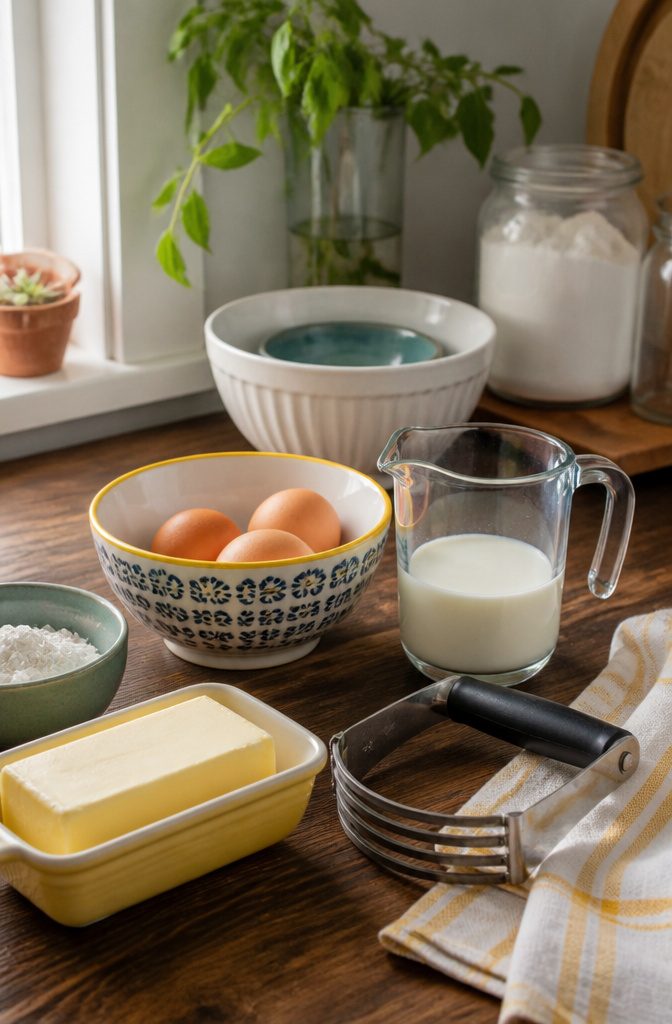
Cold butter and eggs wreck emulsification because the fat stays too firm to coat sugar particles evenly, and yolks cannot bind water into the batter the way they do at room temperature.
The mixture turns curdled or greasy instead of silky, and a 6 inch tall cake needs every structural advantage it can get; the crumb depends on that initial aeration.
The standard 30-minute counter rest works if you plan ahead, though I find butter needs closer to 45 in a cool kitchen.
For the faster route, set the wrapped stick in a bowl of very warm tap water for about 10 minutes, turning once.
Eggs submerge in their shells in the same bath for 5 minutes. You want the butter to yield to a gentle press without softening to oil at the edges, and the eggs merely to lose their refrigerator chill.
Melting is the risk here: even partial liquefaction ruins the creaming stage, so I check every few minutes and pull early rather than late.
Converting Recipes With Cake Math
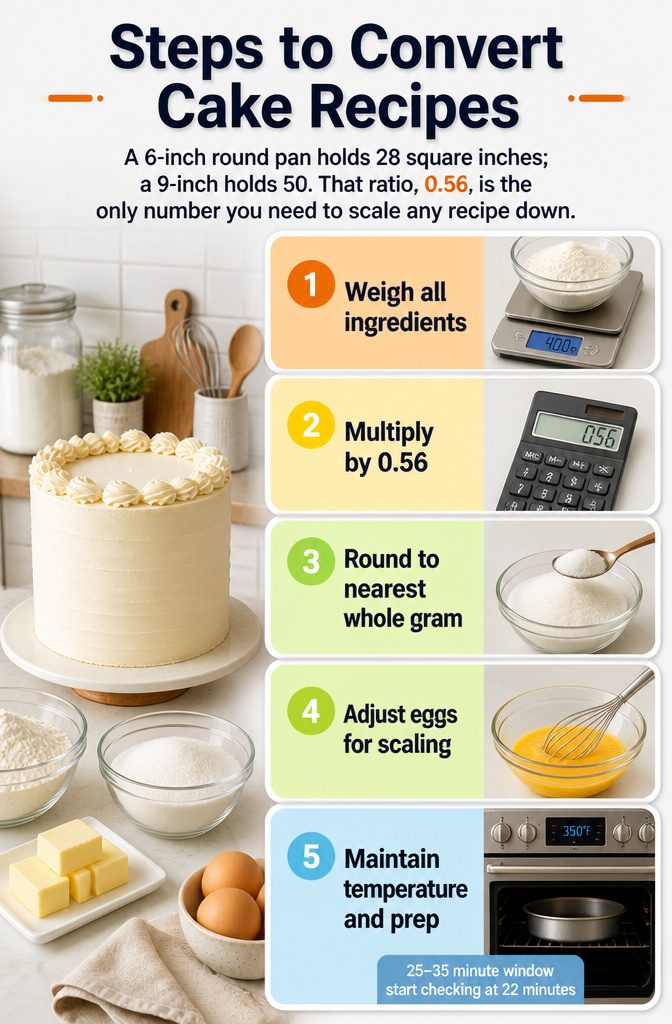
A 6-inch round pan holds 28 square inches; a 9-inch holds 50. That ratio, 0.56, is the only number you need to scale any recipe down.
I convert a standard 9-inch vanilla cake to a 6-inch tall cake like this:
- Weigh every ingredient in the original recipe. A typical 9-inch vanilla uses about 400 grams of flour, 400 grams of sugar, and 226 grams of butter.
- Multiply each weight by 0.56. That gives 224 grams flour, 224 grams sugar, and roughly 127 grams butter.
- Round to the nearest whole gram for everything except leaveners. On baking powder or soda, I round up; a little extra lift beats a dense layer every time.
- Eggs are the only awkward part. If the scaled recipe calls for 2.8 eggs, whisk two eggs together and weigh out what you need, or round to 3 whole eggs. The extra tenth of an egg will not change the outcome.
- Keep the same oven temperature and pan preparation. The batter depth is nearly identical, so the bake time stays in the same 25–35 minute window, though I start checking at 22 minutes.
350°F for 25–35 Minutes
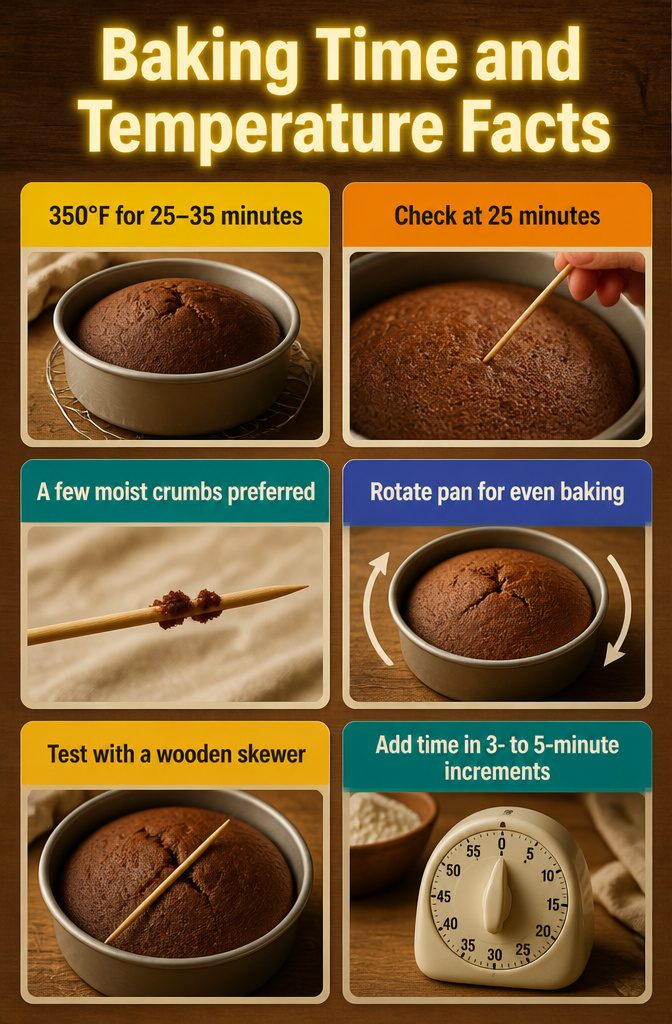
A 6-inch pan has roughly 57 percent of the surface area of an 8-inch, so the batter sits deeper and the center takes longer to heat through than the math on paper suggests.
That deeper column is why 350°F for 25–35 minutes stays reliable across vanilla, chocolate, banana, and funfetti: the circumference-to-volume ratio is identical even when cocoa or banana puree changes the batter’s density.
At 25 minutes, pull the cake and test with a wooden skewer.
For a moist, fudgy crumb, a few moist crumbs clinging to the skewer is the stop point; for a lighter, springier cake, wait until the skewer comes out clean and the surface bounces back under a light finger press.
Rotate the pan at the 25-minute mark if your oven runs uneven, then add time in 3- to 5-minute increments rather than guessing at the full window.
Frosting Quantities for a 6 Inch Cake
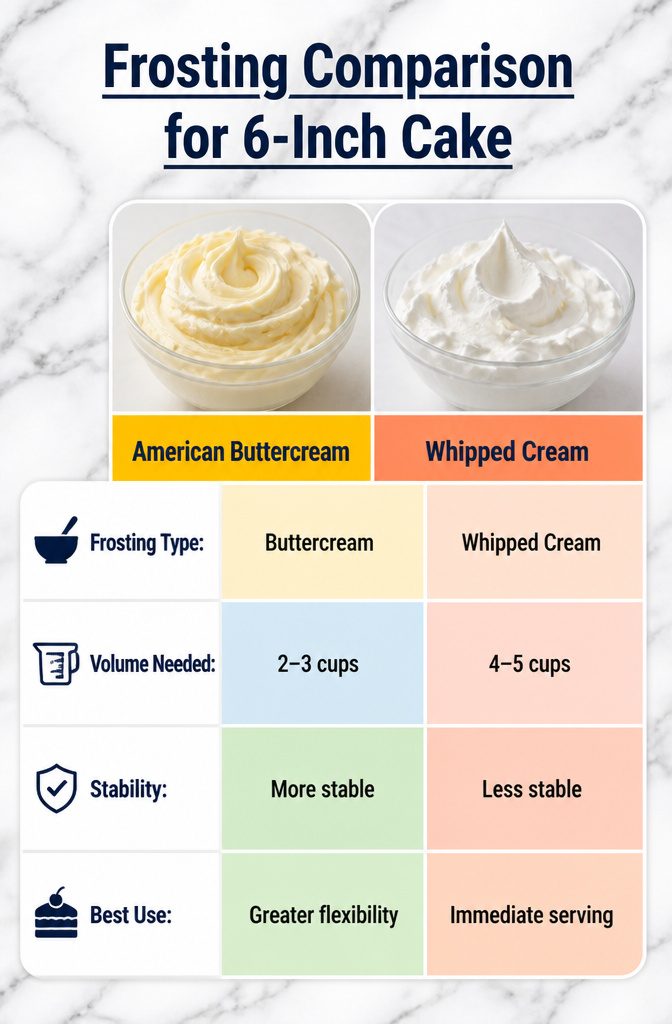
American buttercream for a 6-inch cake scales to 2–3 cups, down from the 4–5 cups you’d need for a 9-inch layer.
That smaller volume is one of the practical payoffs of shrinking the pan size, though the tall sides of a 6-inch cake mean every frosting choice faces more structural scrutiny than it would on a wider, shorter cake.
Whipped cream is the lighter option, and it works on a mini lemon layer cake or a tres leches build where the cake itself provides plenty of moisture.
On a tall stack, though, whipped cream wilts fast. It needs to be applied right before serving, which limits how far ahead you can finish the cake.
Ganache behaves differently. A pourable chocolate ganache sets firm and gives clean edges, but the yield runs smaller than buttercream and the surface sets before you can smooth it the same way.
For a 6-inch tall cake, that tradeoff usually favors ganache only when you want that glossy, poured look rather than a fully frosted finish.
Frequently Asked Questions
How long to bake a 6 inch cake?
Bake a 6 inch tall cake at 350°F for 25–35 minutes. The batter sits deeper than in wider pans, so the center needs more time to heat through.
Start checking at 25 minutes with a wooden skewer; pull it when a few moist crumbs cling for a fudgy crumb, or when clean for a lighter texture.
What are some good flavor variations for a 6 inch cake?
Vanilla, chocolate, banana pudding, funfetti, gluten-free, lemon, red velvet, coffee, and almond all work well in a 6 inch tall cake.
Each needs small adjustments: chocolate and banana batters are denser and need moisture builders like sour cream, while acidic flavors like lemon need slightly reduced leavening so the cake doesn’t dome or sink.
How do I convert a larger cake recipe to a 6 inch cake?
Multiply every ingredient weight by 0.56 when scaling down from a 9-inch recipe, or by 0.57 from an 8-inch recipe.
A 6-inch round pan holds about 28 square inches versus 50 for a 9-inch. Round leavening up slightly and reduce liquid by a touch more than the percentage so the structure sets clean in the taller, narrower format.
How big of a cake for 6 people?
A single-layer 6 inch cake yields 4–6 slices; a two-layer 6 inch tall cake serves 6–8 because the slices are thicker. That makes the two-layer version the safer choice if you want clean wedges for a small group without anyone getting shorted.
How to slice a 6 inch cake?
Use a long, thin knife wiped clean between cuts. For a tall layer cake, slice straight down rather than sawing, and aim for 8 equal wedges from a two-layer cake by cutting quarters first, then halving each.
Chill the cake briefly if the frosting is soft; firmer layers give cleaner edges.