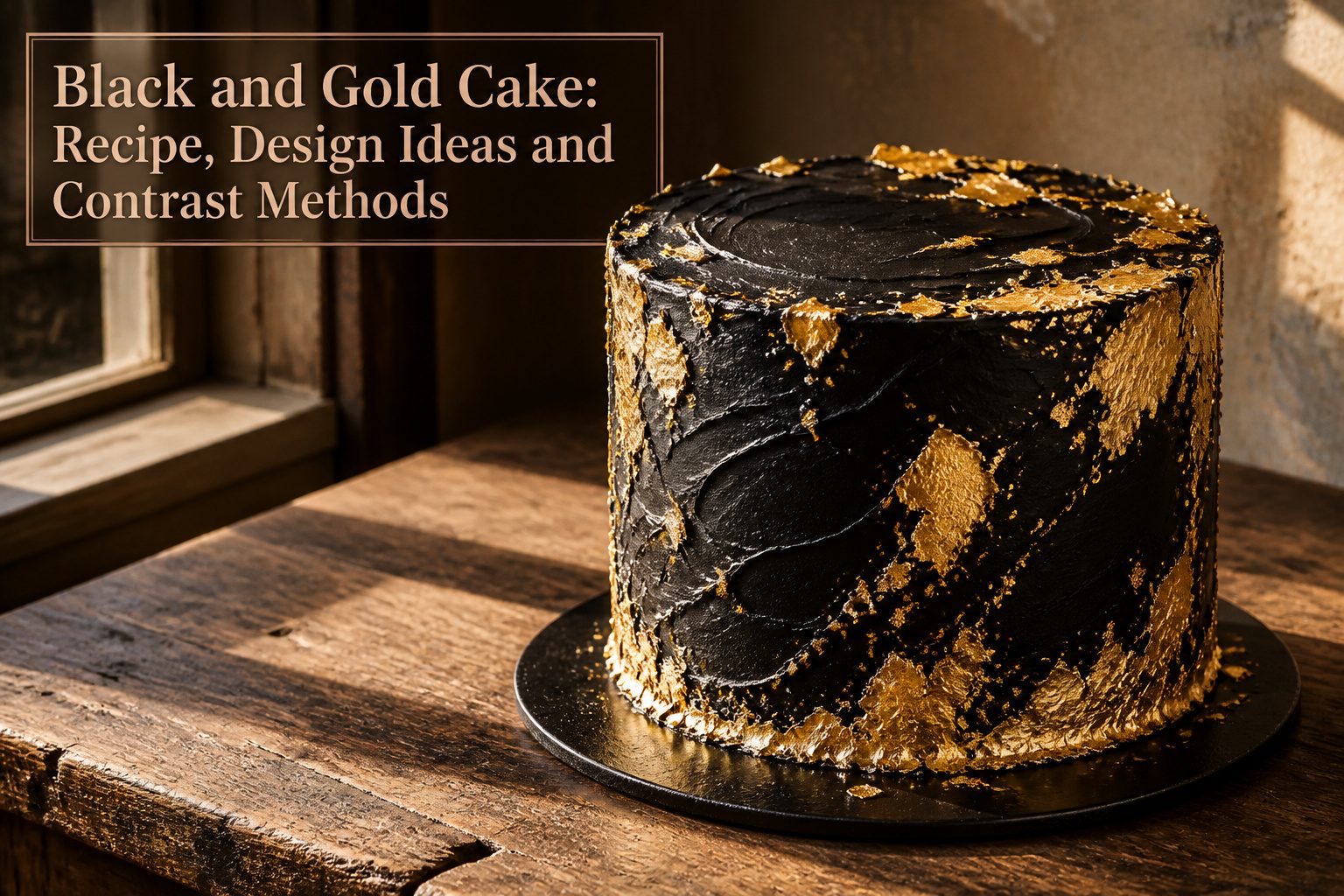
Black velvet cake with black buttercream reads as dark cocoa first, metallic gold second, and the contrast between matte and reflective is what makes it look expensive rather than merely dark. The whole build takes about four hours plus cooling.
It only works if you let the buttercream crust completely before touching it with gold.
Warm fat softens just enough that leaf slides, pools at the base, and loses its mirror finish. A cool room and a patient hand save the entire finish.
The white coat underneath matters more than most guides admit. Gold leaf is thin enough that bare chocolate or black reads through and turns muddy; white buttercream underneath reflects light back up so the gold reads as actual metal.
Ingredients
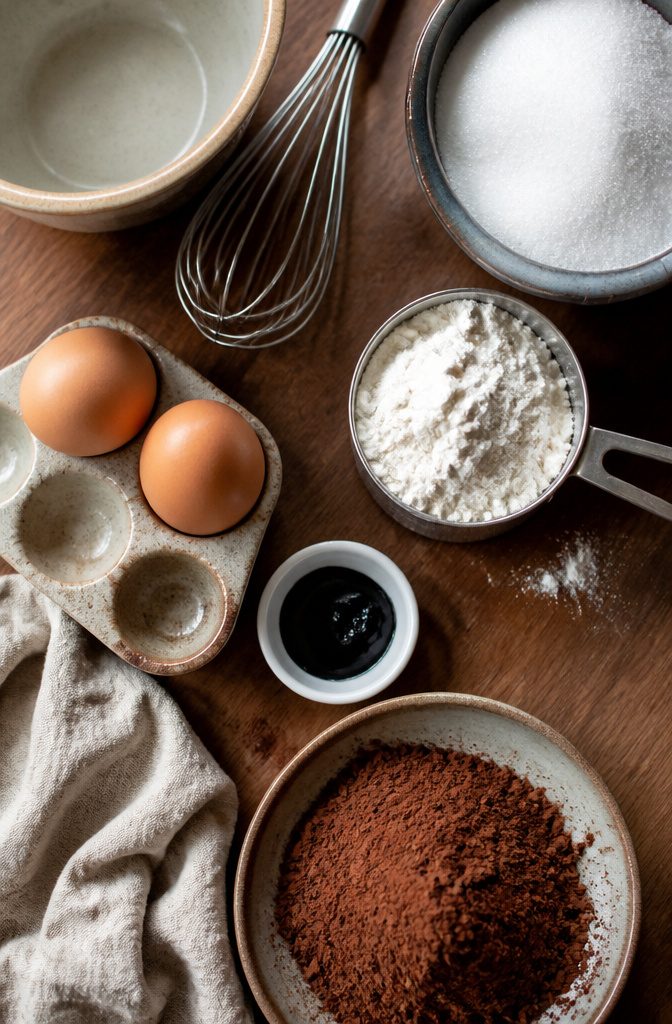
A two-layer 8-inch black and gold cake needs two separate builds: the cake itself and the finish.
I favor a black velvet base over straight chocolate because the extra cocoa gives you a darker starting point before the food coloring even goes in.
For the cake:
- 1¾ cups all-purpose flour
- ¾ cup dark cocoa powder, the Dutch-process kind if your store carries it
- 1½ cups granulated sugar
- 1½ teaspoons baking soda
- 2 teaspoons white vinegar
- 1 cup buttermilk
- ½ cup vegetable oil
- 2 large eggs
- 1 teaspoon vanilla extract
- 1 to 1½ tablespoons black food coloring gel, not liquid; gel saturates without thinning the batter
For the black buttercream (you will need this even if you fill with something lighter, since the exterior sets the look):
- 1½ cups softened butter
- 5 to 6 cups powdered sugar
- 2 teaspoons vanilla extract
- 2 to 3 tablespoons milk or cream
- 1 to 2 teaspoons black gel coloring, added after the base is pale
For the gold:
- Edible gold luster dust, about ½ teaspoon mixed with lemon extract or clear alcohol for painting details
- Gold luster spray, one 1.5-ounce can for misting whole tiers or stencils
- Gold sprinkles or sugar pearls for borders or scattered accents
Skip the spray if your kitchen has no ventilation; the dust-and-paint method controls where the gold lands and costs less per cake.
Method
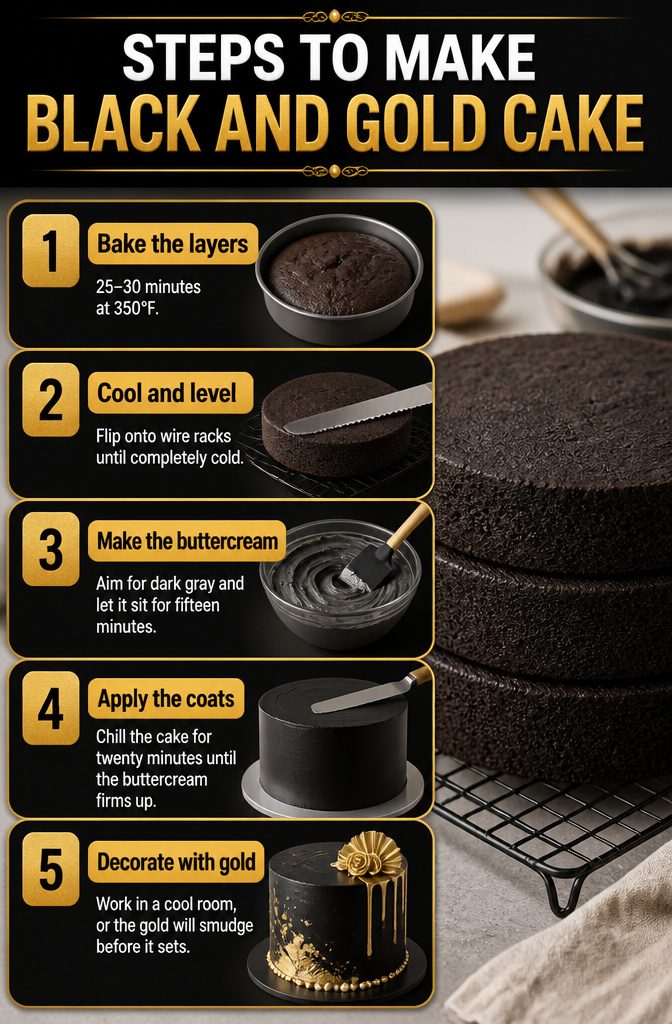
- Bake the layers. I start with a deep chocolate base, then add black gel coloring a drop at a time until the batter reads closer to charcoal than true black; it will darken as it bakes. Too much coloring turns the crumb bitter and dry, so I stop once the raw batter looks like wet asphalt. The layers are done when a toothpick comes out with a few moist crumbs, 25–30 minutes at 350°F.
- Cool and level. The layers sit in their pans for ten minutes, then flip onto wire racks until completely cold. A serrated knife takes off the domed tops; flat layers keep the finished cake from looking lopsided under black buttercream, which shows every bump.
- Make the buttercream. I beat butter until it is pale, then add powdered sugar, a splash of heavy cream, and more black gel. The color deepens after resting, so I aim for dark gray and let it sit for fifteen minutes before deciding whether to add more.
- Apply the coats. A thin crumb coat goes on first, catching every loose speck of dark cake. I chill the cake for twenty minutes until the buttercream firms up, then spread the final coat. For the smoothest surface, I dip an offset spatula in hot water and glide it over the finish; the heat melts the buttercream just enough to fill ridges.
- Decorate with gold. Work in a cool room, or the gold will smudge before it sets. For leaf, I press sheets against tacky buttercream with a dry brush, overlapping slightly. Brushstrokes need a soft brush and edible gold paint mixed with a few drops of lemon extract; I drag the bristles in one direction for clean lines. Drip requires thinned royal icing painted gold after it sets, or candy melts tinted with luster dust, poured from the edge so gravity does the shaping. Splatter is messier: I flick the same thinned paint off a toothbrush, covering the work surface first. Polka dots come from the back of a piping tip dipped in paint and stamped on. Stripes need a bench scraper dragged through wet gold paint in straight vertical lines. Pearls are piped with a round tip, then painted once dry. Glitter sticks to anything still tacky; I dust it on with a soft brush held over a bowl to catch the excess. Flowers and roses get painted petal by petal after shaping fondant or buttercream. Butterflies, stars, and sprigs I cut from gum paste, let dry hard, then brush with gold. Bands wrap fondant strips around the tiers. Bows and crowns I mold from gum paste over crumpled foil for shape, then paint after drying. The fan is pleated fondant, pressed with a veining tool. Ombre fades from heavy gold at the base to bare black at the top by thinning the paint as I work upward. Marble swirls gold through still-wet black fondant with a toothpick. Quilted patterns need a diamond impression mat pressed into soft fondant, then gold painted into the grooves. Combinations with red work best as a single accent: a red ribbon band, or a single red rose against the gold, never competing for attention.
Which Events Suit This Cake
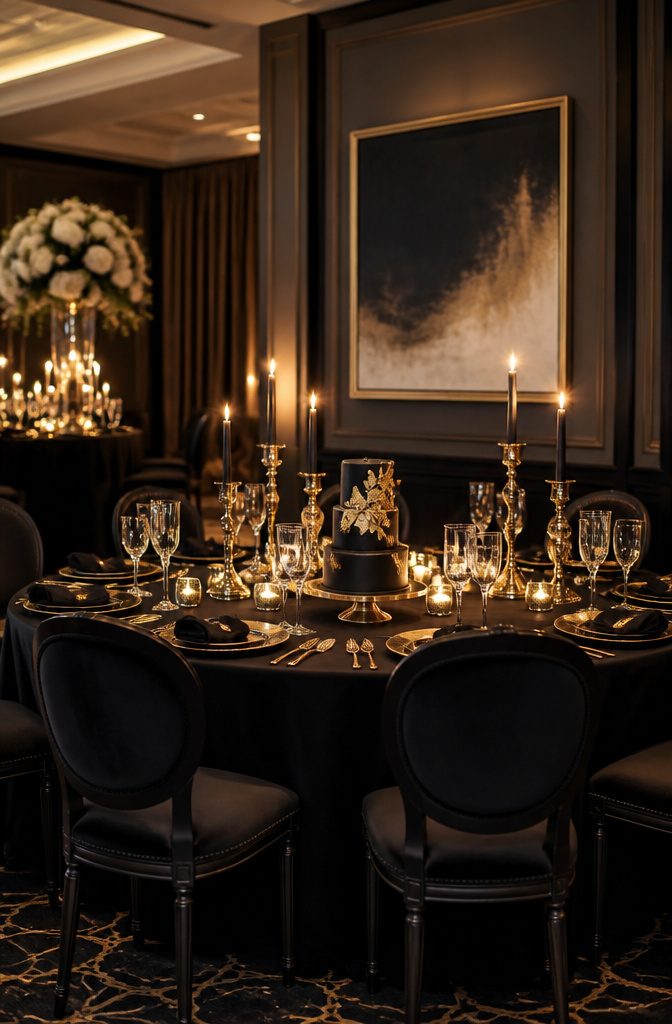
A black and gold cake design reads as sophisticated rather than casual, which makes the color pairing a natural fit for milestone birthdays, anniversaries, New Year’s celebrations, graduation parties, and formal weddings.
The deep black against shimmering gold carries enough drama to hold its own at an evening event without looking like it is trying too hard.
That same formality is where it can feel out of place. An afternoon garden party with wildflowers and daylight asks for softer tones, and a child’s birthday under age ten usually wants something friendlier than black fondant.
I would skip this palette for either unless the specific theme genuinely calls for it, a masquerade or a "Hollywood" party for an older kid, for instance.
The combination adapts well across styles, sleek and modern or more ornate, so the event’s tone matters more than its exact type. A fiftieth anniversary and a twenty-first birthday can both work if the gathering itself leans dressy.
Design Flexibility
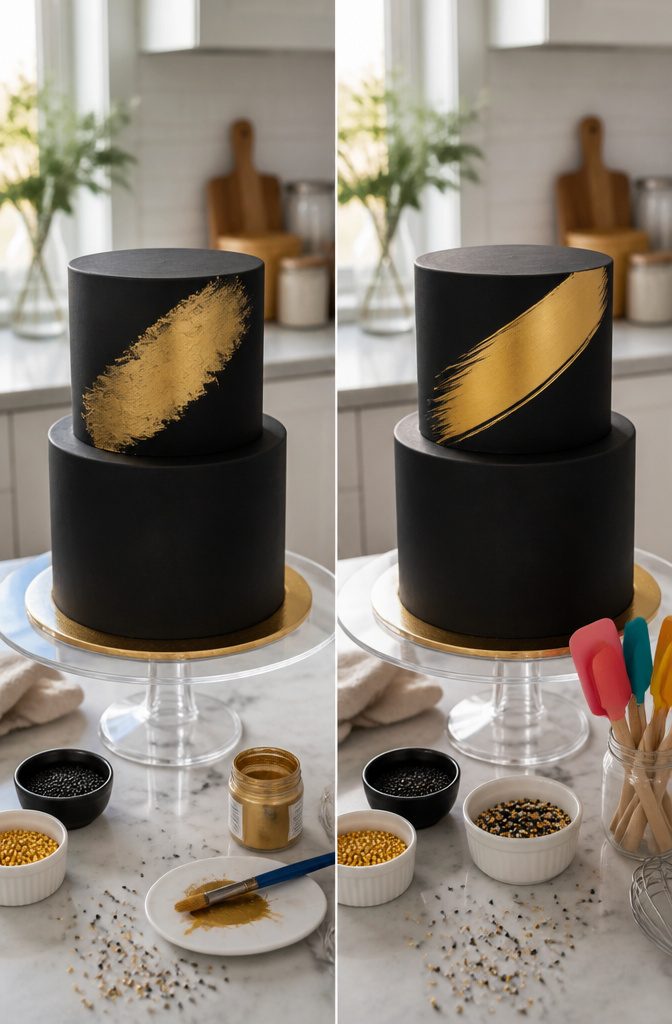
The same buttercream base scales from quiet to loud without changing the recipe. A single gold brushstroke on matte black reads modern and deliberate; it needs only a steady hand and a flat brush you already own.
Full gold leaf with black fondant bows leans traditional and ornate, but the leaf itself is the same material either way.
Fondant gives the sharper edges you want for geometric patterns, grids, or clean stripes.
Buttercream stays softer, which is exactly why it works for organic effects: brushstrokes, splatter, or dragged texture that catches light unevenly. I reach for fondant when the design needs precision, and for buttercream when the design needs movement.
Why the Contrast Reads as Luxury
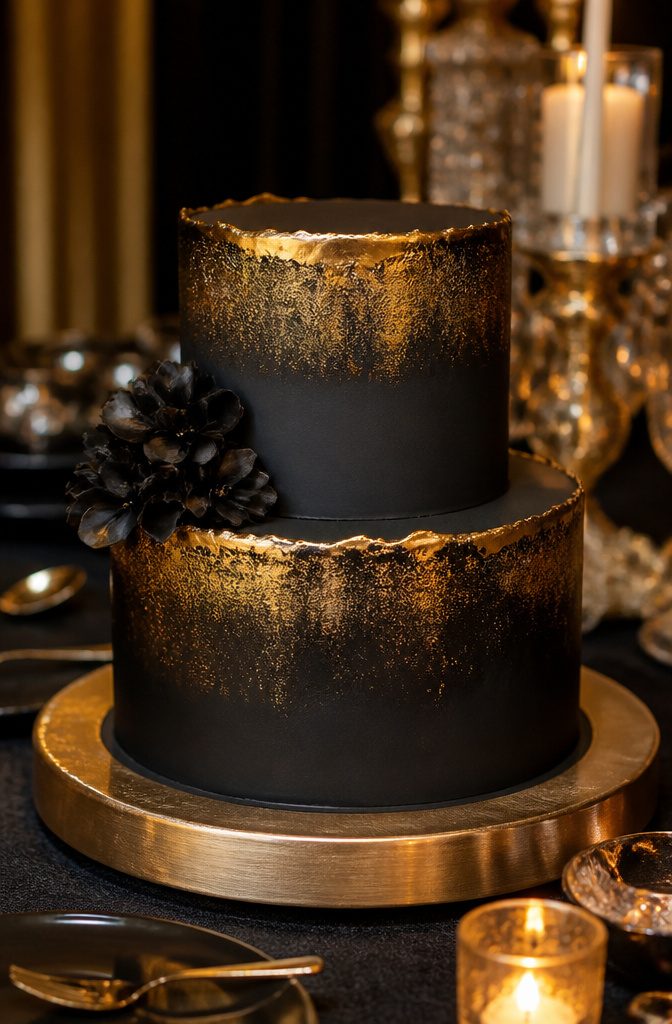
Black recedes visually while gold advances, so the eye travels straight to the metallic points and reads them as the prize.
That push-pull is what makes the combination register as expensive rather than merely dark. Matte black against reflective gold creates depth that flat color pairings cannot replicate, because the surface variation itself becomes part of the design.
Lighting makes or breaks the whole effect. Under fluorescent venue fixtures, gold luster spray loses its dimension and reads as dull mustard.
For reception halls, I prefer gold leaf or brush-applied gold dust; both keep their shimmer under harsh artificial light and photograph with the warmth the color promises.
The extra twenty minutes of hand application pays for itself in how the cake reads from across the room.
What the Ranking Pages Get Wrong
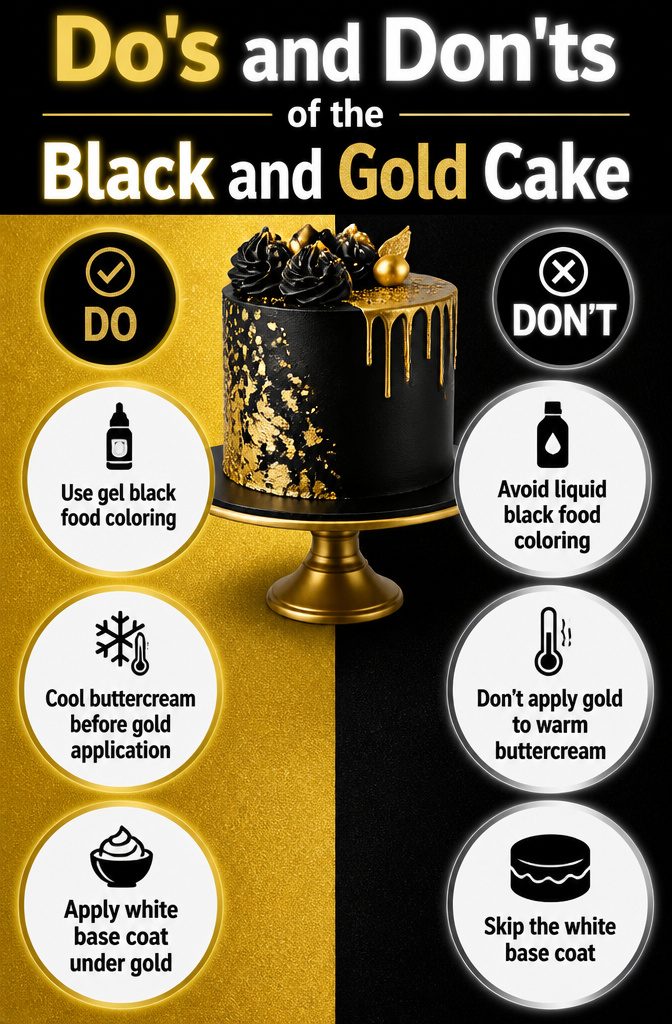
The biggest gap between a black and gold cake design that looks expensive and one that looks homemade usually comes down to three specific errors the ranking pages gloss over.
Liquid black food coloring is the first trap. It takes far more than you expect to get a true black, and by the time you reach it, the batter or buttercream has turned bitter and often steely gray in daylight.
Gel or paste color gives depth without that metallic aftertaste, and you need far less of it.
Gold applied to warm buttercream is the second failure. The heat softens the fat just enough that leaf or dust slides, pools at the base, or loses its mirror finish.
I wait until the buttercream crusts and feels cool to the touch, which takes longer than most guides suggest but saves the whole finish.
The third mistake is skipping the white base coat under gold leaf. Gold is thin enough that whatever sits beneath it reads through.
Over bare chocolate or black, it turns muddy and dull. A solid layer of white buttercream underneath reflects light back up through the gold, giving it the brightness that reads as actual metal rather than yellow paint.
These three fixes cost nothing extra and require no special equipment, just patience the quick tutorials leave out.
Substitutions and Scaling
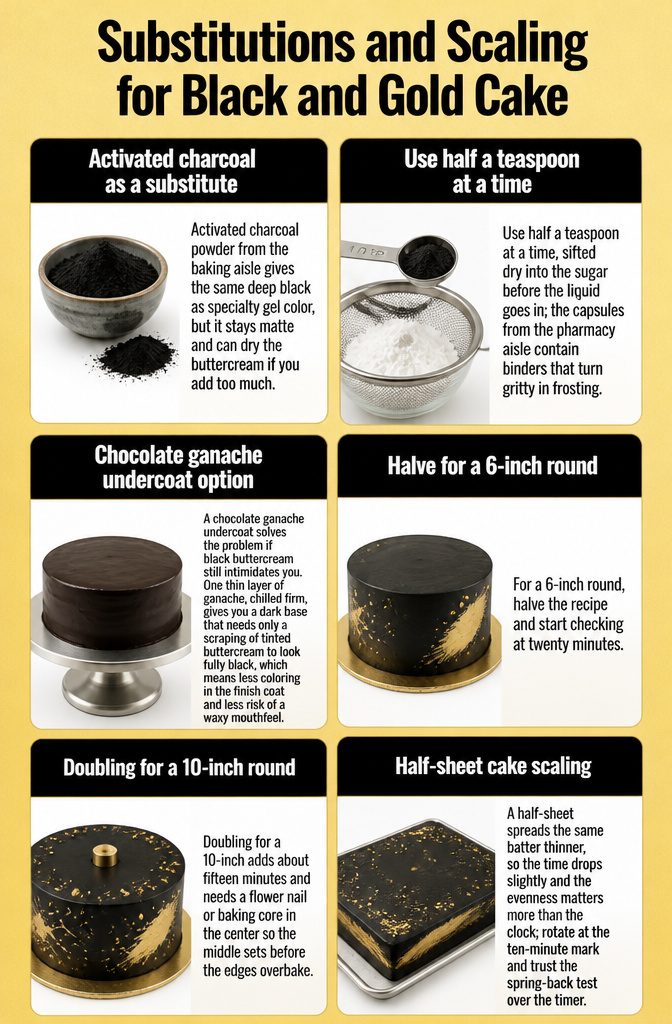
Activated charcoal powder from the baking aisle gives the same deep black as specialty gel color, but it stays matte and can dry the buttercream if you add too much.
Use half a teaspoon at a time, sifted dry into the sugar before the liquid goes in; the capsules from the pharmacy aisle contain binders that turn gritty in frosting.
If gold luster dust is sold out, bronze dust reads warmer against black and copper dust reads cooler, and both photograph nearly the same under kitchen lights.
A chocolate ganache undercoat solves the problem if black buttercream still intimidates you.
One thin layer of ganache, chilled firm, gives you a dark base that needs only a scraping of tinted buttercream to look fully black, which means less coloring in the finish coat and less risk of a waxy mouthfeel.
For a 6-inch round, halve the recipe and start checking at twenty minutes. Doubling for a 10-inch adds about fifteen minutes and needs a flower nail or baking core in the center so the middle sets before the edges overbake.
A half-sheet spreads the same batter thinner, so the time drops slightly and the evenness matters more than the clock; rotate at the ten-minute mark and trust the spring-back test over the timer.
Storage and Timing
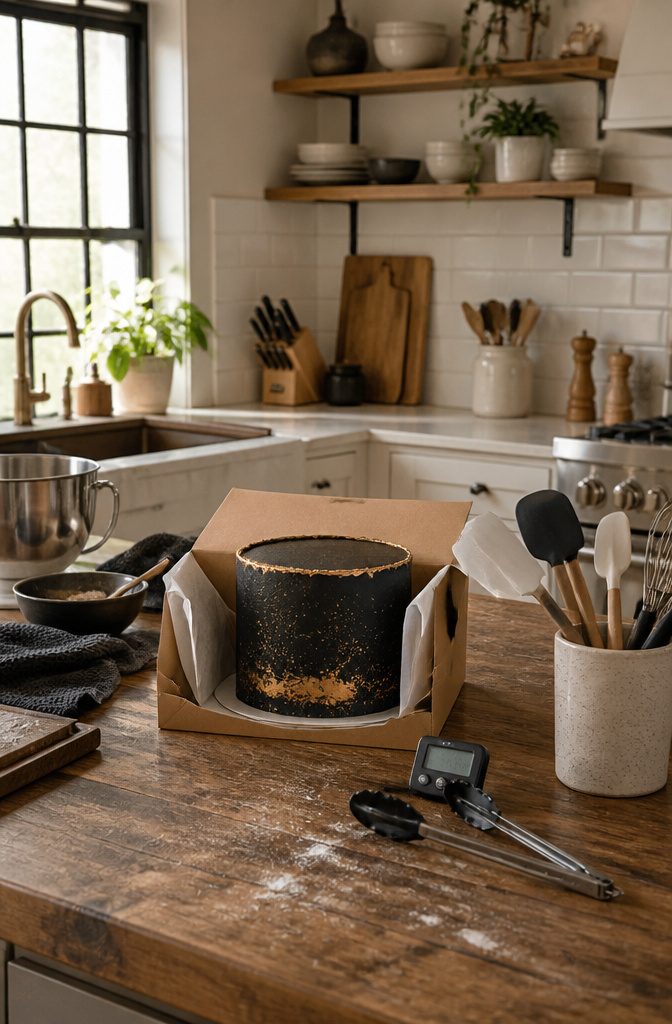
Cake layers freeze well for two weeks wrapped in plastic, then foil, which makes them the easiest part of this build to knock out early.
Black buttercream keeps three days refrigerated, though it needs a full hour at room temperature before it spreads without streaking.
The gold application has to happen day-of, because even a thin film of moisture from refrigeration will dull metallic luster dust to a flat yellow.
I have seen bakers try to revive it with another coat; it only cakes up worse. Transport the finished cake in a box at least two inches taller than the top of the tallest decoration, nothing touching that gold surface.
At 65–70 degrees F, the luster reads brightest, so pull the cake from the refrigerator two hours before serving, not thirty minutes.
Frequently Asked Questions
What are some black and gold cake decorating ideas?
Fondant works best for geometric or ornate shapes with sharp edges, while buttercream suits organic, textured effects that catch light unevenly.
What occasions are suitable for black and gold cakes?
Milestone birthdays, anniversaries, New Year’s celebrations, graduation parties, and formal weddings fit this palette because the pairing reads as sophisticated rather than casual.
Skip it for afternoon garden parties and children’s birthdays under age ten unless the theme specifically calls for it, like a masquerade or Hollywood party.
How can I paint gold on my cake?
Mix edible gold luster dust with lemon extract or clear alcohol for a paint you brush on.
For clean brushstrokes, drag the bristles in one direction only. Work in a cool room so the gold does not smudge before it sets, and apply it to buttercream only after it has crusted and feels cool to the touch.