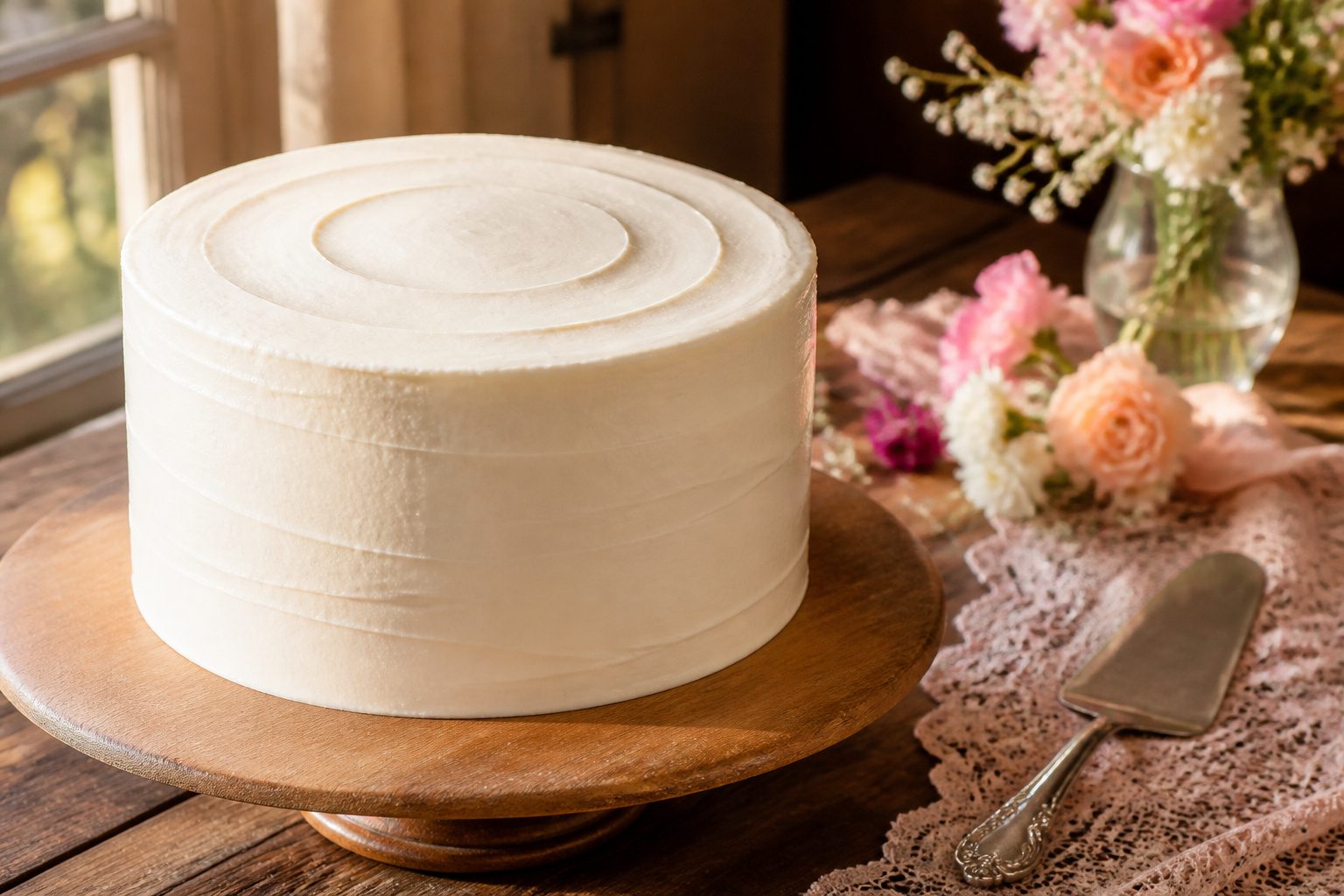
This white cake tastes clean and vanilla-bright with a crumb so fine it practically melts, and the buttercream holds a sharp edge without ever turning gritty.
What sets this version apart is the use of egg whites only, no yolks, which keeps the color porcelain rather than cream.
Plan on roughly 30 minutes of active work plus 25 to 35 minutes in the oven, but do not rush the cooling: frost too soon and the buttercream slides right off.
That last part is what trips most home bakers up. The layers must be fully cool before a single spatula of frosting touches them, which means real waiting time, not just "feels cool to the quick touch."
I set the racks near an open window or in a draft-free corner and give them at least an hour.
The 330 grams of cake flour is the detail that proves this recipe earns its tenderness; measured by weight, not scooped, it builds the tight crumb that separates a celebration cake from a plain white sheet.
What White Cake Is and When to Bake One
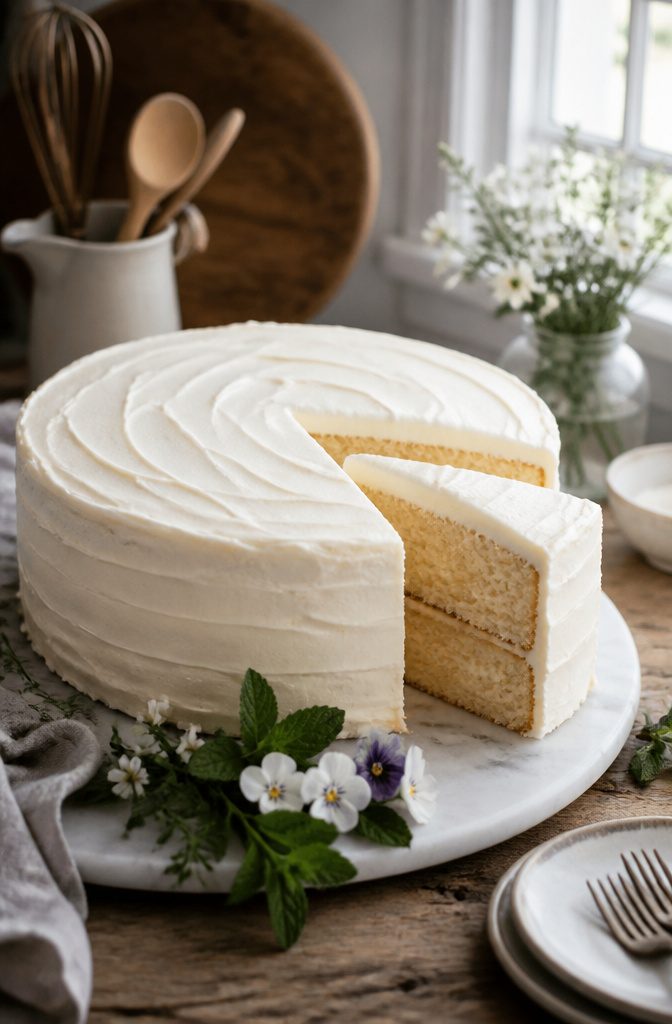
White cake is the classic choice when you want a clean, pale canvas that reads celebration before you even slice it.
Weddings and birthdays lean on it for exactly that reason: the color stays light and bright, and the crumb stays fine enough to take any frosting you plan to pipe on top.
This recipe gets its pale color from egg whites only, no yolks, and its tight, tender crumb from cake flour rather than all-purpose.
The method itself is straightforward enough that I would not hesitate to mix it on a weeknight, though the results look weekend-special.
Count on about 30 minutes of active work, 25 to 35 minutes in the oven, and then real cooling time before you frost.
Rush that last part and the buttercream slides; give it the full wait and the layers hold their shape under a spatula.
Cake Ingredients
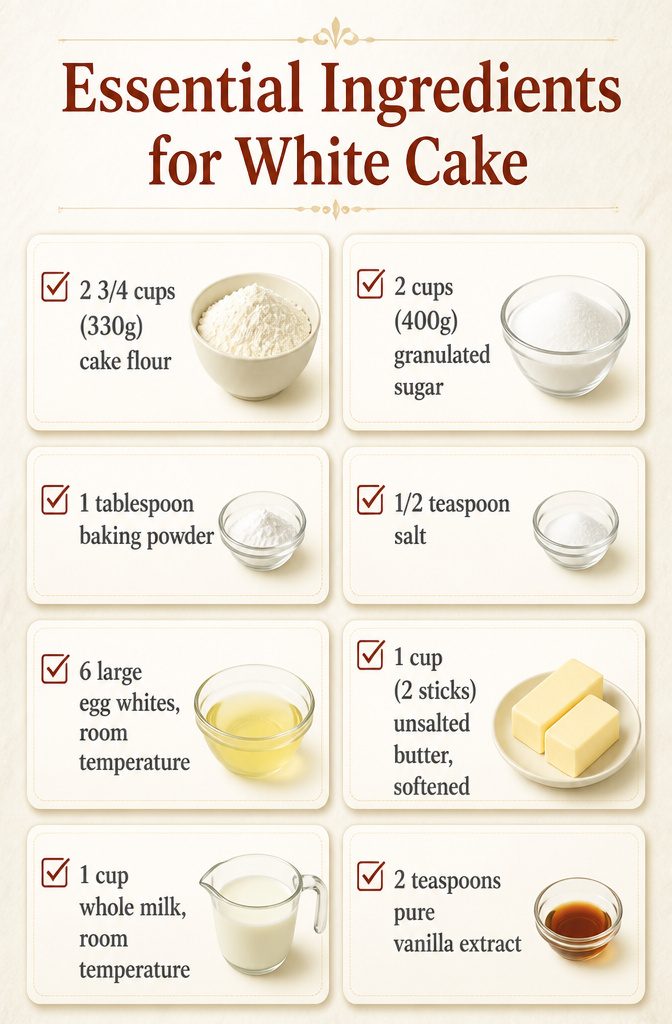
Cake flour is the detail that separates a tender white crumb from a denser one, and 2 3/4 cups (330g) is the weight to measure.
If your grocery store only stocks all-purpose, swap in 2 1/2 cups all-purpose flour plus 1/4 cup cornstarch and sift them together twice. The cornstarch mimics cake flour’s lower protein, though the texture stays slightly less fine.
The full lineup:
- 2 3/4 cups (330g) cake flour (or the all-purpose plus cornstarch substitute above)
- 2 cups (400g) granulated sugar
- 1 tablespoon baking powder
- 1/2 teaspoon salt
- 6 large egg whites, room temperature (not whole eggs; yolks tint the batter)
- 1 cup (2 sticks) unsalted butter, softened (salted butter throws off the balance)
- 1 cup whole milk, room temperature
- 2 teaspoons pure vanilla extract
- 1/4 teaspoon almond extract, optional (I use it; the flavor reads as "white cake" rather than vanilla)
Room temperature on the dairy and eggs matters more than most home cooks think.
Cold butter won’t cream properly, and cold milk seizes the fat into lumps you can’t beat out. I set everything out 45 minutes before I start.
Frosting Ingredients
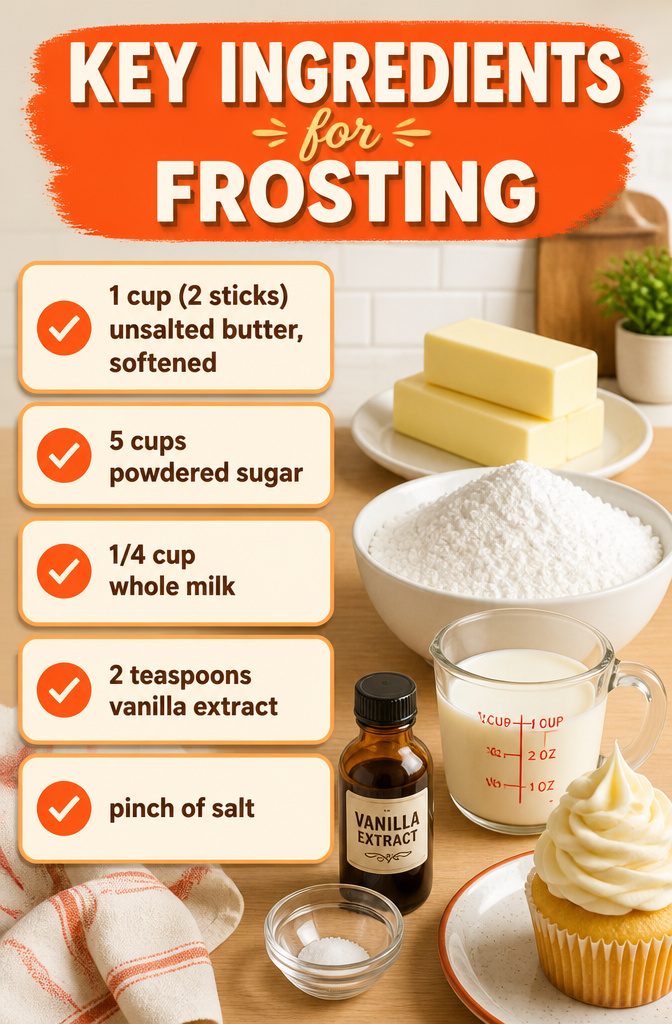
The frosting builds on five ingredients, and two of them make or break the texture.
- 1 cup (2 sticks) unsalted butter, softened — room temperature is non-negotiable; cold butter leaves flecks, melted butter slumps
- 5 cups powdered sugar, sifted if yours is lumpy
- 1/4 cup whole milk, added gradually; the amount shifts up or down depending on how stiff or loose you need the finish
- 2 teaspoons vanilla extract
- pinch of salt
I start with the full 1/4 cup milk and hold back the last tablespoon if the butter was on the soft side.
Powdered sugar absorbs liquid unevenly depending on humidity, so the "right" consistency is a judgment call, not a fixed number.
White Cake and Frosting
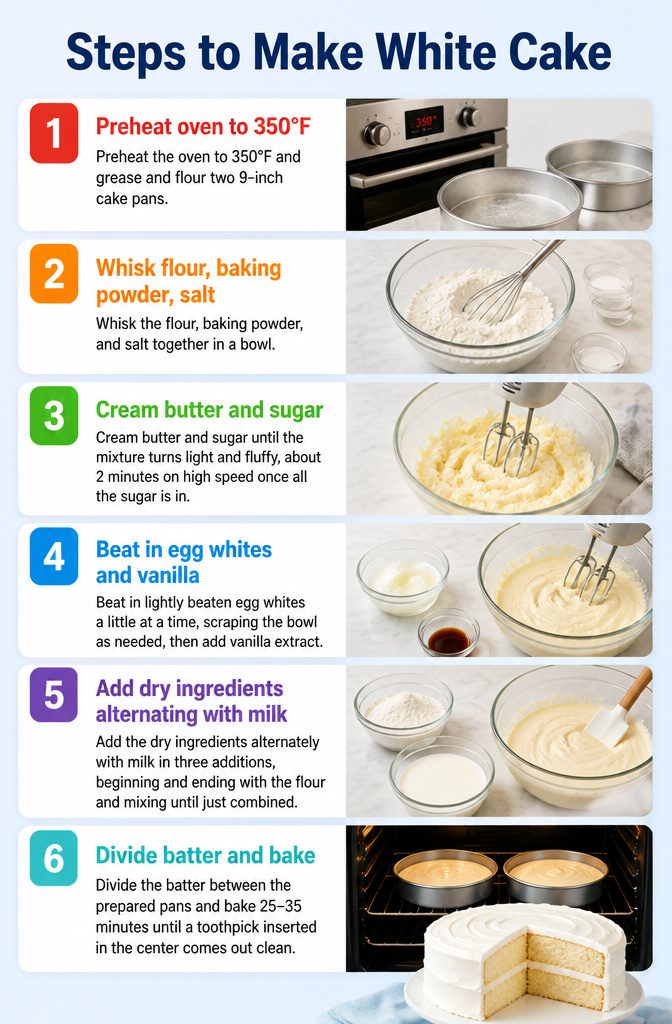
- Preheat the oven to 350°F and grease and flour two 9-inch cake pans.
- Whisk the flour, baking powder, and salt together in a bowl.
- Cream butter and sugar until the mixture turns light and fluffy, about 2 minutes on high speed once all the sugar is in.
- Beat in lightly beaten egg whites a little at a time, scraping the bowl as needed, then add vanilla extract.
- Add the dry ingredients alternately with milk in three additions, beginning and ending with the flour and mixing until just combined.
- Divide the batter between the prepared pans and bake 25–35 minutes until a toothpick inserted in the center comes out clean.
- Cool the cakes in their pans for 10 minutes, then turn out onto racks to cool completely before frosting. The layers must be fully cool; any warmth will melt the buttercream.
- For the frosting, beat butter until smooth, then add powdered sugar, milk, vanilla, and salt. Add milk slowly to reach a spreadable consistency that holds its shape.
- Frost the cooled cake, leveling the layers first if needed for even stacking.
Cake Flour vs. All-Purpose Flour
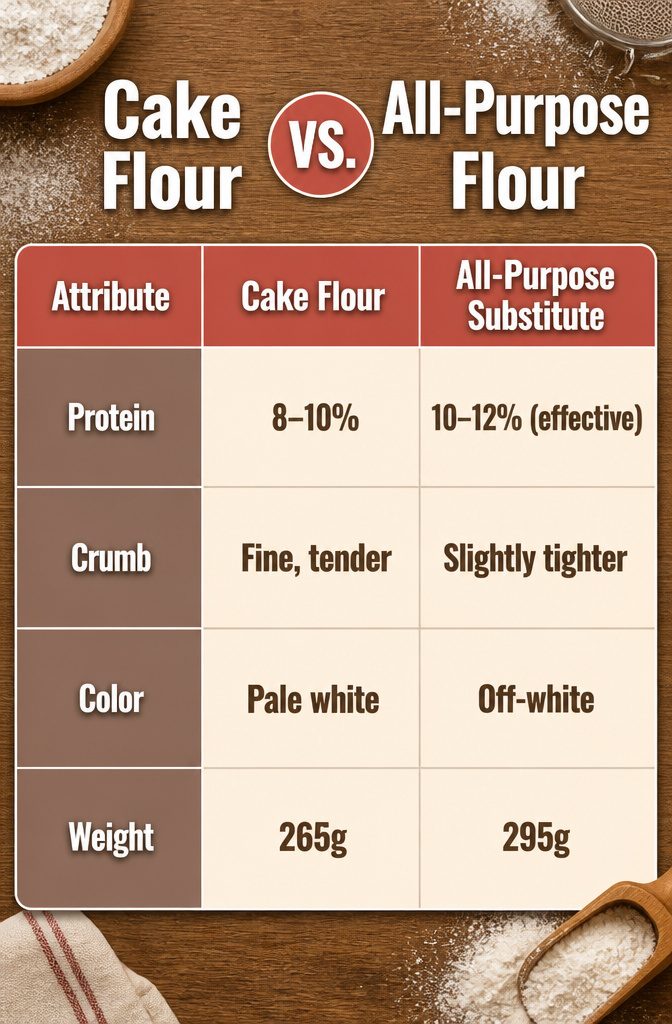
Cake flour runs about 8–10% protein against all-purpose’s 10–12%. That gap matters because protein becomes gluten when it meets liquid, and less gluten means a finer, more tender crumb with the pale color a white cake needs.
All-purpose flour will still bake into a respectable layer, but the crumb tightens and the cake carries more weight than the airy slice most people picture.
For a straight substitution, 2 3/4 cups all-purpose flour minus 5 1/2 tablespoons, plus 5 1/2 tablespoons cornstarch, sifted twice, gets you close.
The cornstarch dilutes the protein and the double sifting aerates the mix, though the gram weight ends up heavier, around 295g versus 265g for true cake flour.
| Attribute | Cake Flour | All-Purpose Substitute |
|---|---|---|
| Protein | 8–10% | 10–12% (effective) |
| Crumb | Fine, tender | Slightly tighter |
| Color | Pale white | Off-white |
| Weight per equivalent volume | 265g | 295g |
I keep cake flour on hand for birthday tiers and wedding-style layers where the crumb gets judged.
For a weeknight sheet cake or a trifle base that gets soaked anyway, the all-purpose version holds up fine and saves a grocery run.
Egg Whites vs. Whole Eggs
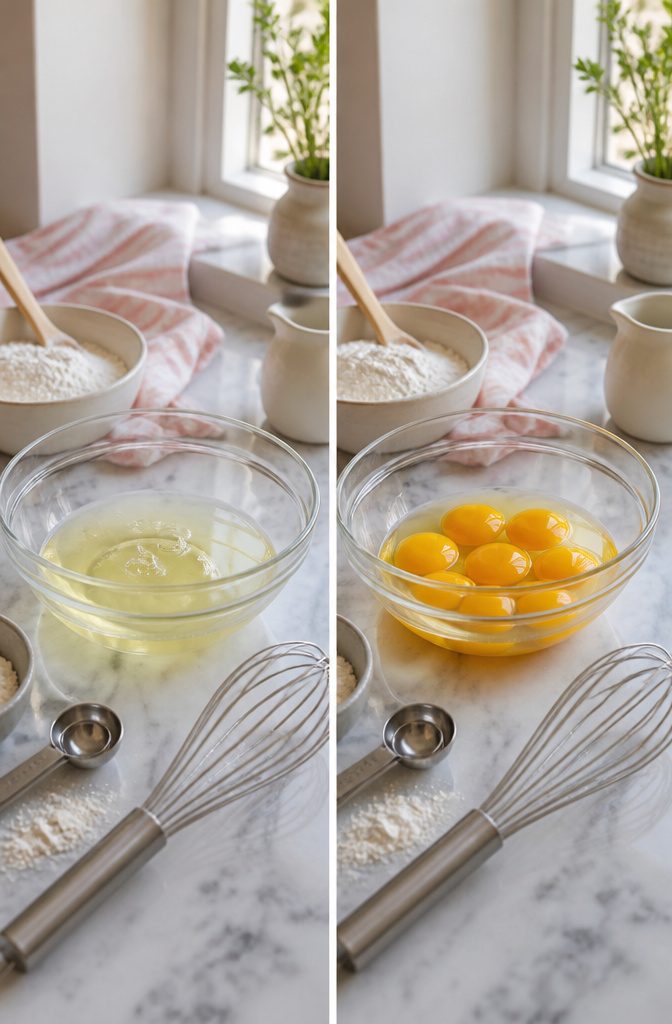
The single ingredient that separates white cake from yellow is the egg. Six egg whites, or about 3/4 cup, keep the crumb pale and fine; whole eggs would tint the batter yellow and push the texture closer to pound cake.
The yolks add fat that enriches and darkens, which is exactly what you want for a birthday layer or a wedding slice, but not here.
Frozen egg whites work fine once they are fully thawed, so I keep a stash for spur-of-the-moment baking. The yolks left behind are worth saving for a batch of lemon curd or a richer buttercream another day.
Buttercream vs. Cream Cheese Frosting
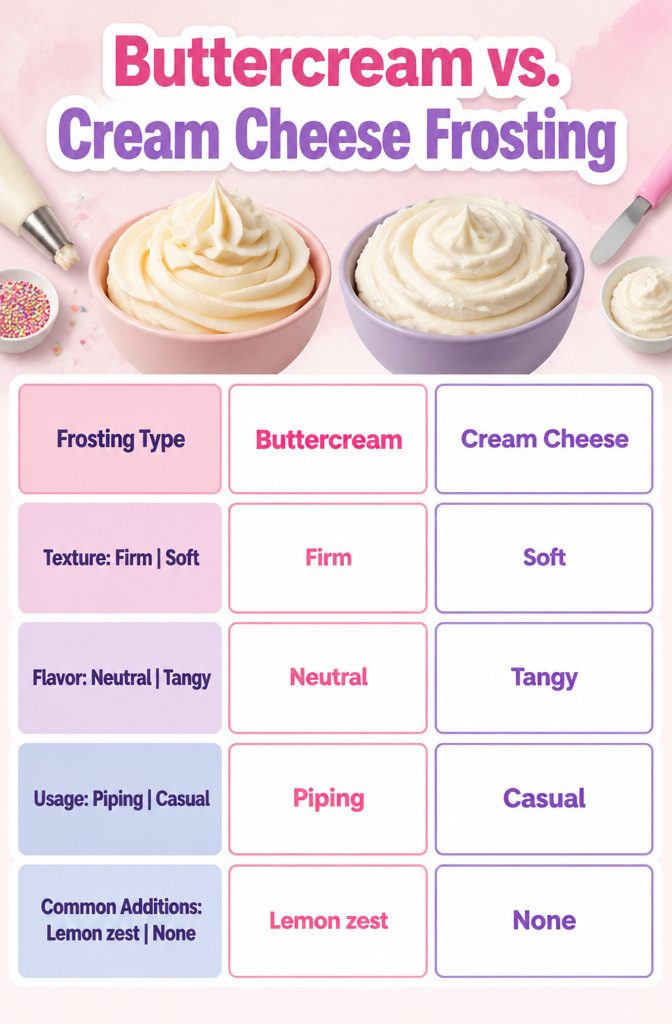
Buttercream is the classic pairing for white cake, and it wins on structure.
It pipes a clean shell border, crusts slightly so stacked layers don’t slide, and stays neutral enough that the vanilla and almond notes in the cake come through.
I reach for it when the cake needs to look finished, or when it’s sitting out for a couple of hours.
Cream cheese frosting brings tang and body that buttercream doesn’t. The softer set means it won’t hold a sharp piped rose, and it can look a little slumped in summer heat.
That looseness is exactly why I like it for casual sheet cakes or a quick birthday layer that gets eaten fast. The flavor is more assertive, so the cake and frosting read as equals rather than cake-first.
The buttercream in this recipe takes flavoring well. I add lemon zest for a spring cake, or a few drops of almond extract when I want something closer to wedding-cake flavor.
Both keep the same base texture, which matters more than you’d think when you’re already managing egg whites in the cake below.
Room Temperature and Mixing Method
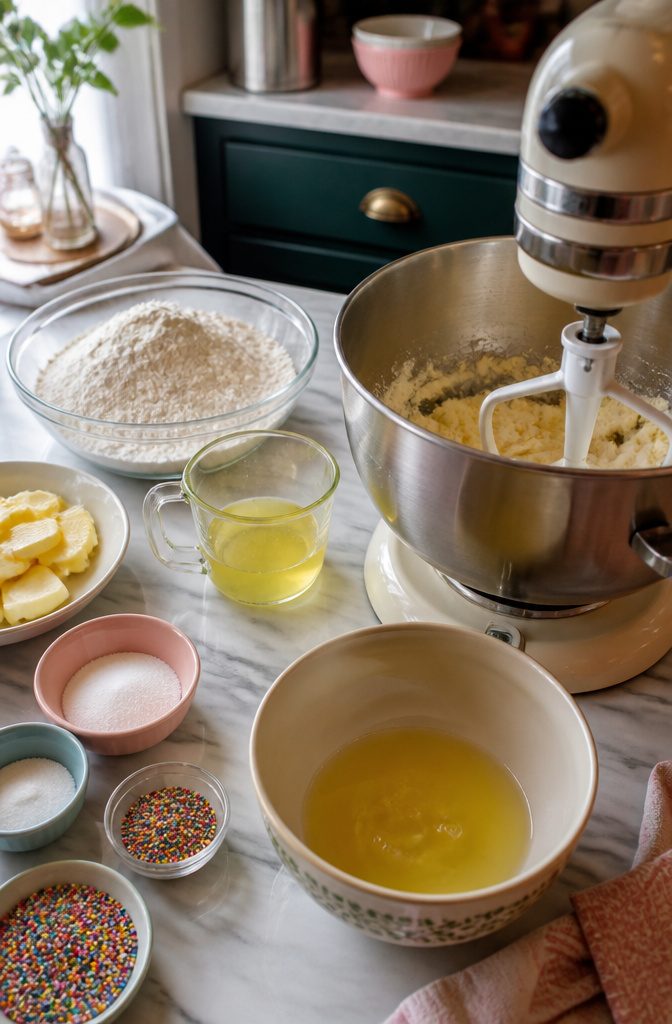
Cold butter will not cream properly no matter how long you beat it; the sugar cannot punch the air pockets that give white cake its fine crumb.
I pull butter, egg whites, and milk from the refrigerator about an hour ahead, or I cut the butter into thin pats to speed things along.
Cold egg whites will curdle the batter when they hit creamed butter, and cold milk will harden the butter back into flecks that never fully smooth out.
Some white cake recipes whip the egg whites separately and fold them in for extra lift, closer to an angel-food texture. This recipe skips that step and creams the butter with sugar, then adds plain egg whites straight in.
You lose a little height and that cloud-like bite, but you get a batter that is harder to overmix and far more forgiving on a weeknight when the oven is already heating and someone is asking about dinner.
For home bakers who need the cake to land on the table without drama, the straight creaming method wins.
Baking and Doneness
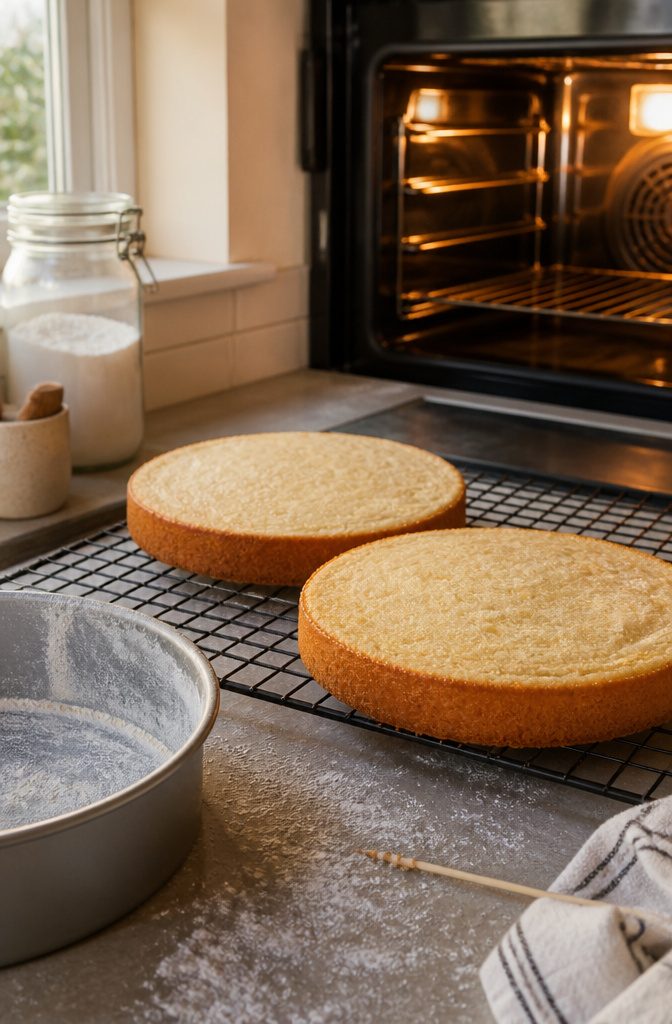
Set your oven to 350°F and let it preheat fully before the pans go in. A cold start gives you a dense, uneven crumb.
For greasing and flouring, I think it beats parchment alone with this batter.
The flour dusting gives the tender crumb something to grip as it rises, so the cake climbs the pan walls evenly instead of sliding down a slick surface.
Parchment on the bottom is still worth doing for insurance, but the sides want that flour coating.
Weighing the batter on a food scale is the only way I trust to get truly even layers. Eyeballing it almost always leaves me with a lopsided stack that needs trimming later.
Start checking at 25 minutes, even though the full range runs to 35 minutes. Ovens vary, and a toothpick pulled from the center should come out clean or with just a few crumbs clinging.
A fully clean pick means carryover cooking will push you past ideal, so pull it when a crumb or two still sticks.
Let the layers rest in their pans for 10 minutes before turning them out.
That rest lets the structure set enough to hold together, but the pan is still warm enough to release cleanly. Invert too soon and the steam-softened crumb cracks; wait too long and the pan grips, tearing the edges.
Frosting Consistency and Technique
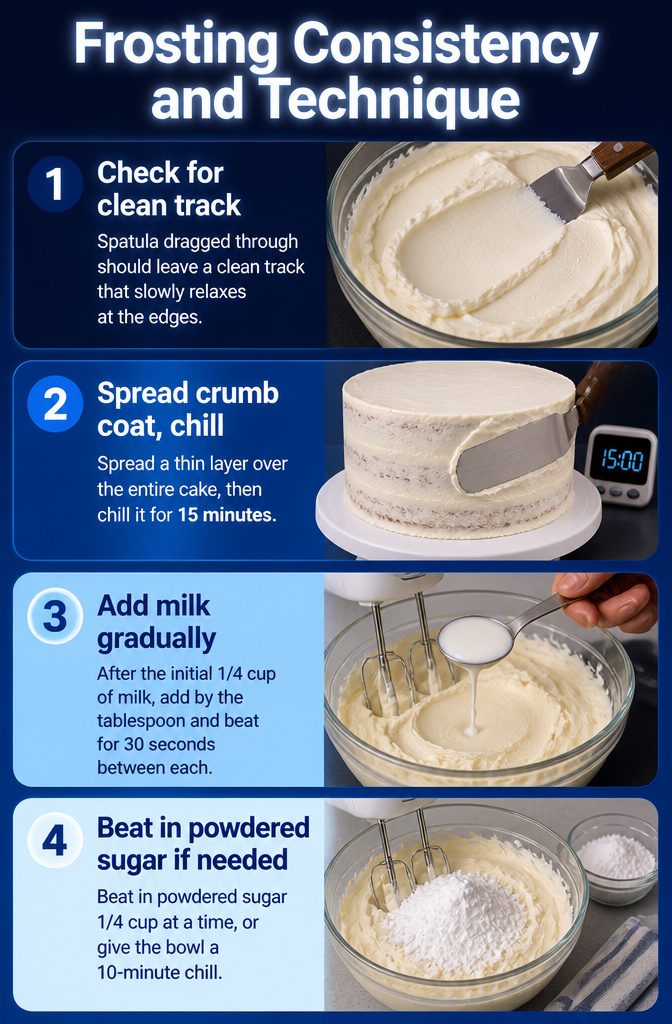
Buttercream consistency sits right in the middle, and the test is simple: a spatula dragged through should leave a clean track that slowly relaxes at the edges. Too stiff, and the frosting tears the cake surface as you spread.
Too soft, and the final coat slumps within the hour. After the initial 1/4 cup of milk, I add by the tablespoon and beat for 30 seconds between each, because powdered sugar hydrates slowly and the texture keeps shifting.
The crumb coat is non-negotiable for a smooth finish. Spread a thin layer over the entire cake, then chill it for 15 minutes so the butter firms up and seals the crumbs in place.
The final coat glides on clean after that. A turntable makes the work faster, but a dinner plate and careful hand rotation gets you there; I have done both, and the plate just requires more stopping and starting.
If the buttercream goes slack on you, beat in powdered sugar 1/4 cup at a time, or give the bowl a 10-minute chill. Cold tightens the butter, sugar stiffens the structure, and either one pulls you back to that workable middle.
Decorating Ideas
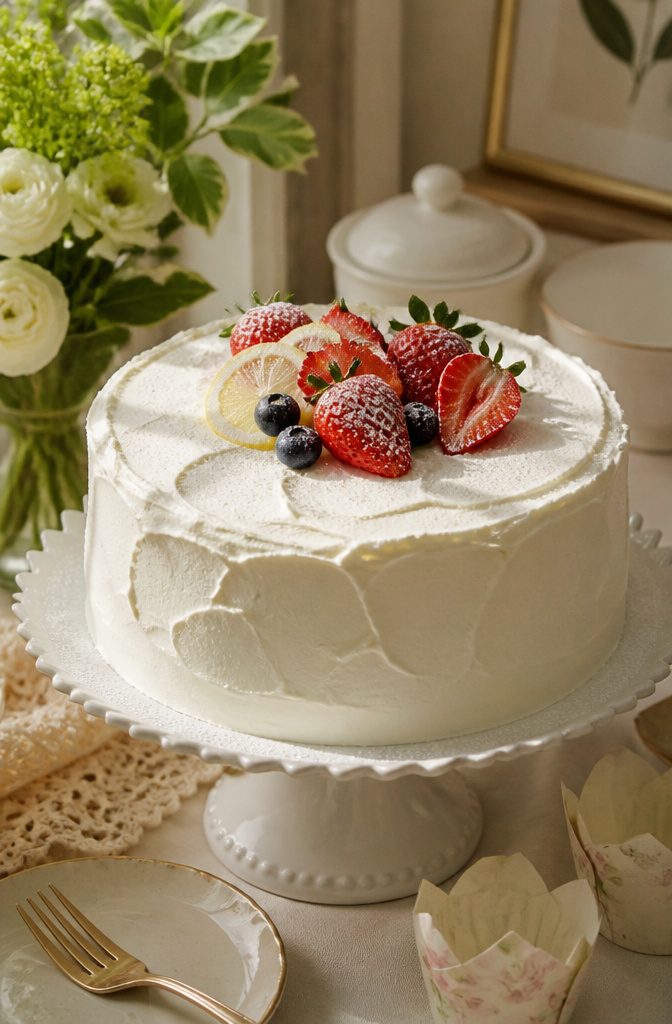
White cake shows every flaw, so a smooth finish matters more than any decoration you pile on top. The back of a spoon dragged across just-frosted layers gives a soft, textured surface that hides minor imperfections without looking fussy.
Fresh berries in season add color and a tart counterpoint to the sweetness, though I would skip them for a birthday and reach for simple sprinkles instead.
A light dusting of powdered sugar works for something closer to elegant, but one high-impact choice beats overdecorating on a cake this clean.
Plain smooth frosting with that spoon-textured top is my default; it respects the white cake’s character rather than fighting it.
Yield and Storage
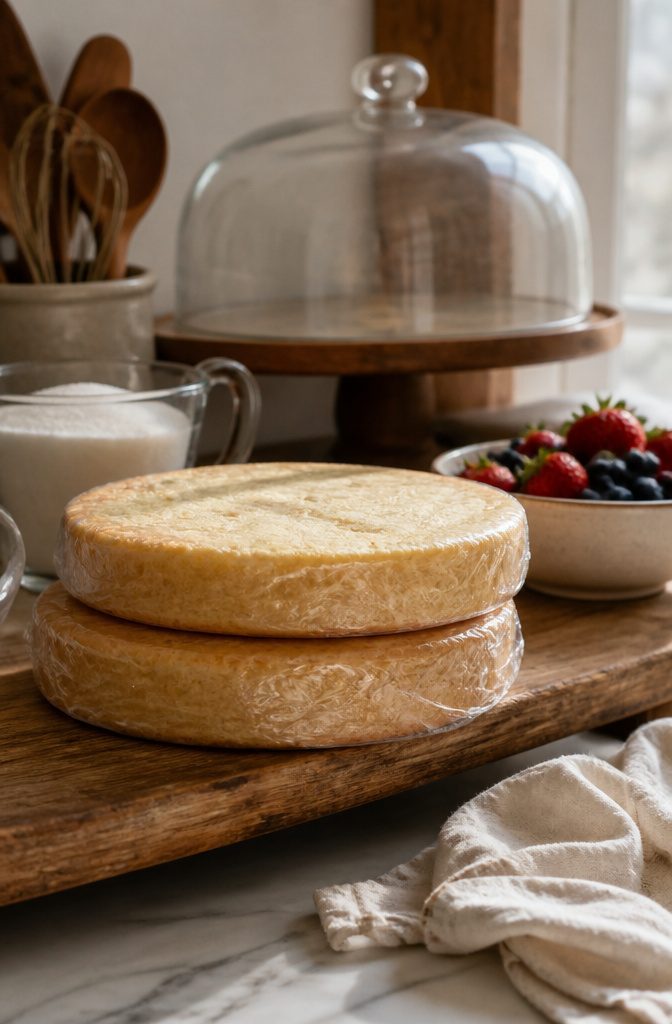
This recipe yields two 9-inch layers that serve 12 to 16, depending on how you slice it. For a party, I cut 12 generous wedges; for a crowd, 16 smaller pieces covers more plates.
Unfrosted layers keep well wrapped in plastic at room temperature for one day, which is handy when you want to bake ahead and assemble later.
For longer storage, freeze them for up to two months; just let them thaw in the refrigerator overnight before you frost.
A frosted cake sits nicely under a dome at room temperature for two days. Push that to one week in the refrigerator, or freeze it for one month.
Thaw a frozen frosted cake overnight in the refrigerator, then let it sit out for about 30 minutes before serving. Buttercream hardens in the cold, and that half hour at room temperature brings the frosting back to its proper creamy texture.
Once the cake is frosted and decorated, it will keep for a couple of days in an airtight container. Store it in the fridge to help it last a few days longer.
— Delish
That refrigerated window matters more in summer heat or humid kitchens, but the airtight part is non-negotiable either way.
Flavor Variations
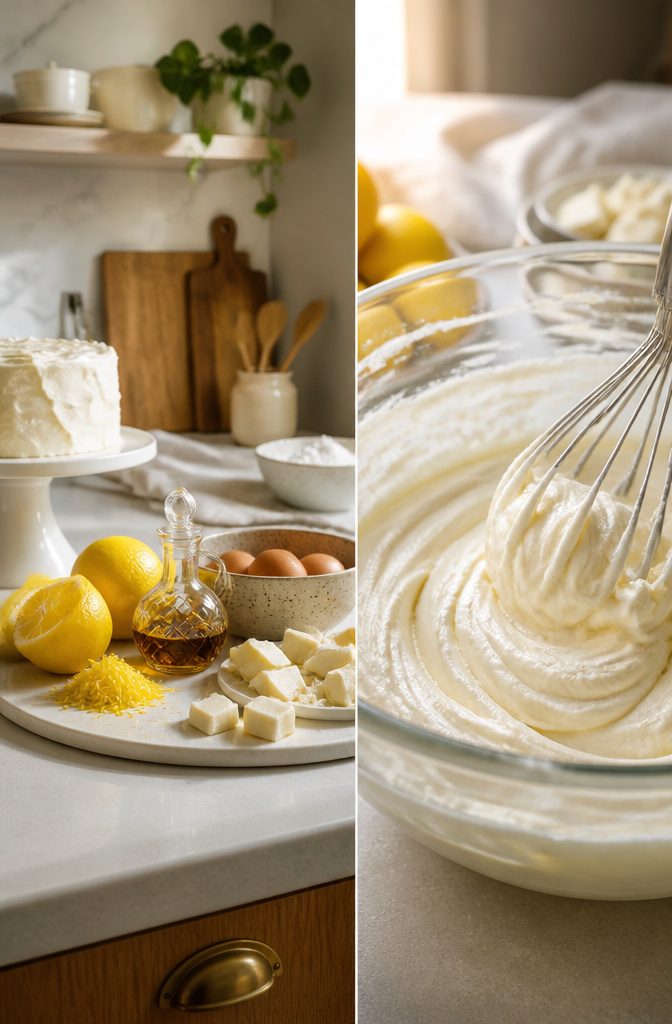
Almond extract is the variation that gives white cake its bakery-counter depth. I add 1/4 teaspoon to the batter and the result reads richer than vanilla alone, though some bakers prefer a blend of both.
The flavor is fuller, but the pale crumb takes on the faintest warmth, so I treat this as a departure from the base recipe rather than an improvement on it.
Lemon zest brightens the cake in a different direction.
I grate 1 tablespoon into the batter and beat 1 teaspoon of juice into the frosting. The acidity cuts the sweetness and the cake smells like spring, though the white turns cream, not porcelain.
For something closer to dessert, I melt 4 ounces of white chocolate, cool it to lukewarm, and beat it in after creaming the butter and sugar.
The crumb tightens slightly and the color shifts toward ivory. It is still recognizably white cake, just dressed up.
A boxed mix variation exists, and Duncan Hines is the reliable choice if you go that route.
The scratch version takes only marginally more effort and the texture is markedly better, so I keep the box as a backup and return to the base recipe when the occasion matters.
Fixing Common Problems
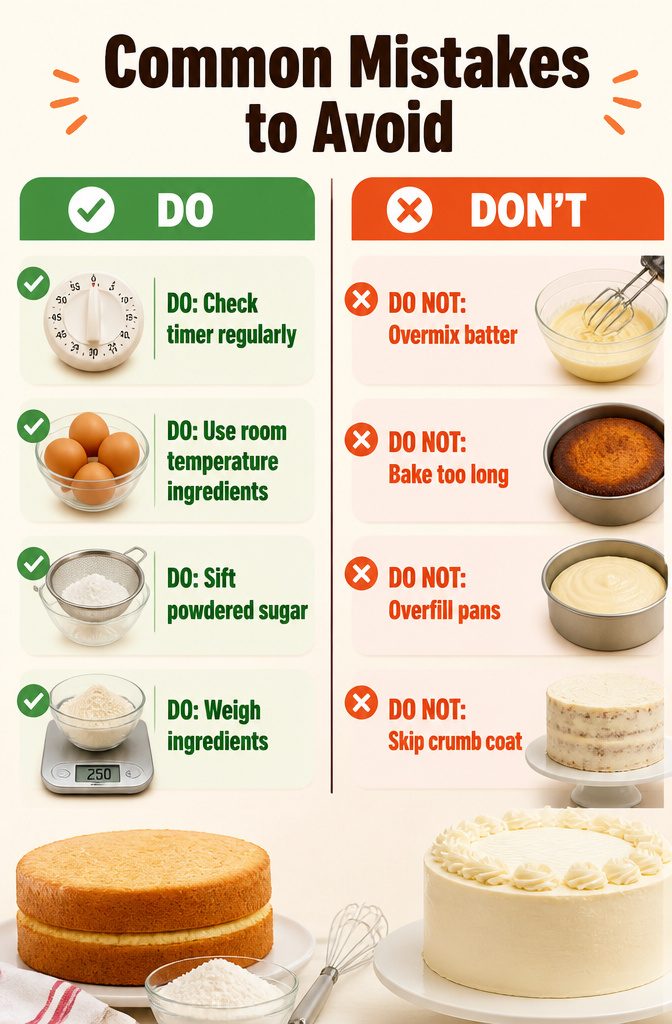
A dry white cake usually means the batter was overmixed or the layers stayed in the oven too long.
I set a timer for the shortest end of the range, 20 minutes at 350 degrees, and pull the pans when a toothpick shows a few moist crumbs clinging rather than waiting for it to come out clean.
That residual heat finishes the crumb without leaching out the moisture.
Dense texture traces back to cold ingredients or packed flour.
Room-temperature egg whites whip to the volume this cake needs, and weighing flour on a food scale beats spooning and leveling if you own one. The scale removes the guesswork.
Domed tops happen when the oven runs hot or the pan is overfilled.
An inexpensive oven thermometer catches the first problem, and filling pans no more than two-thirds full prevents the batter from climbing up the sides and crowning in the middle.
For lumpy buttercream, the butter was too cold or the powdered sugar went in unsifted.
Cold butter creams unevenly against the sugar, so I let it soften until a finger pressed into the surface leaves a dent but not a collapse. Sifting the sugar through a fine-mesh strainer takes thirty seconds and saves the batch.
Frequently Asked Questions
How do you make a white cake from scratch?
Beat 2 3/4 cups cake flour with sugar, baking powder, salt, 6 egg whites, 1 cup butter, 1 cup milk, and vanilla at 350°F for 25–35 minutes. The egg whites keep the crumb pale, and cake flour keeps it tender.
What is the best frosting for white cake?
Buttercream is the classic choice because it pipes cleanly, crusts slightly for stable layers, and lets the vanilla and almond notes in the cake come through. Cream cheese frosting works for casual cakes but won’t hold sharp decorations.
Can I use whole eggs instead of egg whites?
Whole eggs will tint the batter yellow and push the texture closer to pound cake. The yolks add fat that enriches and darkens, which defeats the purpose of a white cake’s pale color and fine crumb.
How do I prevent my white cake from being dry?
Pull the layers when a toothpick shows a few moist crumbs clinging, not when it comes out fully clean. Also keep ingredients at room temperature and avoid overmixing once the flour goes in.
What can I substitute for cake flour?
Use 2 1/2 cups all-purpose flour plus 1/4 cup cornstarch, sifted together twice. The cornstarch mimics cake flour’s lower protein, though the texture stays slightly less fine and the color shifts off-white.
What’s the secret to a moist cake?
Room-temperature ingredients cream properly without seizing, and pulling the cake while a few crumbs still cling to the toothpick lets carryover cooking finish the crumb without leaching moisture.
Can you use cream cheese frosting on white cake?
Yes, though it brings a tangier, more assertive flavor and a softer set that won’t hold sharp piped decorations. It works well for casual sheet cakes or quick birthday layers that get eaten fast.