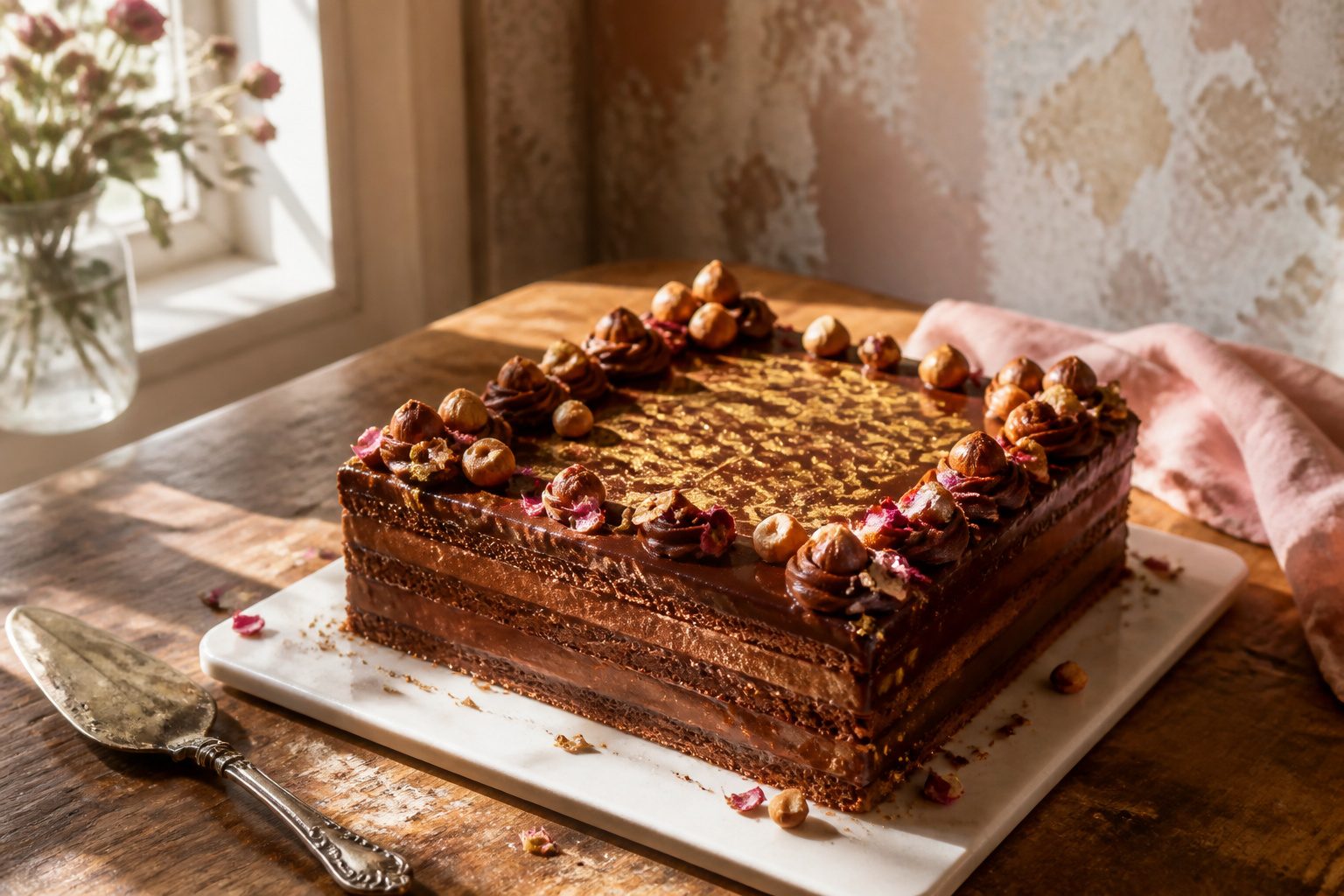
This cake tastes of dark chocolate and hazelnut with a faint rose backnote, and the ganache stays sliceable because of inverted sugar rather than added sweetness.
The 200-hour sugar sculpture versions exist, but this one is built for a kitchen rather than a museum: a 9 by 13-inch base, a warm knife, and edible gold powder brushed through a stencil.
Hazelnut paste is the sticking point. Nutella is too loose and too sweet, so you will need to find the real thing, either in a serious baking aisle or online.
Ingredients
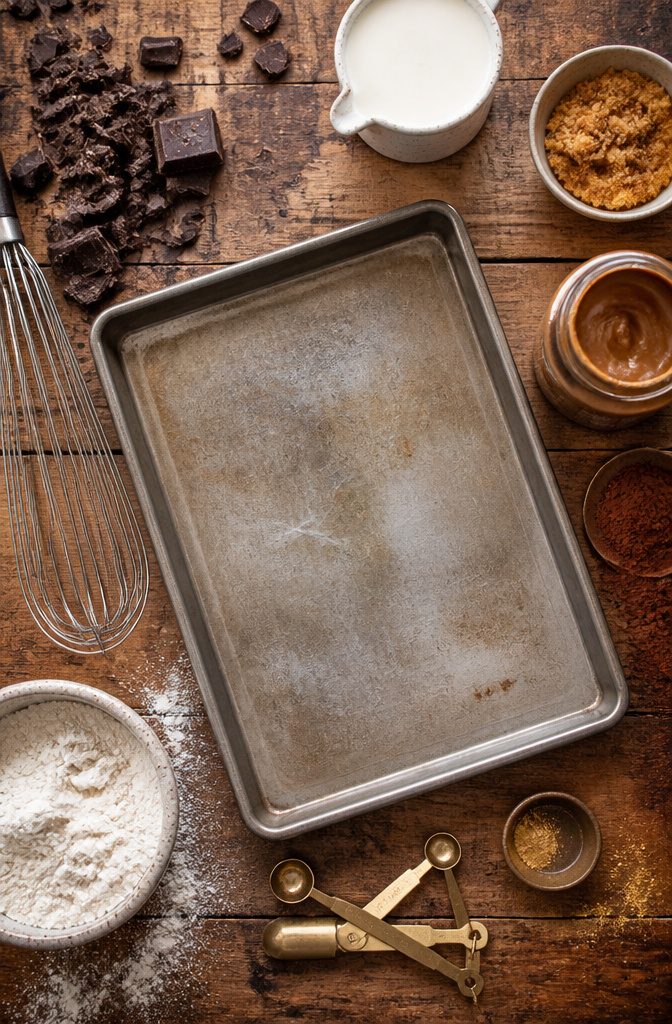
A 9 by 13-inch baking sheet is the right size here; the overhanging plastic wrap makes the finished block easy to lift out and slice clean.
For the ganache, you will need:
- 13 ½ oz 64% dark chocolate, chopped
- 1 ½ cups heavy cream
- ¼ cup inverted sugar or light corn syrup
- 3 ¼ oz hazelnut paste
- 2 ½ tbsp unsalted butter, at room temperature
- 2 tbsp cocoa powder
- Edible gold powder, for finishing
The inverted sugar or corn syrup is what keeps the ganache sliceable after setting, not just sweet.
Hazelnut paste is worth tracking down at a grocery with a decent baking aisle or online; the flavor is the point of this cake, and nutella is too sweet and too loose.
The base calls for standard cake ingredients: flour, sugar, eggs, and the flavorings that carry the rose, pistachio, and almond profile.
I would not substitute here. The feuilletine and milk chocolate layer adds crunch, but the ganache ingredients above are where the cake earns its name.
Method
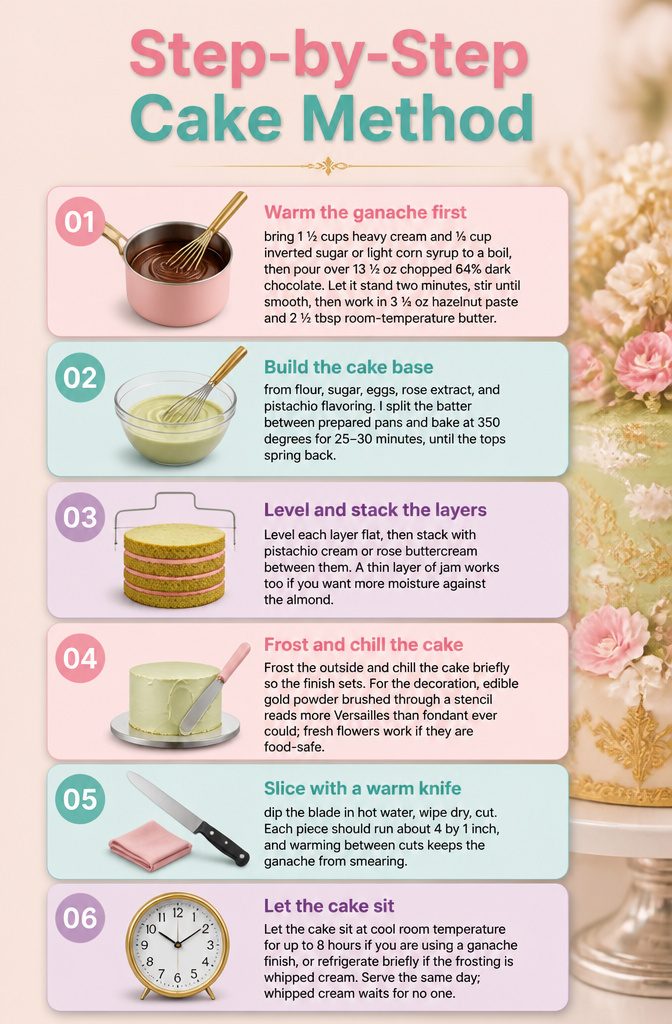
- Warm the ganache first: bring 1 ½ cups heavy cream and ¼ cup inverted sugar or light corn syrup to a boil, then pour over 13 ½ oz chopped 64% dark chocolate. Let it stand two minutes, stir until smooth, then work in 3 ¼ oz hazelnut paste and 2 ½ tbsp room-temperature butter.
- Build the cake base from flour, sugar, eggs, rose extract, and pistachio flavoring. I split the batter between prepared pans and bake at 350 degrees for 25–30 minutes, until the tops spring back.
- Level each layer flat, then stack with pistachio cream or rose buttercream between them. A thin layer of jam works too if you want more moisture against the almond.
- Frost the outside and chill the cake briefly so the finish sets. For the decoration, edible gold powder brushed through a stencil reads more Versailles than fondant ever could; fresh flowers work if they are food-safe.
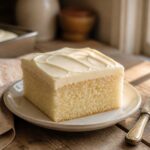
- Slice with a warm knife: dip the blade in hot water, wipe dry, cut. Each piece should run about 4 by 1 inch, and warming between cuts keeps the ganache from smearing.
- Let the cake sit at cool room temperature for up to 8 hours if you are using a ganache finish, or refrigerate briefly if the frosting is whipped cream. Serve the same day; whipped cream waits for no one.
Historical Context
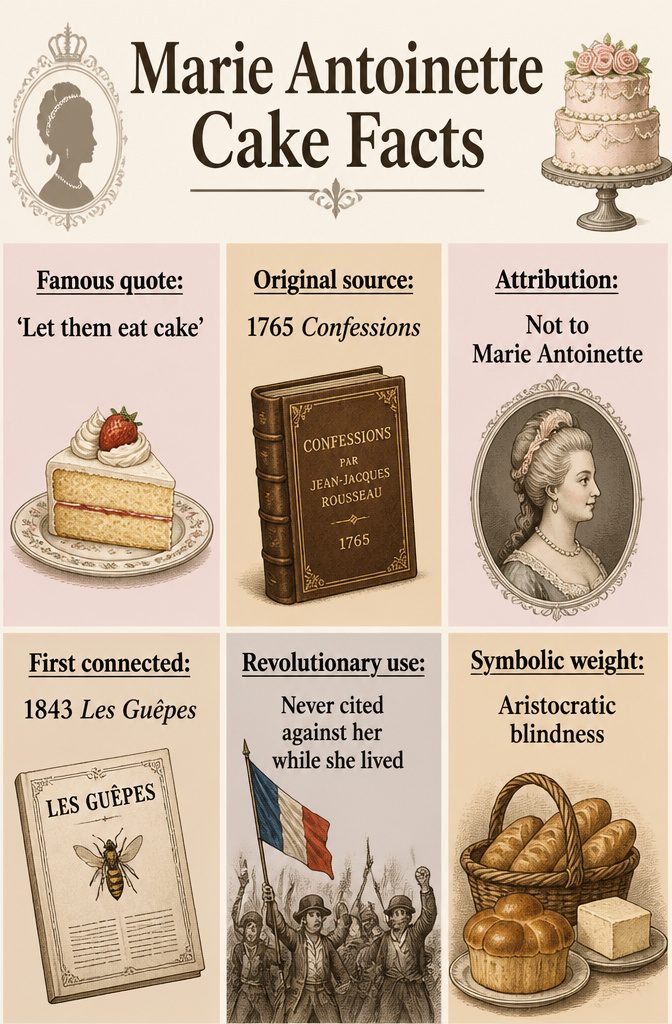
The most famous thing Marie Antoinette never said was "let them eat cake." The original French, "Qu’ils mangent de la brioche," first appeared in Jean-Jacques Rousseau’s Confessions in 1765, when the future queen was nine years old and had not yet set foot in France.
Rousseau attributed the line vaguely to "a great princess," not to her.
The phrase did not connect to Marie Antoinette until 1843, more than fifty years after her execution, when the writer Alphonse Karr mentioned it in the journal Les Guêpes.
By then the revolution had long ended, and the quote had become useful shorthand for aristocratic blindness to ordinary hardship. Revolutionary pamphleteers themselves never cited it against her while she lived.
What made the invented quote stick was its symbolic weight. Bread absorbed roughly half a peasant’s income in pre-revolutionary France, so a princess suggesting they eat enriched butter-and-egg bread instead registered as genuine cruelty whether she said it or not.
The real Marie Antoinette faced enough criticism for extravagance and foreign birth that the line fit a narrative already in place.
Cake Types
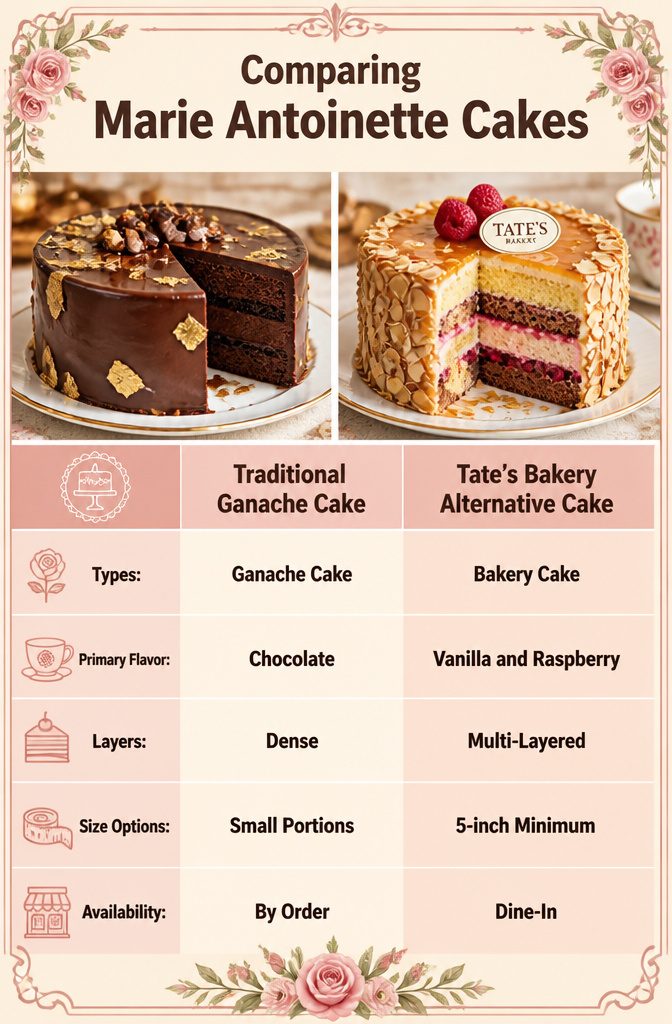
A Marie Antoinette cake can mean four genuinely different desserts, and the one you want depends on whether you are baking or buying.
The showpiece version is a ganache cake dense with chocolate ganache, hazelnut paste, and edible gold leaf. Small slices are the move; it is that rich.
Tate’s Bakery in Southampton, New York, builds something else entirely: layers of yellow and chocolate cake with raspberry and vanilla buttercream, raspberry jam, chocolate mousse, marzipan, apricot glaze, and crushed toasted almonds around the outside.
They make it as small as 5 inches across, which cuts into thin slices that still read as full portions because of everything packed inside.
Ladurée keeps it simpler with a loaf cake infused with their Marie Antoinette tea, a blend of dried rose petals, honey, orange, and pineapple.
That one, and their Rose Raspberry Cake with pistachio filling, are only sold in France and Europe with Paris home delivery, though you can check their USA site for American pickup locations on other confections.
Cultural Significance
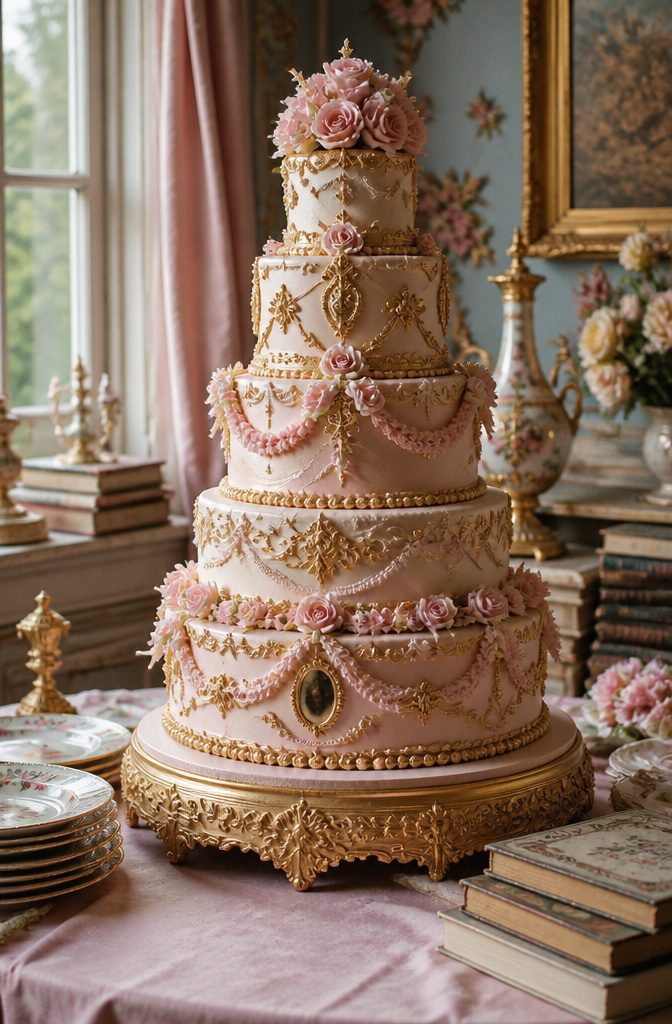
A Marie Antoinette cake carries weight beyond buttercream and fondant.
The figure herself became shorthand for the gap between Versailles and the street, and the cakes borrow that tension deliberately: they celebrate the sugar-work and towering hairpieces of her court while nodding to the revolution those displays helped provoke.
The phrase "let them eat cake," which she likely never spoke, still attaches to every pink rosette and gilded edge.
This friction has pushed decorators toward genuine spectacle. One baker spent more than 200 hours building a life-sized sugar head of the queen, hollow inside, roughly a metre tall, with hair dressed in the ship-and-cage style of the period.
The piece was never meant to be eaten; it toured wedding fairs and trade shows as sculpture, and it raised funds for Farleigh Hospice charity.
Competitions and exhibitions have followed that same impulse, treating the form as edible art history rather than dessert.
I find the best versions keep one foot in each world: enough craft to honor the reference, enough restraint that the cake does not become the thing it critiques.
Decorating Tips
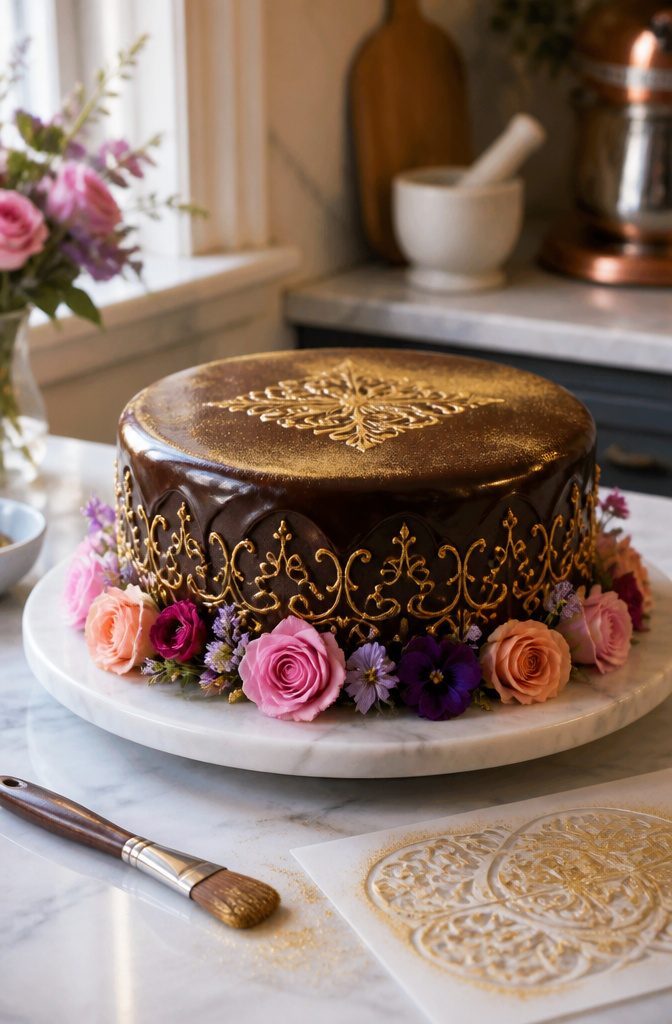
The edible gold powder that finishes a Marie Antoinette cake is the detail that separates grocery-store effort from pastry-shop illusion.
A small pastry brush and a light hand are all you need; tap the brush against the rim after dipping, then dust the surface from above so the particles fall like pollen rather than streak.
Pair it with a stencil for pattern, or brush it freely across a ganache top where the dark chocolate throws the metallic flash into relief.
Fresh flowers are the other signature, and the safety question matters more than the arrangement.
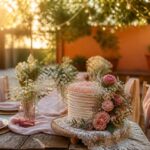
Roses, pansies, and violets grown without pesticide are the reliable choices; florists’ stock is not food-safe unless you can confirm the growing practice. Freeze-dried petals from the baking aisle skip that worry entirely and hold their color longer on buttercream.
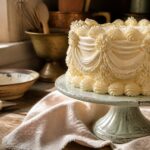
The gap between a simple loaf and a full layer cake is mostly height and expectation. A single loaf, glazed and scattered with petals and a few gold flecks, reads as French patisserie on a Tuesday night.
The multi-layered version with passionfruit curd filling and buttercream under a carpet of flowers is weekend project territory, and imperfect smoothing is fine when the whole cake gets covered anyway.
The gold powder is the one element worth sourcing specifically; everything else is already in your kitchen or your produce section.
Storage and Substitutions
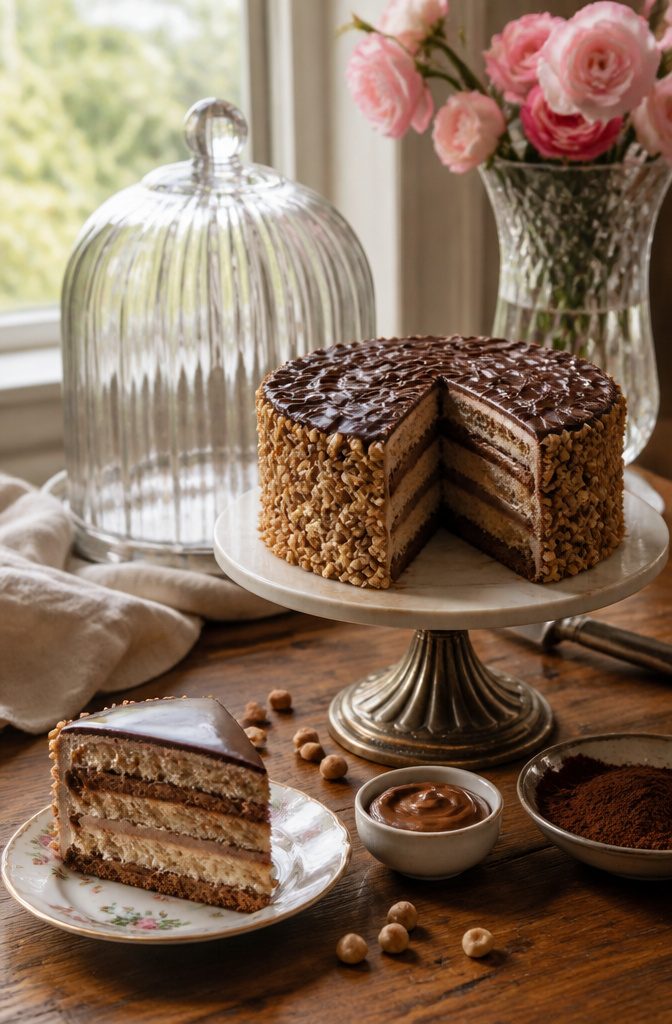
A finished cake yields 24 pieces, each about 4 by 1 inch. I find that generous for a crowd, though the richness means smaller slices work fine for a lighter finish.
Keep the cake chilled and it holds for several days. The whipped cream frosting stays best when served shortly after it goes on, so I frost right before bringing it out.
Do not leave it at room temperature; the cream layer softens too fast and the whole thing loses its shape.
Inverted sugar and light corn syrup swap one for one.
Both keep the ganache smooth and sliceable. For nut allergies, hazelnut paste can be replaced with an equal weight of almond paste; the flavor shifts but the texture holds.
If edible gold powder is unavailable, a light dusting of cocoa powder still looks elegant against the dark glaze. The stencil detail is nice, not necessary.
Frequently Asked Questions
Did Marie Antoinette really say “Let them eat cake”?
No, there is no historical evidence she ever said those words. The phrase first appeared in Jean-Jacques Rousseau’s Confessions in 1765, when Marie Antoinette was nine years old and living in Austria; Rousseau attributed it vaguely to "a great princess."
The quote did not connect to her until 1843, more than fifty years after her execution, when Alphonse Karr mentioned it in the journal Les Guêpes.
What is a Marie Antoinette cake?
It is a cake inspired by the opulence associated with Marie Antoinette, typically featuring rich flavors and elaborate decorations.
The showpiece version combines dense chocolate ganache with hazelnut paste and edible gold finishing; other interpretations include Tate’s Bakery’s layered yellow and chocolate cake with raspberry buttercream and marzipan, or Ladurée’s tea-infused loaf cake with rose, honey, and orange notes.
Where can I find a Marie Antoinette cake?
Tate’s Bakery in Southampton, New York, builds a layered version with yellow and chocolate cake, raspberry and vanilla buttercream, raspberry jam, chocolate mousse, marzipan, apricot glaze, and crushed toasted almonds.
Ladurée sells their Marie Antoinette tea-infused loaf cake and Rose Raspberry Cake with pistachio filling in France and Europe with Paris home delivery; their USA site lists American pickup locations for other confections.
What did Marie Antoinette do with cake?
Nothing specifically; the connection is invented. The famous quote about cake was falsely attributed to her decades after her death, and no historical record links her to any particular cake recipe or baking practice.
Modern Marie Antoinette cakes are creations of contemporary bakers drawing on her image of luxury.
Why did Marie Antoinette eat so much cake?
There is no basis for this idea. The association comes entirely from the misattributed "let them eat cake" quote, not from any documented eating habits.
During the actual period of French royalty, butter-free desserts were fashionable at court, making the modern rich cake an ironic tribute rather than historical recreation.